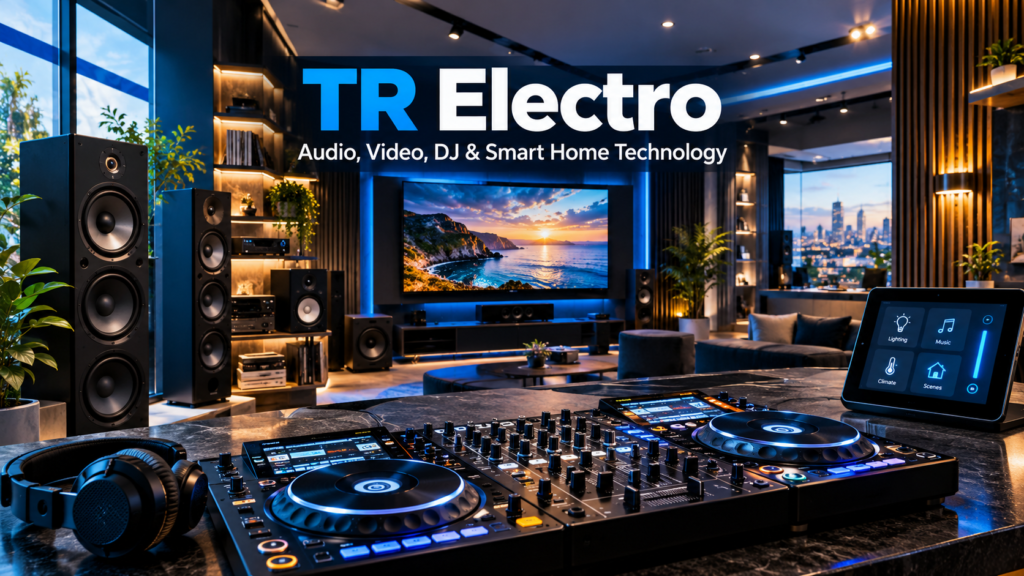
Modern technology has transformed the way people listen to music, watch films, organize entertainment, and manage their homes. From professional DJ equipment and high-quality speakers to home cinema systems and smart-home controls, electronic products have become an important part of everyday life. Businesses that import and distribute these products help connect international manufacturers with local retailers, installers, and consumers.
TR Electro Stereo is an Israeli electronics importer and distributor specializing in audio equipment, video technology, professional DJ systems, and smart-home solutions. Established in 1986, the company has developed a presence in Israel’s audio-visual market through its product categories and retail distribution network.
Understanding TR Electro requires looking beyond individual electronic products. Its business operates within a wider industry that combines product sourcing, distribution, technical compatibility, and changing consumer expectations. Customers may be searching for a home audio system, equipment for professional performances, or technology for a connected living space.
This article explores TR Electro, its major product categories, the role of electronics distribution, and the factors that consumers and businesses should consider when evaluating audio-visual and smart-home solutions.
What Is TR Electro?
TR Electro Stereo is an Israeli company focused on importing, marketing, and distributing audio, video, professional DJ, and smart-home products. Rather than manufacturing every product itself, the business connects technology brands with the local market through distribution and retail partnerships.
The company was established in 1986, giving it a long-standing presence in the electronics sector. Its product categories serve different customer groups, including household consumers, music enthusiasts, professional DJs, retailers, and businesses that require specialized audio-visual equipment.
This type of business plays an important role in the electronics supply chain. Manufacturers develop and produce equipment, while distributors help make those products available through local sales channels. Depending on the product and commercial arrangement, distribution may also involve product information, technical guidance, warranty coordination, and support for retail partners.
TR Electro’s focus on several related product categories allows customers to explore different aspects of entertainment technology through a distributor operating in the same market. However, specific product availability, brand representation, and service arrangements should always be confirmed before purchasing.
| 🔗 You may also like: |
| Workforce management system cloud technology |
| Software discovery is broken |
The History and Development of TR Electro
Established in 1986
TR Electro Stereo began operating in 1986, during a period when consumer electronics were developing rapidly. Traditional stereo equipment, television systems, and standalone audio components were important parts of home entertainment.
Over subsequent decades, the market expanded to include digital media, wireless speakers, advanced projection systems, computer-connected audio equipment, and connected-home devices. Professional music equipment also evolved as digital controllers and software-based workflows became increasingly important.
These changes created new opportunities for distributors serving multiple electronics categories. Customers now expect products to work together, rather than simply purchasing isolated devices. A modern entertainment system might combine a television, amplifier, wireless connectivity, speakers, and automated lighting.
For distributors, adapting to these changes means understanding both individual products and the broader systems in which they operate.
Distribution and Retail Partnerships
Local distribution helps international manufacturers reach customers in specific countries. Retailers and specialist dealers provide another important connection by helping buyers compare products, understand specifications, and identify suitable equipment.
TR Electro operates within this distribution model in Israel. Its business activities connect audio-visual product categories with retail channels serving different consumer and professional requirements.
The availability of local retailers can be particularly useful for specialized equipment. Customers purchasing a home cinema system, for example, may need advice about room dimensions, speaker placement, compatible amplifiers, and installation requirements.
A distributor’s product range can therefore provide a starting point for research, while the retailer or installer helps determine which solution is appropriate for a particular project.
Major Product Categories Associated With TR Electro
1. Home Audio and Stereo Systems
Home audio remains an important part of the consumer electronics market. Products in this category include speakers, amplifiers, headphones, receivers, and wireless audio devices.
Each type of equipment serves a different purpose. Compact wireless speakers may suit smaller rooms, while a traditional stereo setup can appeal to listeners who prefer separate speakers and amplification components. Larger entertainment spaces may benefit from more powerful equipment and carefully planned speaker placement.
Understanding the fundamentals of audio equipment and sound reproduction can help buyers make more informed decisions. The relationship between speakers, amplifiers, audio sources, and room acoustics influences the listening experience.
When selecting a home audio system, customers should consider the size of the room, intended listening volume, connection options, and compatibility with existing devices. Product specifications also deserve attention. Amplifier power, speaker impedance, frequency response, and available inputs can affect how well components work together.
The most expensive equipment is not necessarily the best choice for every household. A well-matched system that meets the listener’s requirements can provide better value than an unnecessarily complicated setup.
2. Professional DJ Equipment
Professional DJ equipment is designed for music mixing, live performances, events, clubs, and personal production environments. Depending on the setup, it can include DJ controllers, media players, mixers, headphones, turntables, and monitoring speakers.
DJ controllers typically combine several mixing functions into one device. They can provide controls for playback, tempo adjustment, effects, cueing, and transitions between tracks. More advanced setups may use separate players and mixers to provide additional flexibility.
The right equipment depends on the performer’s experience and working style. Beginners may prefer a straightforward controller with essential features, while experienced DJs may require dedicated hardware, more connection options, and compatibility with their preferred software.
Sound quality is only one consideration. Reliability, portability, software support, input and output connections, and ease of operation can be equally important during live performances.
Customers researching equipment associated with TR Electro should verify the availability of specific models and brands through current product listings or authorized retailers. They should also check warranty coverage and whether replacement accessories are readily available.
3. Home Cinema and Video Technology
Home cinema systems bring together visual and audio components to create a more immersive entertainment experience. Depending on the space and budget, a system may include a television or projector, a projection screen, an AV receiver, surround-sound speakers, and a subwoofer.
Projectors can be useful for larger images, particularly in dedicated viewing rooms. Televisions may offer greater convenience in everyday living spaces, especially where ambient light cannot be controlled.
Choosing between these options requires considering screen size, viewing distance, room lighting, available space, and installation requirements. Buyers should also verify that the selected equipment supports the video sources and connections they intend to use.
Audio deserves equal attention. Clear dialogue, balanced sound, and appropriate speaker placement can significantly improve the viewing experience. A large display alone cannot compensate for poor audio or an unsuitable room layout.
For customers exploring home cinema solutions, planning the complete system before purchasing individual components can help prevent compatibility problems and unnecessary expenses.
4. Smart-Home Technology
Smart-home technology enables people to manage compatible household devices through applications, control panels, connected accessories, and automated routines.
Depending on the products installed, these systems may support lighting control, entertainment management, scheduled actions, and integration with other connected devices.
Smart-home technology can improve convenience, but successful installations depend on compatibility. Devices may use different communication standards, applications, hubs, and network requirements. Customers should confirm that the products they choose can operate together as intended.
Security and privacy also deserve attention. Buyers should review account protection, software update policies, access permissions, and the manufacturer’s approach to handling connected-device information.
A practical smart-home installation should make everyday tasks easier. Reliable controls, understandable settings, and appropriate integration are generally more useful than adding features that household members rarely need.
5. Commercial Audio-Visual Solutions
Commercial environments often require specialized audio and video systems. Offices may need meeting-room displays, microphones, and speakers, while retail stores and hospitality venues may use distributed audio and background music systems.
The correct solution depends on the size of the space, the number of users, installation constraints, and the purpose of the equipment.
For example, a conference room requires clear speech reproduction and reliable connections for presentations. A restaurant may prioritize even sound coverage, discreet speakers, and simple volume control.
Businesses should evaluate installation costs, equipment durability, maintenance requirements, and opportunities for future expansion before making purchasing decisions.
Professional installation can be particularly important when systems involve multiple rooms, ceiling-mounted speakers, network connections, or integrated controls.
| 🔗 You may also like: |
| Vidnoz review create stunning ai images and videos easily |
| Security thermal upgrades glass doors |
How TR Electro Fits Into Israel’s Electronics Market
The electronics distribution industry connects manufacturers with the retailers and customers who use their products. Local distributors can help organize product availability and establish commercial relationships with retail partners.
For specialist equipment, this role can be especially valuable. Professional audio systems and integrated entertainment products often require more research than ordinary consumer accessories.
A buyer may need to understand the difference between several speaker configurations, identify compatible components, or determine whether an installation requires additional hardware. Retailers and technical specialists can help explain these considerations.
TR Electro operates in this wider market by focusing on multiple related categories, including audio, video, professional DJ equipment, and smart-home technology.
Nevertheless, customers should distinguish between a distributor’s overall product focus and the availability of a particular model. Product ranges can change, and not every item or brand will necessarily be available through every retailer.
Checking current product information and confirming commercial terms before ordering remain important steps.
What Should Customers Consider Before Buying?
Selecting electronic equipment involves more than comparing prices. The best purchase depends on the intended application, compatibility, available space, and long-term support.
Identify the Intended Use
Start by deciding how the equipment will be used. A home listening setup, professional DJ system, conference room, and automated home require different capabilities.
Defining the purpose helps narrow the selection and prevents spending money on unnecessary features.
Set a Realistic Budget
Consider the complete cost of ownership rather than the initial product price alone. Speakers may require amplifiers, home cinema systems may need installation, and smart-home devices may require compatible hubs or additional accessories.
A realistic budget should account for essential components and any ongoing maintenance.
Check Technical Compatibility
Review the available connections, supported formats, power requirements, and software compatibility of each component.
For smart-home products, confirm whether the devices support the intended control platform. For DJ equipment, check software requirements and audio connections. For home cinema, verify compatibility between the display, receiver, and playback sources.
Evaluate the Installation Environment
Room size, lighting, acoustics, power availability, and cable routing can affect performance.
A system designed for a small room may not provide suitable coverage in a large venue. Similarly, a projector may be less practical in a bright room where lighting cannot be controlled.
Confirm Warranty and After-Sales Support
Before purchasing, clarify warranty terms, repair procedures, delivery arrangements, and the availability of technical assistance.
Customers should also establish whether support is provided by the retailer, distributor, or manufacturer. These arrangements can differ by product and brand.
Technology Trends Shaping the Audio-Visual Industry
Digital Audio and Streaming
Digital technology has transformed how sound is recorded, stored, transmitted, and reproduced. Music is now widely accessed through streaming services and digital files, while modern audio systems offer multiple ways to connect playback devices.
Understanding digital audio technology provides useful context for evaluating audio formats, digital signal processing, and the conversion of digital information into sound.
For consumers, practical considerations include supported formats, streaming compatibility, network stability, and the availability of software updates.
Connected Entertainment Systems
Entertainment products increasingly combine multiple functions. Televisions may integrate streaming applications, speakers may connect wirelessly, and control systems may coordinate compatible devices.
These features can make everyday entertainment more convenient, but compatibility remains essential. Buyers should consider whether the products they select will continue to meet their needs as their setup changes.
More Flexible Home Cinema
Home entertainment systems can now be adapted to different budgets and room layouts. Some households prefer a television with a compact sound system, while others invest in dedicated cinema rooms with projection equipment and surround sound.
Careful planning remains more important than simply choosing the largest display or the most powerful speakers.
Evolving Professional DJ Workflows
Digital controllers, software integration, and flexible audio connections continue to influence professional music performance.
DJs may prioritize portability, dependable operation, familiar controls, and the ability to integrate equipment with their existing workflow. Equipment selection should reflect the performer’s practical requirements rather than marketing claims alone.
Smarter Residential Environments
Connected lighting, entertainment controls, and compatible household devices can simplify everyday routines. However, effective smart-home systems require dependable connectivity, appropriate security measures, and straightforward controls.
As these technologies develop, customers will continue to benefit from comparing functionality, compatibility, and long-term support before investing.
Conclusion
TR Electro Stereo represents a long-standing participant in Israel’s audio-visual distribution market. Established in 1986, the company focuses on audio equipment, video technology, professional DJ systems, and smart-home products.
These categories reflect the growing relationship between entertainment, digital connectivity, and connected living. Consumers may be interested in improving their music-listening experience, creating a home cinema, building a professional DJ setup, or integrating compatible smart-home devices.
For customers evaluating products in these areas, the most important step is to match equipment to real requirements. Comparing specifications, confirming compatibility, understanding installation needs, and reviewing support arrangements can help buyers make informed decisions.
As audio-visual technology continues to evolve, distributors and retailers remain important connections between manufacturers and customers. Understanding both the products and the practical requirements behind them makes it easier to evaluate the available solutions and choose equipment suited to a particular environment.
FAQs
What is TR Electro?
TR Electro Stereo is an Israeli importer and distributor specializing in audio, video, professional DJ equipment, and smart-home technology.
When was TR Electro established?
The company identifies 1986 as the year it was established.
What types of products are associated with TR Electro?
Its product categories include home audio, speakers, professional DJ equipment, video technology, home cinema, and smart-home solutions. Specific availability should be confirmed through current listings.
Is TR Electro a manufacturer or distributor?
TR Electro primarily operates as an importer and distributor, connecting product brands with retailers and customers in Israel.
What should customers check before purchasing electronics?
Customers should evaluate technical specifications, compatibility, installation requirements, pricing, warranty terms, and available support.
Why is compatibility important in audio-visual systems?
Components must work together correctly to deliver the intended experience. Checking connections, supported formats, power requirements, and control standards helps reduce installation problems.