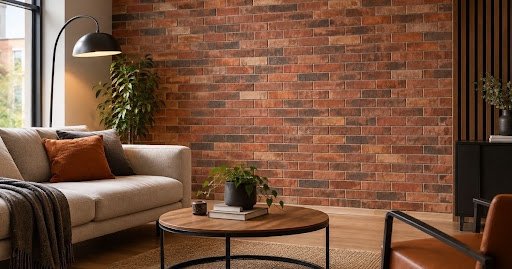
Plain plastered walls can leave even a well-designed room feeling unfinished. A brick feature wall brings texture, warmth and a sense of history that paint struggles to match, and brick tiles deliver that look without the depth, weight or structural work of a full brick skin. Homeowners, interior designers and developers now specify them in kitchens, living rooms, home offices and hospitality fit-outs across the country.
Brick tiles, also known as brick slips, are thin faces cut or formed from real clay bricks. Once fixed and pointed, they read as solid brickwork while taking up only a sliver of floor space. The right tile depends on the mood of the room, the light it receives and the age of the property, so it helps to know how each type behaves indoors.
5 Brick Tiles Worth Considering for Feature Walls
Each option below brings something different to an interior, from sharp modern lines to the soft, worn character of an older building.
1. Wirecut Slips for Clean, Modern Rooms
Slips cut from wirecut bricks have crisp rises, consistent sizing and a fine, even surface. Laid with a tight joint, they create a calm, ordered wall that suits minimalist kitchens, open-plan living spaces and contemporary offices. Darker blues and greys look striking against pale flooring, while lighter reds keep a room feeling open and bright.
Because each tile is so uniform, the bond pattern becomes part of the design. Stack bond forms a neat grid for a gallery-style finish, and a standard stretcher bond gives a quieter backdrop for shelving, artwork or a wall-mounted television. Smooth faces are also easy to wipe clean, which helps in busy kitchens and dining areas.
2. Matching Slips for Indoor and Outdoor Continuity
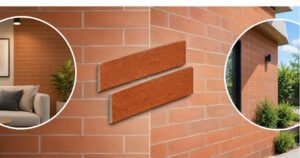
Rear extensions and garden rooms often look best when the brick outside carries straight through to the inside. Slips matched to the external facing brick make this possible, tying kitchen and garden together through large glazed doors and bifolds.
Many modern facing bricks are pinhole bricks, with small perforations running through the body. On a standard wall those holes stay hidden, and the same is true of slips, since only the face of the brick is used. A perforated facing brick specified for the exterior can often be supplied as a matching tile for the interior, with no visible difference in colour or finish. The result is one continuous material story.
3. Golden Buff Tiles for Light and Warmth
North-facing rooms and spaces with limited daylight benefit from a lighter brick. A golden buff brick tile bounces natural and artificial light back into the room, softening harsh shadows and giving the wall a sunny, honeyed glow from morning through to evening.
Buff tones pair well with oak joinery, brass fittings, natural stone worktops and plenty of indoor planting. They also work in smaller spaces, such as hallways, utility rooms and snugs, where a dark red feature wall could feel heavy or closed in. A blend with gentle colour variation keeps the surface lively across the whole wall, and a soft white or pale grey mortar lifts the overall effect even further.
4. Reclaimed-Style Tiles for Period Character
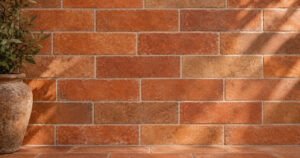
Loft conversions, Victorian terraces and barn renovations call for brick that looks as though it has always been there. Reclaimed-style tiles carry chipped edges, tumbled faces and mixed tones that recreate the look of salvaged brick without the cost and effort of sourcing, cleaning and cutting old stock.
They suit exposed chimney breasts, alcoves and staircase walls in older homes, where they sit naturally beside original period features such as cast iron fireplaces and timber beams. If the wall sits near a wood-burning stove, check heat clearances with the stove manufacturer first. A recessed, slightly rough joint helps sell the effect of weathered masonry and adds depth under low evening lighting.
5. Linear Tiles for a Statement Finish
Long, slim formats draw the eye horizontally and make a room feel wider than it really is. Linear brick tiles bring a refined, architectural feel to reception areas, restaurants, boutique hotels and high-end residential schemes, where the wall often becomes the first thing visitors notice.
Their elongated proportions put the joint lines on show, so mortar colour plays a bigger role here. A joint toned to the brick gives a seamless, monolithic look, and a contrasting joint sharpens every course. Washing the wall with a concealed LED strip from above or below picks out the texture of each tile and turns a plain run of brickwork into a lit centrepiece.
Finding the Right Brick Tile for Your Space
A brick tile feature wall can change the feel of a room in a way few other finishes can. Wire cut slips give a sharp, modern edge, matching slips link inside and out, golden buff tiles bring warmth to darker rooms, reclaimed-style tiles add period charm and linear formats make a bold statement. The best fit comes down to the space, the light and the look you want to live with.
Seeing samples in person is the surest way to judge colour and texture before you commit, and a mechanical fixing system gives a secure, lasting finish. With the right tile in place, a single wall can set the tone for the whole room.