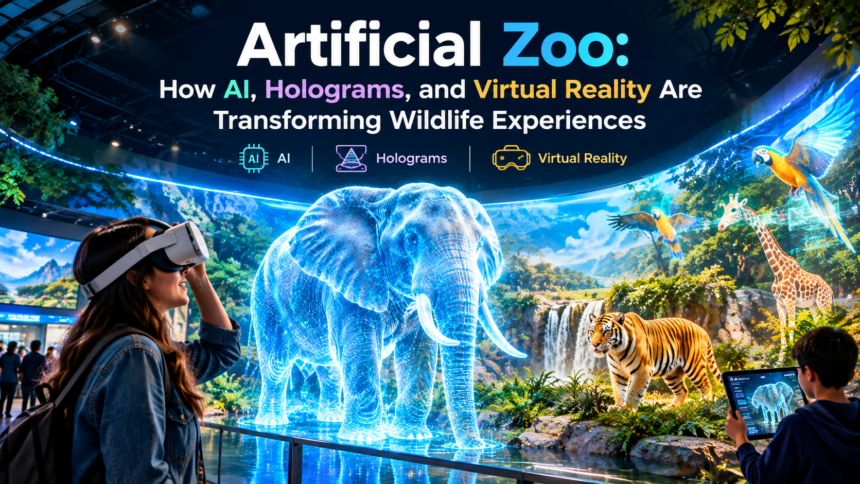
Wildlife experiences have traditionally depended on visiting zoos, wildlife parks, aquariums, or natural habitats to observe animals. However, advances in digital technology are creating new ways for people to explore the animal kingdom without always relying on live-animal exhibits. An artificial zoo represents this changing approach, combining immersive displays, robotic animals, holographic projections, and virtual environments to recreate wildlife experiences.
These attractions aim to make nature more accessible, interactive, and engaging for visitors of different ages. Instead of viewing animals exclusively through glass or physical barriers, guests may walk through a simulated rainforest, encounter a digitally recreated elephant, or explore an underwater environment filled with virtual marine life.
Artificial zoos also introduce important questions about education, animal welfare, conservation, and the relationship between technology and nature. Although they cannot reproduce every aspect of real wildlife, they offer an alternative way to experience animal behavior and understand environmental challenges.
Understanding how artificial zoos work, what technologies they use, and where their limitations lie can help visitors appreciate their potential as an emerging form of wildlife entertainment and education.
What Is an Artificial Zoo?
An artificial zoo is a wildlife-themed attraction that uses artificial representations of animals instead of relying entirely on living creatures. Depending on its design, it may feature holographic projections, digital animations, robotic animals, interactive screens, virtual reality experiences, or a combination of these technologies.
Some artificial zoos are designed as fully digital attractions, while others combine physical models and immersive technology. The purpose is to create an engaging environment in which visitors can observe animal representations, explore habitats, and learn about wildlife without necessarily encountering live animals.
For example, a visitor might see a digitally recreated lion moving through a simulated savanna or experience the appearance of a whale swimming overhead in an immersive underwater environment. Other installations may use robotic creatures that move their heads, walk, or respond to nearby visitors.
The term artificial zoo does not describe one standardized type of attraction. Different venues use different technologies, and the quality of the experience depends on their equipment, design, educational content, and storytelling.
Unlike a traditional zoo, an artificial zoo does not necessarily need animal enclosures, feeding areas, or specialized facilities for every species it represents. However, it still requires suitable exhibition spaces, reliable technology, maintenance, and knowledgeable staff to deliver a successful visitor experience.
How Does Artificial Zoo Technology Work?
Artificial zoos combine several technologies to create convincing representations of animals and their natural environments. Each technology contributes something different, from realistic movement to interactive learning.
Artificial Intelligence and Interactive Wildlife
Artificial intelligence can help make digital wildlife experiences more responsive and personalized. In a carefully designed installation, AI-powered systems may control virtual characters, recognize visitor interactions, adapt educational explanations, or answer questions about different species.
For example, a visitor exploring a digital rainforest might ask how a particular animal finds food. An AI-enabled educational guide could provide an explanation suited to the visitor’s age and knowledge level.
AI may also support interactive storytelling. Rather than following a fixed presentation, visitors could select different animals, explore their habitats, or discover how environmental changes affect their survival.
However, AI does not automatically make an artificial animal realistic. Accurate behavior depends on the quality of the underlying models, scientific information, and programming. If a digital animal displays incorrect movements or misleading ecological information, the experience could create misunderstandings instead of improving wildlife knowledge.
Developers can draw on research into animal behavior to create more convincing simulations. They should also distinguish scientifically supported information from creative elements introduced primarily for entertainment.
Holograms and Three-Dimensional Animal Displays
Holographic and hologram-style displays can create the impression that animals occupy the same space as visitors. Depending on the equipment, these experiences may use projection systems, optical techniques, transparent displays, or specialized augmented-reality technology.
Imagine entering a large exhibition room where a herd of elephants appears to move across a digital landscape. Visitors can observe the animals from different positions, while sound effects and environmental visuals help establish the atmosphere.
Three-dimensional presentations can make animal size, movement, and physical features easier to appreciate. A digital whale, for instance, can be presented at a scale that would be difficult to reproduce in a conventional indoor exhibit.
Nevertheless, not every attraction marketed as a hologram zoo uses true holography in the strict technical sense. Some rely on projected imagery or augmented reality to create a similar visual effect.
The distinction matters because the equipment influences image quality, viewing angles, interactivity, and the overall sense of immersion. Visitors should understand that these displays represent digital images rather than physically present animals.
Virtual Reality and Augmented Reality
Virtual reality allows visitors to enter computer-generated environments using compatible headsets or other immersive equipment. An artificial zoo could use VR to transport guests into a simulated African savanna, tropical rainforest, or underwater ecosystem.
Within the virtual environment, visitors might explore animal habitats, observe simulated behavior, or follow an educational journey through different ecosystems. Some experiences may include interactive activities that demonstrate how animals search for food, avoid predators, or respond to environmental changes.
Learn more about virtual reality (VR) and its role in creating computer-generated environments.
Augmented reality offers a different experience by placing digital elements over the visitor’s view of the real world. Using compatible devices, guests might see a virtual butterfly on a physical exhibit or view a digital animal standing within a recreated habitat.
Both technologies can support wildlife education, but they have different practical requirements. VR usually creates a more immersive, enclosed experience, whereas augmented reality can connect digital information with the surrounding physical environment.
Robotics and Animatronic Animals
Robotic and animatronic animals provide a physical presence that digital projections alone may not offer. These artificial creatures use mechanical components, motors, sensors, and programmed movements to imitate selected animal behaviors.
A robotic penguin might move its head, respond to a nearby visitor, or produce programmed sounds. A larger animatronic dinosaur or mammal could demonstrate walking movements and other carefully choreographed actions.
Such models can be useful when an attraction wants visitors to appreciate an animal’s physical scale without keeping a living specimen on display.
Their realism depends on engineering, movement design, materials, and maintenance. Mechanical animals may require frequent repairs, and repeated movements can become predictable. Even advanced animatronics cannot fully reproduce the spontaneous behavior of living creatures.
| 🔗 You may also like: |
| AI game development for personalized playeexpr eriences |
| Buy or build AI agents companies |
Why Are Artificial Zoos Becoming an Interesting Wildlife Alternative?
Artificial zoos offer several potential advantages for entertainment, education, and accessibility. Their value depends on how well each attraction combines technology with meaningful information.
Wildlife Experiences Without Live-Animal Exhibits
One potential advantage is the ability to present animal representations without requiring live animals to participate in the visitor experience.
Digital and robotic displays do not need to perform on demand, adapt to crowds, or remain visible throughout scheduled presentations. This can remove some practical pressures associated with maintaining live-animal exhibits.
However, an artificial zoo is not automatically an ethical or conservation-focused attraction. Its educational messages, business practices, energy use, and portrayal of wildlife still deserve consideration.
Visitors should also recognize that artificial experiences complement rather than replace the protection of real animals and their habitats.
Access to Animals From Different Environments
Artificial zoos can bring together representations of species that naturally live in very different parts of the world. Visitors may explore polar environments, tropical forests, deserts, and deep oceans within a single venue.
This approach can make wildlife experiences more convenient for families, school groups, and people who cannot easily travel to distant natural destinations.
Digital environments can also depict rare, nocturnal, or extinct species that visitors might never observe in person. A carefully developed simulation could demonstrate the size of a prehistoric animal or illustrate how a species’ habitat has changed over time.
The educational value depends on accuracy. Exhibits should explain when an animal is extinct, endangered, or represented through a reconstruction rather than implying that every digital scene reflects a real, currently observable encounter.
Flexible and Accessible Visitor Experiences
Traditional wildlife attractions often involve extensive outdoor walking, changing weather, and long distances between exhibits. Indoor artificial zoos can offer a different format, with shorter routes, controlled lighting, and opportunities to explore selected displays.
Some venues may provide seated experiences, adjustable sound levels, captions, audio descriptions, or alternative activities for visitors who cannot comfortably use headsets.
These features can make wildlife education more inclusive, although accessibility is not guaranteed. Dark environments, flashing visuals, loud sounds, crowded rooms, and motion-intensive simulations may create difficulties for some visitors.
Before booking, families and visitors with accessibility requirements should check the available facilities, age recommendations, and sensory information.
Artificial Zoo vs. Traditional Zoo
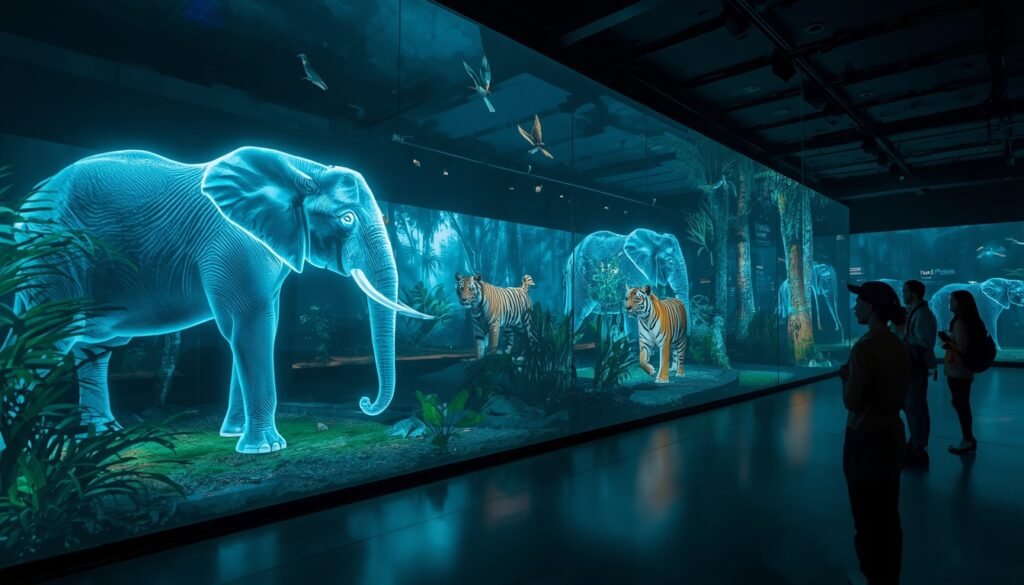
Artificial and traditional zoos provide different types of experiences. Understanding their strengths helps visitors decide what they want from a wildlife attraction.
| Feature | Artificial Zoo | Traditional Zoo |
| Animal representation | Digital, robotic, animatronic, or mixed | Primarily living animals |
| Visitor interaction | Often controlled through digital systems | Depends on the species and exhibit |
| Habitat experience | Computer-generated or constructed environments | Physical enclosures and habitats |
| Animal behavior | Programmed or simulated | Natural behavior influenced by the animal’s condition and environment |
| Education | Digital storytelling and interactive simulations | Observation, interpretation, and sometimes direct conservation programs |
| Operational needs | Equipment, software, displays, and maintenance | Animal care, veterinary services, habitats, and specialized staff |
| Conservation contribution | Depends on education and related initiatives | May include research, breeding, rescue, and conservation partnerships |
Neither model is automatically superior in every situation. Traditional zoos may support conservation research, veterinary care, rescue work, and public education, although their standards and practices vary. Artificial zoos can provide engaging alternatives without displaying live animals, but their contribution to conservation also depends on what they actually do.
For visitors interested in observing living animals, an artificial display cannot provide the same experience as watching a real animal behave spontaneously. For those interested in interactive simulations or technology-based learning, an artificial zoo may offer a compelling alternative.
| 🔗 You may also like: |
| Vidnoz review create stunning ai images and videos easily |
| Software discovery is broken |
Can Artificial Zoos Support Wildlife Conservation?
Artificial zoos can contribute to conservation awareness by explaining environmental challenges in ways that are visual, accessible, and interactive. Their potential is strongest when entertainment is connected to accurate information and practical conservation messages.
Making Environmental Problems Easier to Understand
Environmental issues can be difficult to visualize through text alone. Digital simulations can show how habitat loss affects animal populations, how pollution travels through marine environments, or how changing temperatures influence ecosystems.
For example, an interactive exhibit might allow visitors to compare a healthy forest with a fragmented habitat. As the landscape changes, the simulation could demonstrate how animals lose feeding areas, migration routes, or access to water.
These experiences can make complex ecological relationships easier to understand. They may also encourage visitors to ask questions about biodiversity and the effects of human activity.
However, simulations simplify reality. Their creators should explain the assumptions behind their models and avoid presenting illustrative scenarios as exact predictions.
Encouraging Responsible Wildlife Tourism
Wildlife tourism can support education and conservation, but some activities may disturb animals or create pressure on their natural behavior. Artificial experiences offer another way to introduce people to wildlife without requiring a physical encounter with a living animal.
A well-designed artificial zoo can explain responsible tourism practices, such as observing animals from a respectful distance, avoiding harmful interactions, and choosing reputable wildlife experiences.
It can also direct visitors toward legitimate conservation organizations, protected areas, and educational resources.
The important question is whether an attraction goes beyond displaying impressive images. A venue that explains real conservation challenges and encourages informed choices may offer greater educational value than one focused exclusively on spectacle.
Limitations of Digital Conservation Education
Seeing a virtual elephant does not provide the same experience as observing a living elephant in a natural environment. Digital representations cannot fully communicate an animal’s independent behavior, physical presence, or ecological relationships.
Artificial zoos also cannot replace protected habitats, field research, wildlife rescue facilities, or responsible animal-care programs.
Their most realistic role is as a complementary educational tool. They can introduce visitors to species and environmental challenges, while further learning and conservation action take place beyond the attraction.
What Should Visitors Expect During an Artificial Zoo Visit?
An artificial zoo visit may resemble a combination of a science museum, interactive exhibition, and immersive entertainment venue. The exact experience depends on the attraction’s technology and design.
Some venues organize their exhibits by habitat, allowing visitors to move from rainforests to deserts and oceans. Others build a guided narrative around a wildlife expedition, with digital animals appearing as the story progresses.
Interactive areas may let visitors select species, trigger animations, or explore educational information. More advanced installations can combine projected environments, spatial sound, physical models, and responsive digital effects.
Before visiting, check the venue’s official information to determine which technologies are actually available. Marketing images may show advanced features that are not included in every ticket or session.
Is an Artificial Zoo Suitable for Children?
Many artificial zoos are designed with families in mind, but suitability depends on the age of the child and the intensity of the experience.
Young children may enjoy colorful animals, animated environments, and simple interactive games. Older children may benefit more from simulations explaining food chains, animal adaptations, migration, and habitat conservation.
Parents should review minimum age requirements, headset policies, flashing-light warnings, and sound levels before booking. Some immersive displays can feel overwhelming to sensitive visitors.
The most effective family experiences balance entertainment with clear explanations. Asking children what they observed and how an animal might survive in the wild can turn a visit into a meaningful learning opportunity.
What Are the Main Challenges of Artificial Zoos?
Despite their potential, artificial zoos face technical, financial, and educational challenges that influence their long-term success.
High initial costs: Large projection systems, VR equipment, robotics, interactive software, and specialized exhibition spaces can require substantial investment. Smaller venues may struggle to maintain advanced technology while keeping admission affordable.
Ongoing maintenance: Displays can malfunction, sensors may need recalibration, and software can become outdated. Mechanical animals also require repairs and technical supervision.
Risk of inaccurate information: Digital animals may look convincing while displaying incorrect anatomy or behavior. Educational content should be reviewed by appropriate wildlife specialists and updated when necessary.
Limited realism: A programmed animal cannot fully reproduce the complexity and unpredictability of a living creature. Visitors may enjoy the simulation without developing an accurate understanding of animal behavior.
Accessibility concerns: Headsets, motion effects, sound, lighting, and crowded spaces can create barriers. Inclusive design needs to be considered from the beginning rather than added as an afterthought.
Environmental footprint: Artificial zoos use electricity and physical equipment, which may involve manufacturing, replacement, and electronic waste. Their environmental performance depends on energy efficiency, equipment lifespan, and responsible maintenance.
These challenges do not eliminate the value of artificial zoos. Instead, they show why thoughtful design, accurate science, accessible experiences, and transparent communication matter.
The Future of Artificial Zoos
Artificial zoo technology is likely to continue developing as immersive displays, robotics, and interactive software become more sophisticated. Future attractions may combine several systems to create environments that respond more naturally to visitor movement and questions.
AI-assisted guides could explain animal behavior in different languages, while augmented reality could add digital wildlife to physical landscapes. More advanced simulations may allow visitors to explore ecosystems at different times of day or observe how environmental changes influence species.
Developers may also create personalized learning paths for school groups, families, and visitors with specific interests. A child interested in marine animals could follow an ocean-focused journey, while another visitor might explore predators, pollinators, or endangered species.
However, technological advancement alone will not determine whether artificial zoos succeed. Visitors will continue to value meaningful experiences, trustworthy information, accessibility, and thoughtful storytelling.
The strongest attractions will likely be those that use technology to improve understanding rather than simply produce impressive visual effects.
Final Thoughts
Artificial zoos are creating new possibilities for wildlife entertainment by combining AI, holographic displays, robotics, and virtual environments. They can introduce visitors to animals from distant habitats, support interactive learning, and provide experiences that do not depend entirely on live-animal exhibits.
Their greatest strength lies in making wildlife information engaging and accessible. Through realistic simulations and carefully designed educational activities, visitors can explore animal adaptations, discover environmental challenges, and learn why biodiversity matters.
Nevertheless, artificial zoos have clear limitations. Digital representations cannot replace living wildlife, protected habitats, scientific research, or practical conservation work. Their educational and environmental value depends on the accuracy of their content and the actions they encourage.
For travelers, families, and technology enthusiasts, an artificial zoo can offer a fresh way to explore the natural world. When entertainment is balanced with scientific accuracy and responsible messaging, these attractions can help transform curiosity about digital animals into a deeper interest in real wildlife and its protection.