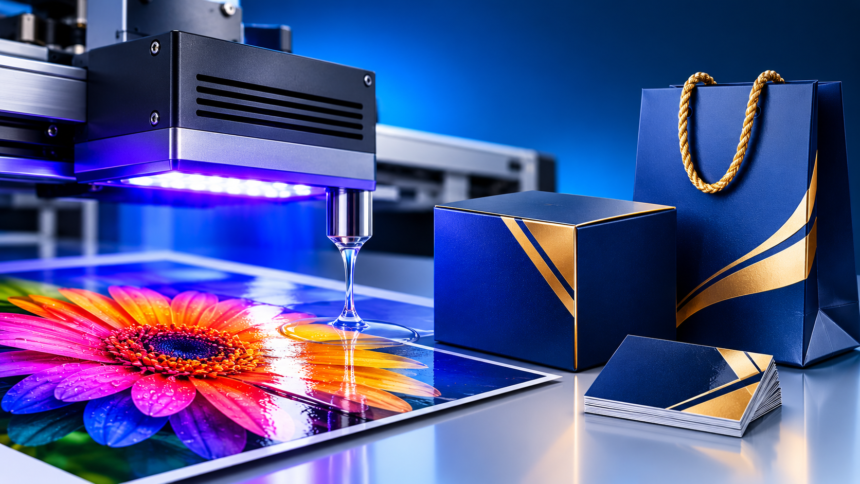
Uvlack is a term associated with UV lacquer, a specialized coating technology used to improve the appearance, durability, and finishing quality of printed materials and packaging products. It is closely related to the German expression UV-Lack, which describes a lacquer or varnish that hardens when exposed to ultraviolet (UV) light.
In modern printing and packaging, appearance plays an important role in how customers recognize and evaluate products. A well-designed package needs more than attractive colours and graphics. Its surface quality, texture, shine, and resistance to everyday handling also influence the final presentation. This is where UV lacquer technology becomes useful.
Unlike many traditional coatings that require time to dry through evaporation, UV-curable coatings harden through a light-activated chemical reaction. This allows printing businesses to produce finished materials more quickly while achieving different decorative effects, including glossy, matte, satin, and textured surfaces.
From business cards and magazine covers to retail cartons and luxury product boxes, UV coating offers several practical finishing possibilities. Understanding how Uvlack works, where it is used, and what makes it different from conventional varnishes helps explain its growing importance in commercial printing and packaging.
What Is Uvlack?
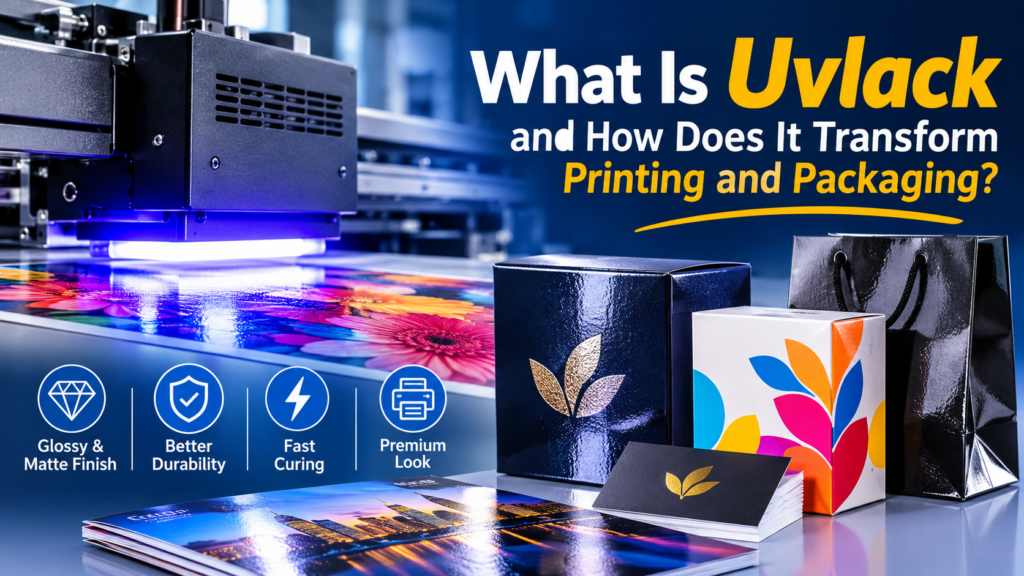
Uvlack is commonly associated with UV lacquer or UV-curable coating technology. The term combines the abbreviation UV, meaning ultraviolet, with the German word Lack, which can refer to lacquer, varnish, or coating.
In the printing industry, UV lacquer describes a liquid finishing material that becomes solid after exposure to an appropriate ultraviolet light source. The process creates a thin film over the printed surface, improving its appearance and potentially providing additional protection against scuffing, rubbing, and everyday handling.
It is important to understand that Uvlack is not a universally standardized name for one particular chemical product. Different manufacturers produce UV-curable coatings with different ingredients and performance characteristics. Therefore, the term is best understood as a keyword connected to the established technology of UV lacquer.
Quick Information About Uvlack
| Feature | Description |
|---|---|
| Meaning | Term associated with UV lacquer |
| UV full form | Ultraviolet |
| Related term | UV-Lack |
| Coating form | Liquid before curing |
| Working principle | Photochemical reaction |
| Main industries | Printing and packaging |
| Common finishes | Gloss, matte, satin, textured |
| Application methods | Rollers, spraying, and coating systems |
| Main advantage | Rapid curing |
| Common materials | Paper, cardboard, wood, and selected plastics |
| Primary purpose | Decorative finishing and surface protection |
How Does Uvlack Transform Printing and Packaging?
UV lacquer transforms printed materials by adding a finishing layer that changes how a surface looks and performs. Instead of leaving printed paper or packaging with its original appearance, manufacturers can apply a specialized coating to achieve a more refined finish.
For example, a standard cardboard product box may have a printed design with ordinary surface finishing. Applying a suitable glossy UV coating can give the box a more reflective appearance and help protect its printed surface from everyday scuffing.
The technology also makes it possible to highlight particular design elements. A company can apply a shiny coating to its logo while keeping the remaining packaging matte. This contrast creates a distinctive visual effect without changing the original printed artwork.
In commercial production, UV curing also reduces the waiting time associated with many conventional drying processes. Once the coating has received the required UV exposure, the material can move to suitable subsequent production stages.
These characteristics make UV lacquer useful for businesses that want attractive packaging, consistent finishing, and efficient manufacturing processes.
| 🔗 You may also like: |
| Expanded polystyrene packaging protect products during transport |
| 4 low cost ways to make a small shop look premium |
How Does the Uvlack UV Curing Process Work?
The main feature of Uvlack technology is its ability to transform a liquid coating into a solid film through ultraviolet exposure. This process is known as UV curing or photopolymerization.
Unlike conventional drying, which often depends on water or solvent evaporation, UV curing uses light energy to activate reactive ingredients within the coating.
The process generally involves the following stages.
1. Surface Preparation
The first step is preparing the material that will receive the coating. Dust, oil, fingerprints, and other contaminants can interfere with adhesion and affect the final appearance.
For printing applications, the ink and substrate must also be compatible with the selected UV lacquer. Proper preparation helps produce a smooth and consistent finish.
2. Applying the Liquid Coating
The UV lacquer is applied to the surface using suitable equipment. Depending on the production process, manufacturers may use rollers, spray systems, or specialized coating machines.
The coating needs to be distributed evenly to prevent unwanted variations in thickness, shine, and appearance.
3. Exposure to Ultraviolet Light
After application, the coated material passes through a UV curing system. The ultraviolet light activates special chemical ingredients called photoinitiators.
These ingredients absorb the appropriate light energy and generate reactive particles that initiate the curing reaction.
4. Chemical Reaction and Hardening
The activated ingredients cause reactive molecules within the coating to connect and form a solid polymer network.
As this reaction progresses, the liquid coating hardens into a stable film. The finished layer can provide the selected decorative appearance and surface properties.
5. Quality Inspection
The final stage involves checking the finished product. Manufacturers may inspect coating consistency, adhesion, gloss, surface texture, and curing quality.
The exact curing requirements depend on the formulation, coating thickness, UV wavelength, light intensity, and production speed. Incorrect settings can leave the coating partially uncured.
What Is Uvlack Made Of?
UV lacquer contains several ingredients that work together to create the desired coating and curing performance. Although formulations differ between manufacturers, most UV-curable systems contain a combination of reactive resins, monomers, photoinitiators, and additives.
Each ingredient has a particular purpose.
Oligomers
Oligomers form an important part of the coating’s structure. They influence the hardness, flexibility, durability, and chemical resistance of the finished film.
Manufacturers select different oligomer chemistries depending on whether the coating is intended for paper, packaging, furniture, or industrial surfaces.
Reactive Monomers
Reactive monomers help control the thickness and flow of the liquid coating. They also participate in the curing reaction and become part of the final polymer structure.
Their selection can influence how quickly the coating cures and how flexible or hard the resulting surface becomes.
Photoinitiators
Photoinitiators are among the most important ingredients in UV lacquer technology.
They absorb ultraviolet energy and generate reactive species that initiate polymerization. Without a suitable photoinitiator system, the coating cannot cure properly under its intended light source.
Additives and Other Ingredients
Additional ingredients help manufacturers control the coating’s appearance and application characteristics.
These may include:
-
Flow-control agents for smoother application.
-
Matting agents for reducing surface shine.
-
Stabilizers for formulation performance.
-
Pigments for coloured coatings.
-
Slip additives for improving surface characteristics.
The final formula depends on the intended application and required performance.
| 🔗 You may also like: |
| WhatsOnTech Understanding Technology in a Changing Digital World |
| TR Electro: Inside Israel’s Audio, Video, DJ, and Smart Home |
Different Types of Uvlack Finishes
UV lacquer is available in different finishes, allowing printing and packaging businesses to create surfaces that match their branding and design requirements.
The most appropriate finish depends on the printed material, desired appearance, and intended use.
Gloss UV Coating
Gloss UV coating creates a shiny, reflective surface that can make printed colours and images appear more prominent. It is commonly used on product boxes, business cards, brochures, and promotional materials.
This finish is particularly useful when a brand wants its packaging to have a bright and polished appearance.
Matte UV Coating
Matte UV coating creates a smooth surface with limited reflection. It provides a softer, understated appearance compared with a high-gloss finish.
Luxury packaging, corporate brochures, and premium product boxes often use matte finishing when a less reflective design is preferred.
Satin UV Coating
Satin UV coating offers a balance between glossy and matte finishes. It provides a subtle sheen without the strong reflection associated with high-gloss coatings.
This option works well for printed materials that require a refined appearance without excessive shine.
Textured UV Coating
Some specialized UV coatings create textured or raised effects. These finishes can add a tactile element to packaging and printed designs.
For example, a manufacturer may use a raised coating on a company logo or decorative pattern to make selected areas more noticeable when customers touch the packaging.
Spot UV and Flood UV: What Is the Difference?
Spot UV and Flood UV are two common application techniques used in commercial printing. Both involve UV-curable coatings, but they differ in how much of the printed surface receives the coating.
What Is Spot UV?
Spot UV is a finishing technique in which UV lacquer is applied only to selected areas of a printed design.
Instead of coating the entire surface, manufacturers use it to highlight specific elements such as:
-
Company logos and brand names.
-
Product images and illustrations.
-
Headings and important text.
-
Decorative patterns and graphic elements.
-
Selected areas of business cards and brochures.
For example, a black business card may have a matte background with a glossy company logo. The difference in reflection makes the logo more noticeable.
Spot UV is especially effective when used with matte lamination because the contrast between the two finishes creates a distinctive appearance.
What Is Flood UV?
Flood UV involves applying a UV coating across the entire intended surface of a printed material.
Unlike Spot UV, which focuses on selected details, Flood UV provides a consistent finish across the coated area.
It is commonly used for:
-
Magazine and catalogue covers.
-
Product packaging cartons.
-
Promotional brochures.
-
Printed presentation folders.
-
Business cards and advertising materials.
Flood UV can be glossy or matte, depending on the selected formulation.
Spot UV vs Flood UV
| Feature | Spot UV | Flood UV |
|---|---|---|
| Coverage | Selected areas | Entire coated surface |
| Main purpose | Highlight design elements | Provide an overall finish |
| Appearance | Selective contrast | Consistent appearance |
| Common use | Logos and headings | Covers and packaging |
| Design approach | Decorative emphasis | Full-surface finishing |
The choice depends on the design objective. Spot UV is useful when a business wants to emphasize particular details, while Flood UV is suitable when the entire printed surface needs a consistent finish.
Major Applications of Uvlack in Printing and Packaging
UV lacquer technology has applications across several commercial industries. Its ability to produce different finishes and cure quickly makes it suitable for various printed and manufactured products.
1. Product Packaging
Product packaging is one of the most recognizable applications of UV coating.
Manufacturers apply suitable UV lacquer to cardboard boxes, retail cartons, cosmetic packaging, and promotional packaging to improve their appearance and surface properties.
A glossy coating can make colourful packaging more noticeable, while a matte finish creates a more subtle presentation.
For businesses selling products in competitive retail markets, these finishing choices can help create a consistent brand identity.
2. Business Cards
Business cards are another common application of UV finishing.
A business may choose a glossy coating across the entire card or use Spot UV to highlight its logo, company name, or contact information.
The result can give an ordinary printed card a more professional appearance. However, the coating should be selected carefully if the business needs to write on the finished surface.
3. Brochures and Catalogues
Brochures and catalogues are frequently handled by customers, employees, and business partners.
A suitable UV coating can improve their presentation and help reduce surface scuffing during everyday use.
Gloss finishes are useful for colourful promotional materials, while matte finishes can complement professional and corporate designs.
4. Magazine and Book Covers
Publishing companies use UV finishing to improve the appearance of magazine covers, book jackets, and printed promotional materials.
Spot UV can highlight a title or image, creating a visual contrast against the remaining cover.
Flood UV, meanwhile, provides an overall coating across the intended surface.
5. Labels and Retail Cartons
Labels and retail cartons often require finishing that supports product presentation and routine handling.
UV coatings can be used on suitable printed labels and packaging materials to improve their appearance and surface durability.
However, manufacturers must consider the label’s intended environment, adhesive system, substrate, and any applicable product-contact requirements.
6. Furniture and Wood Finishing
UV-curable coatings are not limited to the printing industry. Specialized formulations are also used in furniture manufacturing and wood finishing.
They can be applied to suitable wooden panels, cabinets, flooring, and decorative furniture components.
Rapid curing helps manufacturers process finished parts efficiently. The formulation must be appropriate for the particular wood surface and expected use.
Main Benefits of Uvlack for Printing Businesses
UV lacquer offers several practical benefits that make it an attractive finishing option for commercial printing and packaging companies.
Faster Production
One of the most important advantages is rapid curing. A compatible UV coating can harden quickly under suitable light conditions.
This reduces the waiting time associated with many conventional drying processes and allows materials to move to subsequent production stages sooner.
Improved Visual Appearance
UV coatings are available in several finishes, including gloss, matte, satin, and textured options.
These choices allow businesses to create different visual effects without changing the original printed design.
Better Surface Resistance
A properly formulated and cured UV coating can improve resistance to everyday rubbing, scuffing, and certain chemicals.
This is useful for printed materials that experience regular handling, although the actual level of protection varies by product.
Greater Design Flexibility
Spot UV and specialized textured coatings give designers additional ways to highlight important elements.
A company can emphasize its logo, product name, or decorative artwork while maintaining a different finish across the rest of the packaging.
Production Efficiency
Because UV curing does not depend primarily on solvent or water evaporation, many UV coating systems can support faster production workflows.
This can be valuable for printing facilities managing large quantities of packaging and promotional materials.
| 🔗 You may also like: |
| Cooling tower water treatment managing legionella risk in humid climates |
| Software discovery is broken |
Uvlack vs Traditional Varnish
UV lacquer and traditional varnish both provide surface finishing, but their curing methods are different.
Traditional water-based or solvent-based varnishes generally harden as water or solvents evaporate. Other conventional coatings may cure through different chemical reactions.
UV lacquer uses ultraviolet energy to initiate a photochemical reaction that forms a solid coating.
| Comparison | UV Lacquer | Traditional Varnish |
|---|---|---|
| Curing method | UV-activated chemical reaction | Often evaporation or chemical curing |
| Curing speed | Usually very fast | Often requires more drying time |
| Equipment | Requires compatible UV system | Depends on the varnish |
| Finishes | Gloss, matte, satin, textured | Depends on formulation |
| Production | Suitable for rapid production lines | Suitable for various production scales |
| Environmental profile | Can reduce solvent-related emissions | Varies by formulation |
Neither option is automatically better for every project. The right choice depends on the substrate, finishing requirements, production equipment, budget, and environmental considerations.
Limitations and Challenges of UV Lacquer Technology
Although UV lacquer offers several advantages, it also has limitations that printing businesses should understand before investing in the technology.
Initial Equipment Costs
Professional UV coating systems require specialized curing equipment, application machinery, and appropriate safety controls.
For smaller printing businesses, the initial investment may be higher than using conventional finishing methods.
Material Compatibility
Not every coating works with every material. Certain plastics, papers, inks, and other surfaces may require specialized formulations or preparation.
Testing compatibility before starting large production runs can help prevent adhesion problems and wasted materials.
Incomplete Curing
If the UV light does not provide sufficient energy, the coating may remain partially uncured.
This can happen because of incorrect lamp settings, excessive coating thickness, unsuitable wavelengths, or excessive production speed.
Surface Flexibility
Some UV coatings create relatively hard films. Depending on their formulation, these films may crack when applied to materials that undergo significant bending or folding.
Manufacturers should select coatings designed for the flexibility requirements of the finished product.
Safety and Environmental Considerations
Safety is an important part of UV lacquer production. Although fully cured coatings are generally more stable than their uncured formulations, the chemicals used during manufacturing and application require appropriate handling.
Uncured UV coatings may contain reactive ingredients that irritate the skin or cause allergic sensitization in some individuals.
Businesses should follow these precautions:
-
Wear suitable protective gloves and eye protection.
-
Avoid direct contact with uncured coating materials.
-
Maintain appropriate workplace ventilation.
-
Use properly shielded UV curing equipment.
-
Follow the manufacturer’s safety data sheet.
-
Store and dispose of coating materials according to product instructions.
UV radiation itself can also damage the eyes and skin. Industrial curing equipment should therefore include appropriate shielding, protective covers, and safety controls.
From an environmental perspective, some UV-curable coatings contain little or no added solvent, potentially reducing solvent-related emissions compared with certain traditional coating systems.
However, UV coatings are not automatically environmentally harmless. Their ingredients, energy requirements, manufacturing processes, and waste management practices all matter.
How to Choose the Right Uvlack Coating
Selecting the correct UV lacquer is important for achieving a consistent finish and avoiding production problems.
Different products are developed for different surfaces and applications. A coating designed for printed cardboard should not automatically be used on plastic, furniture, or metal.
Consider the following factors before selecting a coating.
1. Identify the Surface Material: Determine whether the coating will be applied to paper, cardboard, wood, plastic, or another substrate.
2. Select the Desired Finish: Decide whether your project requires a glossy, matte, satin, or textured appearance.
3. Check Material Compatibility: Review the manufacturer’s product specifications to confirm that the coating is suitable for the intended surface and printing ink.
4. Consider Curing Equipment: Make sure the coating is compatible with the available UV lamp or LED curing system.
5. Evaluate Performance Requirements: Consider adhesion, flexibility, scuff resistance, chemical resistance, and other properties relevant to the finished product.
6. Review Safety Information: Read the technical data sheet and safety data sheet before purchasing or using the product.
7. Test Before Full Production: Apply the coating to a sample and evaluate its appearance, adhesion, and curing performance.
These steps help businesses choose a suitable finishing solution while reducing unnecessary production costs.
The Future of Uvlack in Printing and Packaging
UV-curable coating technology continues to develop as manufacturers look for improved production efficiency, better surface performance, and more flexible finishing options.
One important development is UV LED curing. Unlike conventional mercury-based UV lamps, LED systems use light-emitting diodes to deliver ultraviolet energy within specific wavelength ranges.
Depending on the equipment and formulation, UV LED systems can offer advantages such as lower heat output, instant switching, and longer operating life.
Another area of development involves improved coating formulations. Manufacturers continue to work on products that provide better adhesion, flexibility, surface protection, and compatibility with different materials.
Sustainability is also influencing the development of printing and packaging materials. Businesses are increasingly considering coating composition, energy consumption, recycling compatibility, and waste management when selecting finishing methods.
These developments demonstrate how established UV lacquer technology is evolving to meet changing manufacturing requirements.
Conclusion
Uvlack is best understood as a term associated with UV lacquer and ultraviolet-curable coating technology. Its importance in printing and packaging comes from its ability to transform a liquid coating into a solid finishing layer through exposure to suitable UV light.
The technology offers several useful possibilities, including glossy and matte finishes, selective Spot UV applications, and full-surface Flood UV coatings. These methods help businesses improve the presentation of packaging, brochures, business cards, magazine covers, and other printed materials.
Its rapid curing process can also support efficient commercial production when the correct coating and equipment are used.
However, achieving reliable results requires proper material selection, surface preparation, curing conditions, and safety procedures. UV lacquer is not suitable for every material or application, so manufacturers should always check product specifications before using it.
As printing and packaging requirements continue to evolve, UV-curable coatings remain an important finishing option for businesses seeking attractive surfaces and efficient production processes.
FAQs
What is Uvlack used for?
Uvlack is associated with UV lacquer, which is used to improve the appearance and surface properties of printed materials and manufactured products. Common applications include product packaging, business cards, brochures, magazine covers, labels, and suitable furniture components.
How does Uvlack work?
Uvlack-related coatings work through ultraviolet curing. A liquid coating is applied to a suitable surface and exposed to UV light. Photoinitiators absorb the light energy and initiate a chemical reaction that transforms the liquid into a solid film.
What is the difference between Spot UV and Flood UV?
Spot UV applies coating to selected areas, such as logos, headings, and decorative elements. Flood UV covers the entire intended surface with a consistent coating. Spot UV emphasizes design details, while Flood UV provides an overall finish.
Is Uvlack waterproof?
Some UV-curable coatings offer moisture resistance, but not every UV lacquer is completely waterproof. The level of protection depends on the coating formulation, application, curing conditions, and underlying material.
Does Uvlack improve packaging durability?
A suitable and properly cured UV coating can improve resistance to ordinary scuffing, rubbing, and certain environmental conditions. However, it does not make every type of packaging resistant to all forms of damage.