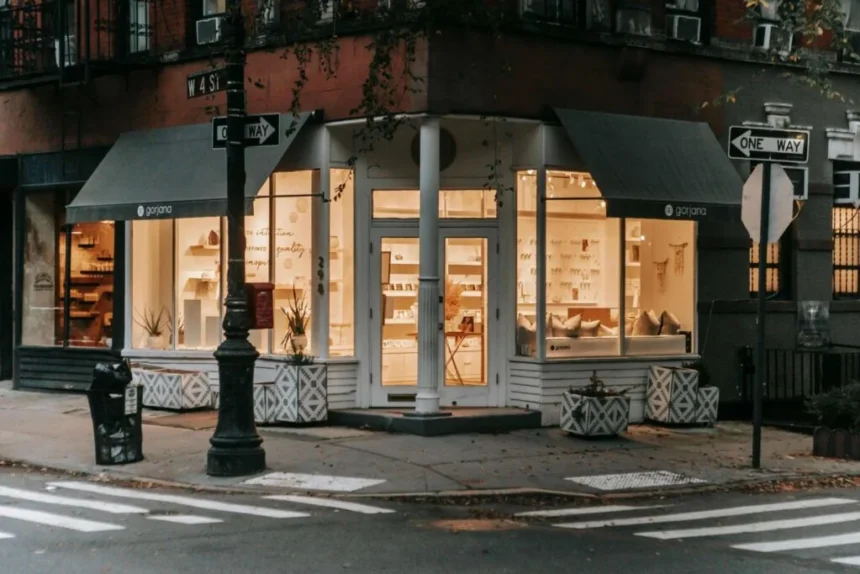
“Premium” sounds pricey. You think of marble counters and designer lighting. Maybe a refit that wipes out a year’s profit in one go. Most customers, though, couldn’t explain what makes a shop feel high-end if you asked them. They just know, and they usually know within a few seconds of coming through the door.
If your margins are tight, that’s good news. Much of that impression comes from small choices made on purpose. Not from big spending. Get a handful of noticeable things right, tidy up the details, and the shop starts to look like it cost a great deal more than it did.
1. Start with What Customers Notice First
The selling starts on the pavement. Your shopfront is making its case before anyone’s hand reaches the door, and it isn’t always making a good one. A window crammed with stock, a sign that’s faded, paint coming away in strips. People take that to mean the business has stopped caring. You could argue that’s unfair. They’ll think it all the same.
Fixing it doesn’t have to cost much:
- Clean the windows and doorstep more often than seems strictly necessary
- Simplify the window display, so a few products are shown properly rather than everything you stock
- Check your signage can actually be read from across the street
- Brighten the entrance, because a gloomy doorway can make a perfectly good shop look closed
There’s no need to hire a designer. Mostly you need fresh eyes. Step outside for a minute and look at the place as if you’d never seen it before.
2. Make the Space Feel More Considered
Clutter makes a shop look cheap faster than just about anything else. Fill every surface, and nothing gets noticed. Customers end up unsure where to look first.
So give your products a bit of space. With fewer items on a shelf, each one tends to look more valuable. High-end retailers know this perfectly well, which is the whole reason they do it. Group things in a way that’s logical, by type, colour, or use, and keep that going right through the shop.
Sightlines are worth a thought as well. When someone can see from the front to the back without tall displays blocking the view, the shop feels calmer, and browsing gets easier. Matching shelving helps too. That doesn’t mean ripping it all out. One colour of paint can make a mismatched collection of units look like they belong together, and it often works better than you’d expect.
3. Upgrade the Details That Signal Quality
Small things often do more than big ones. Customers clock them even when they couldn’t tell you afterwards what they clocked.
Your team is a sensible starting point. Uniforms aren’t needed. A consistent look is, or at least it helps a lot, and plain tops in the same colour or a simple apron would do the job. Packaging is another quick win. A branded label stuck on a plain paper bag costs pennies, and it looks far better than a flimsy carrier.
Next, consider the things people physically handle. Handwritten price tags can look charming. They can also look scruffy, and which way they go depends largely on the handwriting. A wobbly door handle, a sticky counter, a receipt that tears as you hand it over. Each one takes a little off the impression you’ve been working on.
It’s also worth treating card machines as part of a shop’s branding. The payment point is often the very last thing a customer touches before leaving. Put a clean, modern terminal on a tidy counter, and the visit ends on a good note. A battered one held together with tape rather spoils the effect.
4. Create a More Thoughtful Customer Experience
How the shop feels counts for as much as how it looks. A friendly hello when someone comes in, without a sales pitch hiding behind it, puts people at ease straight away.
Then make life easy for them. With clear prices, nobody has to ask awkward questions. Simple signs mean people can find what they came for rather than wandering round in circles. Checkout should be quick but never rushed, without any scrabbling for bags or searching under the counter for a pen.
Running through all of this is a sort of quiet confidence. Premium shops rarely push. They leave the products and the service to do the talking.
All in All
None of this needs a big budget. Begin with whatever customers see first and move inward from there, tackling the changes that are most visible and cheapest along the way. It won’t happen overnight. Still, a bit of care and clarity will do more for your shop than an expensive refit ever would.