Introduction
Packaging is not simply an outer layer placed around a product before it reaches the customer. For many businesses, it is an important part of the product itself. The right packaging can prevent breakage, reduce movement inside a box, simplify handling and help products arrive in the same condition in which they left the warehouse.
This is where Expanded Polystyrene packaging can become a useful solution. Lightweight yet capable of providing cushioning, expanded polystyrene can be shaped around different products and used for both standard and specially designed applications. It is particularly useful when a product needs protection from knocks, pressure and unwanted movement during transportation.
Rather than choosing packaging based only on appearance or price, businesses should consider the shape, weight, fragility and transportation conditions of their products. Expanded polystyrene offers flexibility in this respect because it can be supplied in different forms and tailored to individual requirements.
What Is Expanded Polystyrene Packaging?
Expanded polystyrene, commonly known as EPS, is a lightweight material made by expanding polystyrene beads. The resulting structure contains numerous small air pockets, giving the material its characteristic combination of low weight and cushioning ability.
For packaging applications, this material can be converted into inserts, protective sections, blocks, corners and other shapes designed to fit inside cartons or around individual products.
One of its most useful characteristics is its ability to be shaped for a particular application. A business does not necessarily have to rely on a one-size-fits-all insert. Packaging can instead be designed around the dimensions and vulnerable areas of a product.
For companies handling unusual, delicate or difficult-to-package items, this adaptability can make a considerable difference.
Why Product Shape Matters When Choosing Protective Packaging
Two products with the same weight may require completely different packaging.
A compact electronic component may need protection around its corners, while a larger manufactured item could require support underneath and between several sections. A fragile product may also need internal cushioning to prevent it from hitting the sides of its carton.
This is why packaging design should begin with the product rather than the box.
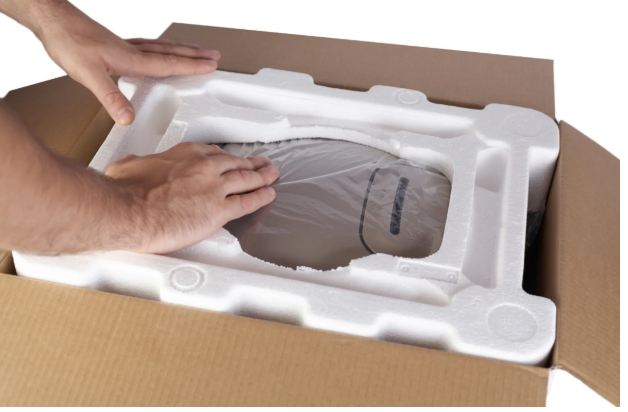
With Expanded Polystyrene packaging, protective sections can be developed according to the requirements of the item. Standard designs may be suitable for commonly packaged products, while bespoke designs can provide a closer fit where additional protection is required.
A correctly fitted insert can help prevent excessive movement inside the carton. This can be especially valuable when products are transported through several stages of handling, loading and delivery.
Expanded Polystyrene Blocks for Flexible Protection
One particularly practical format is Expanded polystyrene blocks These blocks can be used as supporting pieces, spacers or protective sections depending on the application.
For example, blocks may be positioned between a product and the walls of a carton to create a protective buffer. They can also be used beneath heavier products to provide support or around particular areas that are more vulnerable to impact.
Their simple form makes them useful in applications where a complicated moulded insert is unnecessary.
Blocks can also be incorporated into a wider packaging design. Several pieces can work together to hold an item securely while leaving enough space for the outer carton and other packaging components.
The important point is that protective packaging does not always need to be complicated. Sometimes strategically positioned pieces of material can provide the support a product actually needs.
Bespoke Packaging or Standard Designs?
Businesses often face a choice between using an existing packaging design and developing something specifically for their product.
Standard Packaging
Standard designs can be appropriate when the product has common dimensions and does not require unusual protection. They can simplify purchasing and make packing operations straightforward.
For frequently shipped products with predictable dimensions, an established design may be all that is required.
Bespoke Packaging
Bespoke packaging becomes more useful when a product has unusual dimensions, delicate components or specific areas that need additional support.
A tailored design can take into account the product’s length, width, height and shape. It can also be developed around components that should not experience direct contact with the outer carton.
An important advantage of a tailored approach is that businesses can test the proposed design before committing to a large production run. Samples can help identify areas where the product moves too much or where additional support may be needed.
How the Design Process Can Save Time
Packaging development can sometimes become a lengthy process, particularly when specialist tooling is required. However, some EPS packaging applications can be developed without traditional tooling, allowing production to move forward quickly when the design is ready.
Computer-controlled cutting methods, including CNC-based processes where appropriate, can help create packaging shapes according to a digital design.
This can be particularly useful for businesses that need packaging for a new product and do not want to wait through a lengthy tooling process before testing the concept.
Samples are also valuable because they turn a packaging idea into something that can be physically tested. A product can be placed inside the sample, the fit can be checked and adjustments can be made before production begins.
Benefits of Expanded Polystyrene Packaging
There are several practical reasons why businesses consider EPS when developing protective packaging.
1. Lightweight Construction
Expanded polystyrene is known for being lightweight. This can make packaging easier for workers to handle and may help businesses manage the overall weight of packaged shipments.
When large numbers of products are packed every day, even small differences in packaging weight can become relevant to handling and logistics.
2. Impact Protection
The cellular structure of EPS allows it to provide cushioning around products. Properly designed inserts can absorb some of the forces associated with everyday handling and help separate a product from hard external surfaces.
The level of protection depends on the design, density, product weight and transportation conditions, so packaging should be selected according to the actual application.
3. Customisable Shapes
One of the biggest practical benefits is the ability to create different shapes. Packaging can be designed to accommodate corners, curves, protrusions and other product features.
This makes EPS suitable for products that cannot be safely secured with a simple sheet of packaging material.
4. Product Stability
A protective insert is not only there to absorb impact. It can also help keep the product in position.
When an item moves around inside a box, repeated contact with the carton can increase the risk of cosmetic or physical damage. Properly positioned Expanded polystyrene blocks or inserts can reduce unnecessary movement.
5. Fast Development for Certain Applications
Where packaging can be produced without dedicated tooling, development may be more straightforward. This can help businesses test new packaging concepts without unnecessarily complicating the early design stage.
Where Can EPS Packaging Be Used?
The suitability of EPS depends on the product and its protection requirements, but its versatility allows it to be considered across a wide range of packaging applications.
It can be used as internal protection for manufactured goods, components, equipment and other products that need separation from the outer carton.
Businesses can also combine EPS with other packaging materials. For example, an outer cardboard carton can provide the overall shipping structure while EPS components provide internal support and cushioning.
This combination creates a packaging system in which each material performs a different role.
Making Packaging More Efficient
Good protective packaging should provide enough protection without becoming unnecessarily complicated.
Using too little protection can increase the possibility of product damage. On the other hand, using excessive packaging can consume additional materials, increase packing time and take up more storage space.
A well-designed EPS solution aims to balance these considerations.
The starting point should be understanding how the product is handled. Consider where it is most vulnerable, how it is positioned inside the carton and what types of impact it could experience during transportation.
From there, packaging designers can determine whether standard components, Expanded polystyrene blocks, custom inserts or another configuration would be appropriate.
Conclusion
Protective packaging works best when it is designed around the real needs of the product. Instead of selecting a box and filling the empty space with generic materials, businesses can consider how the item needs to be supported, separated and protected throughout its journey.
Expanded Polystyrene packaging offers a practical combination of lightweight construction, cushioning and design flexibility. It can be supplied in standard formats or developed around the dimensions of an individual product, making it useful for applications where a closer fit is important.
From simple Expanded polystyrene blocks to customised internal inserts, EPS can form an important part of a carefully planned packaging system. For businesses dealing with fragile, irregular or valuable products, the right design can make packing more organised while helping reduce the risk of damage during handling and transportation.
Ultimately, effective packaging is not about using the most material possible. It is about using the right protection in the right places so that products can move from warehouse to customer with greater security and efficiency.