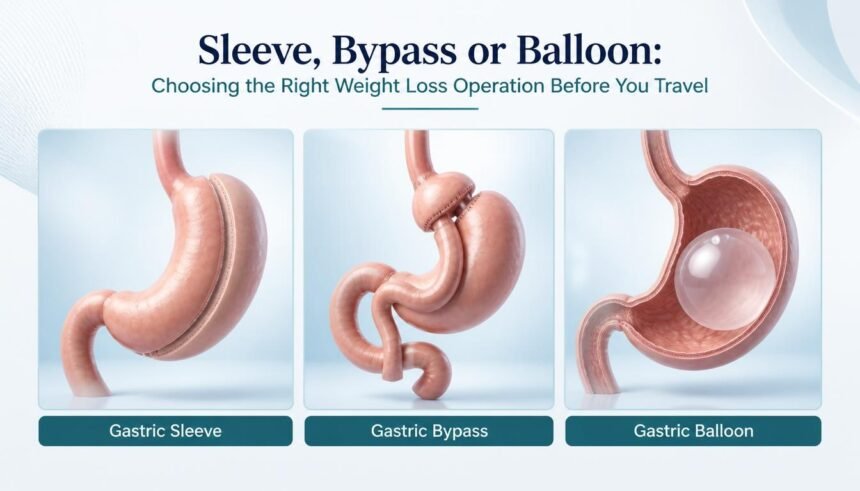
Most people choose a clinic first and an operation second. It works better the other way round. The sleeve, the bypass and the balloon behave differently in your body for decades, and the decision between them depends on your health history far more than on the city where the surgery happens.
If you have started researching gastric surgery Turkey options, you will notice that the gastric sleeve dominates the listings. It is the most commonly performed weight loss operation in many countries, but it is not automatically the right one for you. This guide walks you through how the main options compare, what long-term trial data shows, and the single symptom that most often changes a surgeon’s recommendation.
Why the Operation Type Matters More Than the Destination
Every weight loss operation trades something. Some remove part of the stomach permanently. Some reroute the gut so food bypasses a section of it. Some are temporary devices that come out after a few months. Each option has a different effect on weight, on conditions such as type 2 diabetes and high blood pressure, on acid reflux, and on how your body absorbs vitamins and minerals.
That means the “best” operation is the one that fits your body, your medical history and your goals. A good bariatric team will ask about your weight history, previous diets and medicines, reflux, diabetes, previous abdominal operations, and your eating patterns before recommending anything. If a clinic quotes you for one specific operation before asking those questions, treat it as a sales offer rather than a recommendation.
How a Sleeve Gastrectomy Works
A sleeve gastrectomy removes most of the stomach along its outer curve and leaves a narrow tube. You feel full after a small amount of food, and the part of the stomach that produces much of the hunger hormone ghrelin is removed, which many people notice as reduced appetite.
Its advantages are a comparatively straightforward operation, no rerouting of the intestine and no device left inside you. Its main disadvantages are that it cannot be reversed, and that it is more prone to causing or worsening acid reflux than a bypass. Like all weight loss operations, it needs vitamin and mineral supplements and blood tests for life.
How a Gastric Bypass Differs
A Roux-en-Y gastric bypass creates a small stomach pouch and connects it directly to a lower section of the small intestine, so food skips most of the stomach and the first part of the intestine. A one-anastomosis or “mini” bypass uses a single connection instead of two and is offered by some centres as an alternative.
A bypass is a more complex operation than a sleeve. It changes how you absorb some nutrients, so supplements are just as essential, and some people experience dumping syndrome after sugary or fatty foods. In exchange, a standard bypass is one of the more effective anti-reflux operations available, which matters a great deal for the right patient.
What Ten Years of Trial Data Show
The most useful long-term evidence comes from the SLEEVEPASS trial in Finland, which randomly assigned 240 adults with severe obesity to either a sleeve or a Roux-en-Y bypass and followed them for ten years. The results, published in JAMA Surgery in 2022, are worth knowing before any consultation:
- Both operations produced good, lasting weight loss. Median excess weight loss at ten years was 43.5% after a sleeve and 50.7% after a bypass, with a wide range in both groups.
- Most health conditions improved similarly. There was no statistically significant difference in remission of type 2 diabetes, high cholesterol or sleep apnoea between the two groups.
- High blood pressure did better after a bypass. Remission of hypertension was greater in the bypass group.
- Reflux was the big difference. Inflammation of the oesophagus seen on endoscopy affected 31% of sleeve patients against 7% of bypass patients, and sleeve patients used more reflux medication.
- Barrett’s oesophagus was the same in both groups, at 4%, lower than some earlier studies had suggested.
The trial’s lead investigator described both as good operations with sustainable ten-year results, and recommended that reflux assessment, including a pre-operative gastroscopy when a sleeve is being considered, form part of the decision.
Reflux Is the Question That Changes Recommendations
If you take heartburn medicine regularly, wake with acid in your throat, or have been told you have a hiatus hernia, say so at your very first consultation. Existing reflux is one of the commonest reasons a surgeon steers a patient away from a sleeve and towards a bypass. Some people who have a sleeve and later develop severe reflux need a second operation to convert it into a bypass.
This is also why a pre-operative endoscopy is worth having, even if you feel well. It shows whether there is inflammation, a hernia or other changes that would make one operation a better fit than another, and it gives you a baseline for later comparison.
Where Balloons and Endoscopic Options Fit
A gastric balloon is a soft device placed in the stomach, usually through the mouth, and removed after a set period. It involves no incisions and no permanent change to your anatomy, but its effect on weight is generally smaller and lasts only as long as you keep the habits you built while it was in place. It can suit people with a lower BMI, or people who are not ready for permanent surgery.
Endoscopic sleeve gastroplasty narrows the stomach from the inside with stitches rather than removing tissue. Recovery is usually quicker than after a surgical sleeve, but it is a different procedure with different results, and long-term evidence is more limited.
Neither option replaces surgery for people with severe obesity and serious related conditions, but both deserve a place in the conversation if your situation is less advanced.
Questions to Ask Before You Commit to One Operation
Bring these to your consultation, and ask for the answers in writing:
- Based on my history, which operation do you recommend, and why that one rather than the alternatives?
- Will I have an endoscopy before the decision is made, and will I see the results?
- What happens if I develop severe reflux after a sleeve? Do you perform conversions to bypass?
- How many of the recommended operation does the surgeon perform each year?
- Which supplements and blood tests will I need for life after this operation specifically?
- What follow-up continues after I return home, and who provides it?
When you compare gastric surgery Turkey packages, keep the clinical decision separate from the travel arrangements. Agree on the right operation first, with a team that has examined you and explained its reasoning. Then compare the clinics that perform that operation well. Done in that order, the price comparison is a fair one, because every quote describes the same treatment.
This article is general information, not medical advice. Only a bariatric team that has assessed you in person can tell you which operation, if any, suits your health and goals.
| 🔗 You may also like: |
| Cooling tower water treatment managing legionella risk in humid climates |
| 5 career habits of successful aviation professionals |