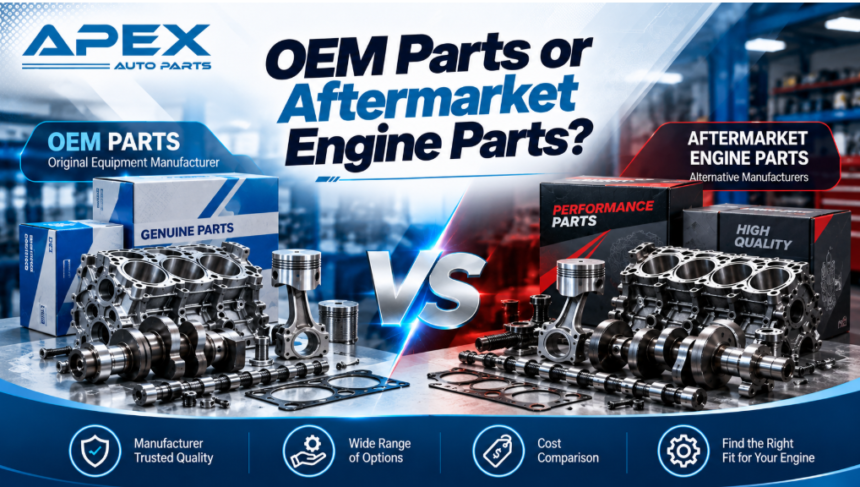
Buying an engine part is rarely as simple as choosing the cheapest option on the screen. The part must fit the exact engine, perform correctly under heat and pressure, and last long enough to make the repair worthwhile.
This is where the choice between OEM parts and aftermarket engine parts becomes important. OEM parts often provide factory-level fitment, while quality aftermarket parts may offer better value and faster availability. However, neither option is automatically right for every vehicle or repair.
The best choice depends on the engine, the part being replaced, the quality of the manufacturer, and the amount of labour involved in fitting it.
What Are OEM Parts?
OEM stands for Original Equipment Manufacturer. These parts are made by the vehicle manufacturer or by a company that supplies components for the original vehicle.
Car makers do not produce every component themselves. Parts such as sensors, filters, pumps, bearings, and ignition components may be produced by specialist companies. The vehicle manufacturer then approves these parts for use during production.
OEM parts are designed to match the original size, material, connection points, and performance requirements. This usually makes fitment easier and reduces the risk of receiving a part that does not work correctly with the vehicle.
They can be particularly useful for newer cars, sensitive electronic systems, and repairs where exact factory specifications matter. The main drawback is price. An OEM part may cost more because of its packaging, supply chain, and connection to the vehicle brand.
What Are Aftermarket Engine Parts?
Aftermarket engine parts are replacement components produced for vehicles after they leave the factory. They are normally sold under the part manufacturer’s own name rather than the vehicle manufacturer’s name.
The aftermarket covers many different quality levels. Some companies manufacture dependable parts used by professional garages every day. Other suppliers focus mainly on producing the lowest possible price.
This difference is important. A recognised aftermarket brand may produce a reliable oil pump, gasket, bearing, timing kit or water pump. An unknown part with poor materials or weak quality control may fail early, even if it looks correct when first removed from the box.
The term “aftermarket” should not be treated as another word for “cheap”. Buyers need to look at the actual manufacturer, fitment information, warranty, and reputation of the supplier.
Why Part Quality Matters Inside an Engine?
Engine components work under difficult conditions. They deal with heat, oil pressure, combustion pressure, vibration, and constant movement. A small defect can therefore create a much larger problem.
A weak timing component may allow the engine timing to move out of position. A poor oil pump may fail to maintain safe oil pressure. A low-quality gasket may begin leaking soon after installation. An inaccurate sensor may send incorrect information to the engine control unit.
The price of the failed part is only one part of the cost. The engine may need to be opened again, new oil and coolant may be required, and the garage may need to repeat several hours of labour.
For parts fitted deep inside the engine, saving a small amount can create a much larger bill later. Quality becomes even more important when the cost of fitting the part is higher than the cost of the part itself.
When Do OEM Parts Make Sense?
OEM parts are often a sensible option when a manufacturer’s warranty still covers the vehicle. They may also be preferred for newer, valuable, or high-performance vehicles where the owner wants to retain the original specification.
Electronic parts can be another area where OEM is helpful. Sensors, control units, injectors, and emissions components must communicate correctly with other systems. A small difference in calibration or resistance may cause warning lights, poor running, or incorrect fault codes.
OEM may also be the safer choice when there is no proven aftermarket option available. If the listings are unclear or several versions were fitted during the same production year, an original part identified through the VIN can reduce fitment doubt.
This does not mean that OEMs are always better. It means that it can offer a lower-risk route when accuracy matters more than price.
When Are Aftermarket Parts a Better Choice?
Trusted aftermarket engine parts can provide excellent value, especially for older vehicles. Spending heavily on an original boxed component may not make financial sense when a recognised aftermarket manufacturer offers a suitable alternative.
Aftermarket parts are also useful when OEM stock is unavailable or has a long delivery time. A quality replacement can help return the vehicle to the road sooner without lowering the repair standard.
Some aftermarket manufacturers update products to address known weaknesses. They may improve a seal, strengthen a housing, or use a more durable material. In these cases, the replacement may offer a practical improvement over the original design.
The important point is to compare brands and specifications rather than comparing only prices. The cheapest aftermarket option and a proven aftermarket product should not be treated as the same thing.
For a clearer explanation of the differences, read this detailed OEM and aftermarket engine parts guide.
Correct Fitment Matters More Than the Box
A high-quality part is still useless if it does not fit the engine. Two cars with the same model name and engine size may use different components because of their production year, power output, emissions system, or engine code.
A sensor may have a different electrical plug. A gasket may use different oil or coolant openings. A timing kit may require another tensioner. Bearings and pistons may also be available in different size grades.
This is why buyers should not order an engine component from a photograph alone. The vehicle registration, VIN, engine code, and old part number should be checked wherever possible.
A professional parts supplier may ask for additional vehicle details before confirming an order. This is not an unnecessary delay. It helps prevent the wrong part from reaching the customer and reduces wasted labour for the garage.
Diesel Engine Parts Need Careful Selection
Diesel engines produce high compression and strong torque. Their fuel, turbo, and emissions systems also depend on precise control. Poor-quality aftermarket diesel engine parts can therefore cause difficult starting, smoke, limp mode, low power, or repeated warning lights.
Injectors, glow plugs, EGR components, turbo oil pipes, timing parts and oil pumps should always come from reliable sources. The cause of the original failure must also be checked before a replacement is installed.
For example, fitting a new turbo will not solve the problem if a blocked oil feed caused the old turbo to fail. The replacement may suffer the same damage within a short period.
Good diagnosis protects both OEM and aftermarket parts. No component can provide reliable service when the fault that damaged the original part remains inside the engine.
Engine Rebuilds Require a Complete Plan
An engine rebuild may include pistons, piston rings, bearings, gaskets, seals, valves, timing parts, and an oil pump. These components must work together within very small measurements.
Before ordering rebuild parts, the crankshaft, cylinder bores, and cylinder head should be inspected and measured. This helps confirm whether standard or oversized components are required.
It is possible to combine OEM and trusted aftermarket parts during a rebuild. The correct approach is to choose each item according to its job, specification, and proven quality. Using one weak component can place the entire rebuild at risk.
How to Choose the Right Engine Part?
Before buying an OEM or aftermarket component:
- Confirm the registration, VIN, and engine code.
- Compare the old part number when it is available.
- Choose recognised manufacturers for critical engine parts.
- Consider the labour required if the part fails.
- Diagnose the original fault before ordering a replacement.
- Check what warranty and fitment support the supplier provides.
These checks are more useful than choosing a part based only on its price or packaging.
Final Thoughts
There is no single winner in the OEM vs aftermarket parts debate. OEM parts can offer confidence, exact specifications, and straightforward fitment. Quality aftermarket parts can provide strong reliability, better availability, and more sensible prices.
The right choice is the component that matches the engine, comes from a dependable manufacturer, and suits the repair being carried out. For critical parts, complex engine work, or labour-heavy jobs, quality should always come before a small saving.
Apex Auto Parts helps drivers and garages check parts using vehicle and engine information. Whether the repair needs OEM parts or trusted aftermarket engine parts, confirming fitment before ordering can prevent delays, repeated labour, and unnecessary expense.