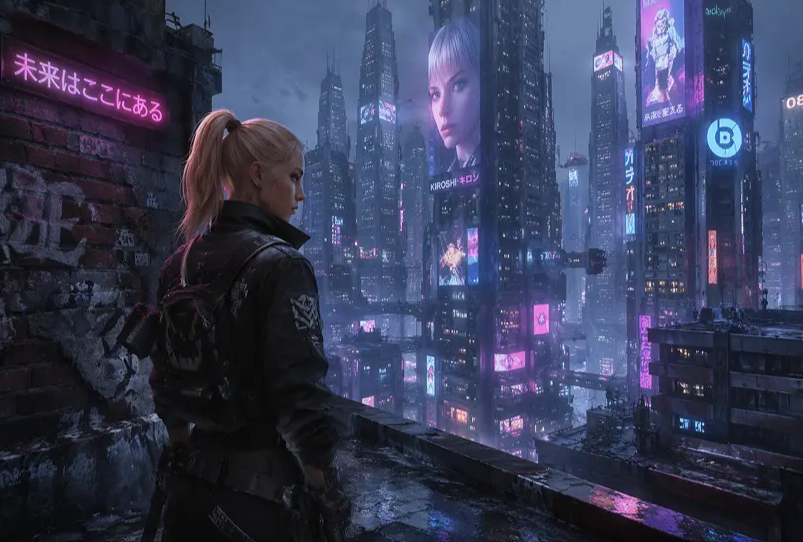
A character can look recognizable in every shot while the sequence still feels disconnected. Objects may change state, movement may reverse unexpectedly, or the same location may appear to have a different layout. When working with ai video generator tools, consistency needs a shared visual plan. Dreamina supports text, image, and reference-led video creation, giving creators several ways to communicate that plan before generating individual scenes.
The challenge is deciding what must remain stable and what is allowed to change. A story needs development, a demonstration needs a sequence of states, and a campaign may need visual variety. Consistency helps viewers follow those changes without repeatedly questioning whether they are still looking at the same subject, setting, or idea.
A recurring subject needs recognizable features that survive changes in viewpoint. For a character, those may include silhouette, facial features, hairstyle, and clothing. For an object, proportions, distinctive components, and surface treatment may matter. A broad description of color or mood may leave the defining structure open to reinterpretation.
Distinguish essential features from flexible ones. Not every fold of clothing or background texture needs identical treatment. Focus on details that establish recognition or carry information. This makes the brief more useful and prevents the review from giving a harmless texture change the same importance as a missing component.
Use an approved reference that clearly shows the features the sequence depends on. If a detail is hidden, tiny, or distorted in the reference, it may provide a weak basis for another view. A beautiful image is not automatically the best working reference. Choose material for what it communicates.
The platform’s Seedance 2.5 reference-to-video workflow, or R2V, accepts multimodal inputs such as images, video, audio, storyboards, character references, and motion clips. Those inputs can carry different parts of the scene plan. A character reference communicates appearance; a storyboard communicates sequence; a motion reference communicates movement. Keep their intended roles clear in the accompanying direction.
Action continuity concerns what has changed
A sequence can preserve appearance while losing the logic of an action. An object can move without a visible cause, return to an earlier state, or appear in a different position between adjacent shots. Viewers may recognize everything in the frame but still struggle to understand the event.
Describe each shot in terms of its starting state, meaningful change, and ending state. This is more precise than naming only the action. A shot of an object opening may finish partly open or fully open. The following shot needs to begin from a state that makes sense in relation to that ending.
Not every change has to be shown. Editing routinely omits unimportant intervals. What matters is whether the audience can understand the transition. An intentional time jump can move the action forward, while an unexplained reset can make the sequence appear to contradict itself. Establish the intended relationship before choosing the cut.
Compare usable boundaries rather than whole clips in the abstract. The most attractive part of a generation may not provide a compatible ending. Another interval may connect more clearly with the next shot. Select the footage that preserves the action the audience needs to follow, even if that means leaving a visually impressive moment unused.
Space remains understandable through relationships
A location is recognizable through the arrangement of its important elements. Doors, windows, furniture, landmarks, and the subject’s position help viewers understand where an action happens. When those relationships change without explanation, the sequence can seem to move into another place even if its colors and architecture remain similar.
Prepare a simple spatial plan when the route or layout matters. It need not be a detailed architectural drawing. Identify the relevant entrance, destination, and landmarks, then describe each viewpoint in relation to them. This gives different scene briefs a common geography rather than a set of independently plausible rooms.
Screen direction is another relationship to plan. Movement toward a destination in the story and movement across the frame are related but different descriptions. A change of camera position can reverse apparent travel. Decide whether the audience has enough context to understand that change before accepting the next angle.
Review the sequence without consulting the plan. If a viewer needs the creator’s notes to understand where the subject is going, the visible information may be insufficient. A clearer establishing view or a more restrained viewpoint change can help. Additional angles are useful only when they improve the audience’s understanding.
Style should connect scenes without freezing them
A shared visual treatment can make separate scenes feel part of one project. Lighting, contrast, color, texture, and camera behavior all contribute. However, a consistent style does not require identical illumination or framing everywhere. A scene can change setting or emotional emphasis while remaining part of the same visual language.
Define the relationships that should persist. A restrained palette, soft contrast, or a particular approach to camera movement can provide continuity without dictating every detail. Keep those decisions in the shared brief, then add scene-specific requirements separately. This avoids rebuilding the project’s visual identity from memory for each generation.
Text-to-video leaves room to explore scenes that have not yet been visually established. Image-to-video provides a starting composition when appearance and placement are already important. Choose according to the decision that is settled. A reference is most useful when it communicates a visual requirement the scene actually needs to preserve.
Check the result across different kinds of change. A shift from a wide view to a close view should retain the important identity and treatment. A move between locations may justify new lighting while preserving the intended tone. The question is whether the variation feels motivated by the scene rather than like an accidental switch between unrelated productions.
Different mismatches need different repairs
Begin by stating the observed problem in concrete terms. A subject has a different silhouette. A component disappears. The next shot begins from the wrong state. The background suggests another location. Naming the mismatch makes it easier to choose an appropriate correction and to judge whether it worked.
Localized editing offers a way to address selected problems within a promising scene. The model supports changes such as removing an unwanted object, altering selected elements, adjusting camera angles, and editing audio. Consider that route when the rest of the shot remains useful, then inspect the surrounding material to see what else changed.
Other problems may be solved by selecting a different interval or an existing alternative. A brief defect after the required action may not invalidate an earlier usable passage. A compatible take may already exist. Review available material before generating another version that introduces a fresh set of differences.
A structural contradiction can require a new shot plan. If the intended camera position makes an important relationship impossible to read, a small visual correction may be insufficient. Revise the viewpoint, action, or reference. Solving the underlying conflict is more dependable than adding an elaborate transition to divert attention from it.
Long Video mode provides an option for ideas that benefit from a longer generated sequence. Its usefulness still depends on whether the important relationships remain clear across the result. A continuous clip can develop identity or state problems within itself, so a lack of visible cuts does not remove the need for continuity review.
Review connections, then review the complete event
A local review and a whole-sequence review answer different questions. At each boundary, compare identity, object states, position, and direction. Then watch at normal speed to judge whether the event develops naturally. Pausing helps diagnose details, while continuous playback reveals the experience the audience actually receives.
Sound can reinforce the connection between scenes or undermine it. A continuing ambience may suggest one place, while a sudden change may suggest another. If synchronized audio is generated with the footage, check whether the visible action and sound remain aligned. Include any separately added narration and music in the final review.
Ask a fresh viewer what remained the same, what changed, and why. Their explanation can distinguish a minor visual variation from a confusing event. A technically noticeable difference may have little effect on understanding, while an unexplained action state can alter the meaning of the sequence.
Keep review comments tied to the effect on the viewer. Rather than requesting that everything be more consistent, identify what breaks recognition, geography, or cause and consequence. This produces a revision brief that can be checked. It also prevents useful creative variation from being removed merely because two frames are not identical.
Revisions need the same shared plan
Replacing one scene changes its relationship with its neighbors. Compare the new opening with the preceding ending and the new ending with the following opening. If a changed object state matters later, inspect those dependent scenes as well. A correction can solve one boundary and create another mismatch farther along.
Update the approved references when the creative direction changes. Otherwise, replacement shots may follow new assumptions while retained footage follows old ones. Keep the shared visual decisions accessible with the current sequence so collaborators are choosing against the same definition of the subject and setting.
The final crop also deserves attention. A narrower layout may remove the landmark that explained a route or hide a prop that connected two actions. Review each delivered composition for the information it actually includes. Preserving the underlying footage does not guarantee that the audience receives the same spatial clues.
Consistency is useful because it makes change understandable. A coherent sequence lets viewers recognize the subject, follow the action, and accept variation that belongs to the story or message. Shared references, explicit states, and targeted revisions help generated scenes support that experience without requiring every frame to look the same.