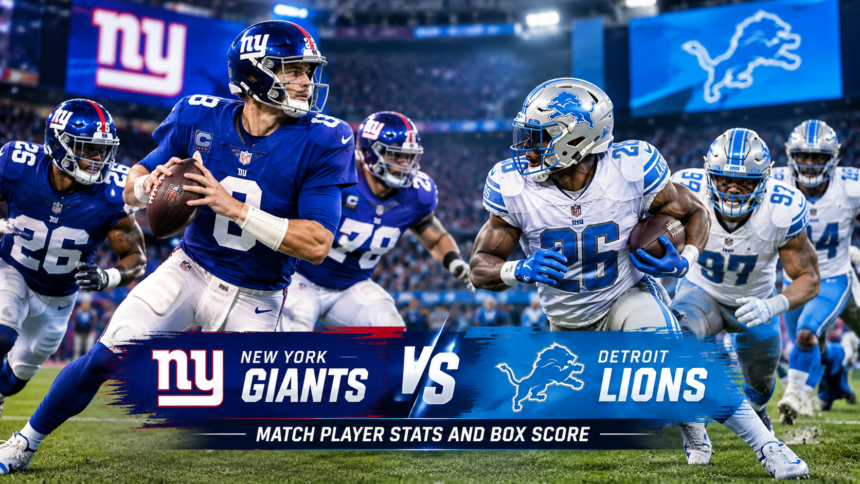
The New York Giants vs Detroit Lions matchup on November 23, 2025, delivered an exciting NFL contest that ended with a dramatic overtime victory for Detroit. The Lions defeated the Giants 34–27 at Ford Field in Detroit, Michigan, after recovering from a 10-point deficit in the fourth quarter.
Running back Jahmyr Gibbs was the standout performer, producing 219 rushing yards and three total touchdowns. His 69-yard touchdown run on the opening play of overtime secured the victory for Detroit. On the Giants’ side, quarterback Jameis Winston threw for 366 yards, while wide receiver Wan’Dale Robinson recorded 156 receiving yards and a touchdown.
This game featured explosive offensive plays, a remarkable comeback, a long-range field goal and a memorable overtime finish. In this guide, we cover the New York Giants vs Detroit Lions match player stats, full box score, leading offensive performers, scoring summary and the key moments that decided the result.
New York Giants vs Detroit Lions Match Overview
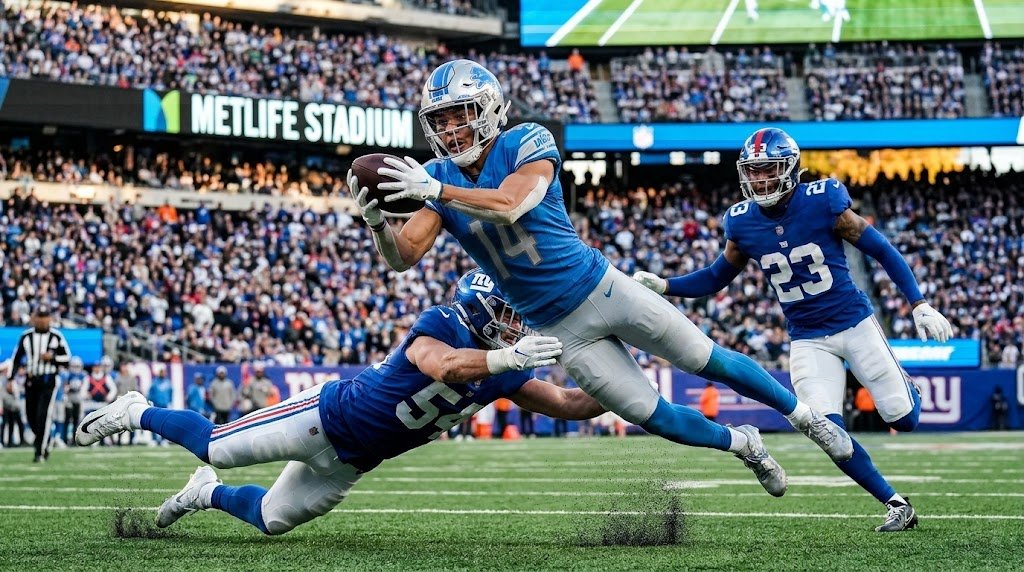
The Lions and Giants met in Week 12 of the 2025 NFL regular season. Detroit entered the contest looking to strengthen its position in the NFC, while New York aimed to end a difficult run of results.
The Giants made a strong start and built a 20–17 halftime lead. Detroit responded in the second half, but New York regained the advantage in the fourth quarter before the Lions forced overtime with a long field goal.
Final score: Detroit Lions 34, New York Giants 27 (OT).
Game Information
- Match: New York Giants vs Detroit Lions
- Date: November 23, 2025
- Competition: NFL regular season, Week 12
- Venue: Ford Field, Detroit, Michigan
- Final score: Giants 27, Lions 34
- Halftime score: Giants 20, Lions 17
- Result: Detroit Lions won in overtime
- Game-winning play: Jahmyr Gibbs’ 69-yard rushing touchdown
Detroit improved to 7–4 following the victory, while New York fell to 2–10. The result was particularly significant because the Lions had to overcome a fourth-quarter deficit rather than simply protect an early lead.
| 🔗 You may also like: |
| Pittsburgh Steelers vs Detroit Lions match player stats |
| New York Jets vs Baltimore Ravens match player stats |
New York Giants vs Detroit Lions Full Box Score
The final statistics show two offenses that succeeded in different ways. New York produced more total yards and passing yards, but Detroit generated significantly more rushing production and scored the decisive touchdown in overtime.
Team Statistics
| Statistic | New York Giants | Detroit Lions |
|---|---|---|
| Final score | 27 | 34 |
| Total yards | 517 | 494 |
| Passing yards | 395 | 257 |
| Rushing yards | 122 | 237 |
| Total offensive plays | 77 | 65 |
| First downs | 25 | 23 |
| Third-down conversions | 8/16 | 5/12 |
| Fourth-down conversions | 1/3 | 0/0 |
| Turnovers | 1 | 1 |
| Time of possession | 37:11 | 28:30 |
| Penalties | 7–59 | 9–81 |
| Total touchdowns | 3 | 4 |
Source: NFL game statistics and published box scores.
One of the most interesting details is that the Giants finished with 517 total yards, compared with 494 for Detroit. Despite producing fewer yards, the Lions won because their rushing attack delivered explosive plays at crucial moments.
New York held the ball for more than 37 minutes and generated 25 first downs. However, Detroit’s 237 rushing yards, compared with the Giants’ 122, helped the home team create the plays needed to change the game’s direction.
The turnover count was even at one apiece, so the difference was not simply a matter of one team protecting the football better. Detroit’s ability to turn its biggest offensive opportunities into touchdowns proved decisive.
Detroit Lions Player Stats
Jahmyr Gibbs: The Game’s Outstanding Performer
Jahmyr Gibbs delivered one of the most important individual performances of the 2025 NFL regular season. He rushed for 219 yards on 15 carries and scored two rushing touchdowns. He also caught 11 passes for 45 yards and another touchdown.
| Category | Statistics |
|---|---|
| Rushing attempts | 15 |
| Rushing yards | 219 |
| Rushing touchdowns | 2 |
| Longest rush | 69 yards |
| Receptions | 11 |
| Receiving yards | 45 |
| Receiving touchdowns | 1 |
| Total touchdowns | 3 |
| Total yards from scrimmage | 264 |
Gibbs averaged 14.6 yards per rushing attempt, an extraordinary figure that reflected his ability to break through the Giants’ defense. His 49-yard touchdown run in the fourth quarter brought Detroit back into contention, while his 69-yard score in overtime ended the game.
His receiving contribution was equally valuable. The Lions used him as both a runner and a passing target, giving the Giants multiple responsibilities to manage. Gibbs finished with 264 yards from scrimmage and accounted for three of Detroit’s four touchdowns.
| 🔗 You may also like: |
| Philadelphia Eagles vs Dallas Cowboys match player stats |
| Buffalo Bills vs Miami Dolphins match player stats |
Jared Goff: Efficient Passing Performance
Quarterback Jared Goff helped the Lions maintain their offensive rhythm despite the Giants’ strong start. He completed 28 of 42 pass attempts for 279 yards, two touchdowns and one interception.
| Passing statistic | Jared Goff |
|---|---|
| Completions | 28 |
| Attempts | 42 |
| Passing yards | 279 |
| Passing touchdowns | 2 |
| Interceptions | 1 |
| Sacks taken | 3 |
Goff connected with Amon-Ra St. Brown for an 11-yard touchdown and found Gibbs for a three-yard scoring reception. Those plays helped Detroit respond after falling behind early.
Although Goff threw an interception, his passing game contributed to the comeback. He finished with more completions than Winston, but fewer passing yards because New York generated several major gains through the air.
Amon-Ra St. Brown: Detroit’s Leading Receiver
Amon-Ra St. Brown was another major contributor to the Lions’ victory. He caught nine passes for 149 yards and one touchdown, giving Goff a dependable target throughout the contest.
| Receiving statistic | Amon-Ra St. Brown |
|---|---|
| Receptions | 9 |
| Receiving yards | 149 |
| Receiving touchdowns | 1 |
| Longest reception | 30 yards |
| Targets | 13 |
St. Brown’s 149 receiving yards represented a significant share of Detroit’s passing production. His 11-yard touchdown in the second quarter put the Lions on the scoreboard after their difficult opening period.
His ability to find space in the passing game helped Detroit keep drives alive and prevented the Giants from focusing exclusively on Gibbs.
David Montgomery and Other Lions Contributors
David Montgomery carried the ball five times for 18 yards and caught three passes for 19 yards. Although his rushing numbers were modest, he provided another option in Detroit’s backfield.
Other receiving contributions included Kalif Raymond, who caught two passes for 37 yards, and Brock Wright, who recorded three receptions for 29 yards.
The combined production of Gibbs, St. Brown and the supporting players allowed Detroit to remain competitive even when the Giants appeared to have control of the game.
New York Giants Player Stats
Jameis Winston: 366 Passing Yards
Jameis Winston produced an impressive passing performance for New York, completing 18 of 36 attempts for 366 yards, two passing touchdowns and one interception.
| Passing statistic | Jameis Winston |
|---|---|
| Completions | 18 |
| Attempts | 36 |
| Passing yards | 366 |
| Passing touchdowns | 2 |
| Interceptions | 1 |
| Sacks taken | 1 |
Winston attacked the Detroit secondary with several deep throws and helped New York establish an early lead. His 39-yard touchdown pass to Wan’Dale Robinson opened the scoring, and a 12-yard connection with Isaiah Hodgins extended the Giants’ advantage in the second quarter.
Winston’s performance was not limited to conventional passing. During the fourth quarter, he caught a 33-yard touchdown pass from wide receiver Gunner Olszewski on a trick play.
That unusual scoring sequence gave the Giants a 27–17 lead and appeared to put them in a strong position to win. However, Detroit’s comeback and overtime rushing touchdown ultimately overshadowed New York’s impressive offensive numbers.
Wan’Dale Robinson: New York’s Leading Receiver
Wan’Dale Robinson led the Giants in receiving, finishing with nine receptions for 156 yards and one touchdown.
| Receiving statistic | Wan’Dale Robinson |
|---|---|
| Receptions | 9 |
| Receiving yards | 156 |
| Receiving touchdowns | 1 |
| Targets | 14 |
| Longest reception | 40 yards |
Robinson’s 39-yard touchdown reception gave New York an early 7–0 lead. He continued to create opportunities throughout the game, finishing with more receiving yards than any other player on either team.
His 156-yard performance was especially important because the Giants needed explosive passing plays to challenge Detroit’s offense. Robinson consistently helped move the chains and stretched the Lions’ coverage.
Tyrone Tracy Jr. and Devin Singletary
New York relied on both Tyrone Tracy Jr. and Devin Singletary to establish its rushing attack.
| Rushing statistic | Tyrone Tracy Jr. | Devin Singletary |
|---|---|---|
| Carries | 20 | 14 |
| Rushing yards | 62 | 47 |
| Rushing touchdowns | 0 | 0 |
| Longest rush | 11 yards | 13 yards |
| Receptions | 3 | 0 |
| Receiving yards | 68 | 0 |
Tracy finished with 62 rushing yards and added 68 receiving yards on three catches. His 130 combined rushing and receiving yards made him a useful contributor to the Giants’ offense.
Singletary added 47 rushing yards on 14 carries. Together, the two running backs contributed 109 rushing yards, although neither found the end zone.
The Giants’ rushing production was respectable, but it did not match Gibbs’ explosive output for Detroit. That difference became particularly important when the game reached overtime.
Isaiah Hodgins and Gunner Olszewski
Isaiah Hodgins caught two passes for 42 yards and scored a 12-yard receiving touchdown from Winston in the second quarter.
Gunner Olszewski made an unusual contribution. Listed primarily as a wide receiver, he completed his only pass attempt for 33 yards and a touchdown to Winston during the fourth quarter. The trick play temporarily increased New York’s lead to 27–17.
This play demonstrated the Giants’ willingness to use unconventional offensive designs in a high-pressure situation. However, it was not enough to prevent Detroit from completing its comeback.
Quarter-by-Quarter Scoring Summary
The scoring progression explains how Detroit turned a difficult game into an overtime victory.
| Quarter | New York Giants | Detroit Lions |
|---|---|---|
| First quarter | 10 | 0 |
| Second quarter | 10 | 17 |
| Third quarter | 0 | 0 |
| Fourth quarter | 7 | 10 |
| Overtime | 0 | 7 |
| Final | 27 | 34 |
First Quarter: Giants Take Control
New York opened the game with a 39-yard touchdown pass from Winston to Robinson. Younghoe Koo added a 21-yard field goal later in the quarter, giving the Giants a 10–0 advantage.
Detroit struggled to score during the opening period and needed a response to avoid allowing New York to control the game.
Second Quarter: Lions Fight Back
The Lions scored 17 points in the second quarter. Goff connected with St. Brown for an 11-yard touchdown before Gibbs scored on a three-yard reception.
New York also scored twice during the period. Winston threw a touchdown pass to Hodgins, and Koo converted a 44-yard field goal. Jake Bates added a 37-yard field goal for Detroit just before halftime.
The Giants entered the break ahead 20–17, but Detroit had already demonstrated its ability to respond.
Third Quarter: Both Defenses Hold Firm
Neither team scored in the third quarter. Both offenses continued to seek opportunities, but the scoreboard remained unchanged.
The scoreless period set up a dramatic fourth quarter in which both teams found ways to produce major scoring plays.
Fourth Quarter: A Comeback and a Long Field Goal
New York extended its lead to 27–17 when Olszewski threw a 33-yard touchdown pass to Winston.
Detroit responded almost immediately. Gibbs broke free for a 49-yard rushing touchdown, cutting the deficit to three points.
With 28 seconds remaining in regulation, Bates converted a 59-yard field goal to tie the game at 27–27. The successful kick forced overtime and gave Detroit another opportunity to complete its comeback.
Overtime: Gibbs Ends the Game
Detroit received the ball to begin overtime. On the opening play, Gibbs broke through the Giants’ defense and ran 69 yards for a touchdown.
Bates converted the extra point, giving the Lions a 34–27 victory. The Giants did not get another opportunity to answer with their own possession.
The decisive run turned an already remarkable individual performance into the defining moment of the game.
Key Differences That Decided the Game
1. Detroit’s Explosive Rushing Attack
The most significant statistical difference was rushing production. Detroit gained 237 rushing yards, while New York finished with 122. Gibbs alone accounted for 219 yards on the ground.
His two long touchdown runs changed the momentum of the contest. The 49-yard score reduced the Giants’ lead, and the 69-yard overtime run ended the game.
2. New York’s Passing Game Produced More Yards
The Giants recorded 395 net passing yards in the team statistics, compared with Detroit’s 257 net passing yards. Winston’s individual total was 366 passing yards, while Goff recorded 279 passing yards before subtracting sack yardage.
Robinson’s 156 receiving yards were particularly impressive. However, Detroit’s ability to combine passing with an effective rushing attack helped the Lions remain dangerous even when their passing production was lower.
3. Detroit Finished Stronger in Crucial Moments
The Giants led 27–17 in the fourth quarter, but Detroit scored 10 unanswered points to force overtime. Bates’ 59-yard field goal was crucial because it prevented the Giants from securing the win in regulation.
Detroit then scored on its first overtime play. This quick finish meant the Lions did not need another extended drive to secure the victory.
4. Both Teams Recorded One Turnover
Each team finished with one turnover. This statistic shows that the game was not decided by a major difference in overall ball security.
Instead, the decisive factors were Detroit’s explosive rushing plays, the late field goal and the Lions’ ability to convert their overtime possession into a touchdown.
| 🔗 You may also like: |
| Denver Broncos vs Indianapolis Colts match player stats |
| Tennessee Titans vs Cleveland Browns match player stats |
Defensive Highlights
Although the offensive performances attracted much of the attention, the defenses also played important roles.
Detroit needed to stop New York after the Giants built their 27–17 lead. The Lions allowed the game to reach overtime but prevented the Giants from adding another score during the extra period.
In overtime, Aidan Hutchinson recorded a sack on fourth-and-five, ending New York’s attempt to respond after Gibbs’ touchdown. That defensive play confirmed Detroit’s victory.
For the Giants, the main challenge was limiting explosive plays. Gibbs’ two long rushing touchdowns demonstrated how a single defensive breakdown could quickly change the score. Even with New York’s strong overall yardage, the defense could not contain Detroit’s biggest offensive weapon when it mattered most.
Conclusion
The New York Giants vs Detroit Lions game on November 23, 2025, demonstrated why total yardage alone does not determine an NFL result. New York produced 517 total yards and received an outstanding passing performance from Winston, while Robinson delivered the game’s highest receiving total.
Detroit, however, had the more explosive rushing attack. Gibbs finished with 219 rushing yards, 45 receiving yards and three touchdowns. His two long rushing scores, combined with Bates’ late 59-yard field goal, transformed a potential Giants victory into a memorable overtime comeback.
The final score was Detroit Lions 34, New York Giants 27. For readers examining the full box score, Gibbs’ record-setting impact on the game, Robinson’s receiving production and the fourth-quarter comeback provide the clearest explanation of how the Lions secured the win.
FAQs
Who won the New York Giants vs Detroit Lions game on November 23, 2025?
The Detroit Lions defeated the New York Giants 34–27 in overtime at Ford Field during Week 12 of the 2025 NFL regular season.
How many rushing yards did Jahmyr Gibbs record?
Gibbs rushed for 219 yards on 15 carries and scored two rushing touchdowns. He also caught 11 passes for 45 yards and one receiving touchdown, finishing with 264 yards from scrimmage.
How many passing yards did Jameis Winston have?
Winston completed 18 of 36 passes for 366 yards, two passing touchdowns and one interception. He also caught a 33-yard touchdown pass from Gunner Olszewski on a trick play.
Who led the game in receiving yards?
Wan’Dale Robinson led all players with 156 receiving yards on nine receptions. Detroit’s Amon-Ra St. Brown followed with 149 yards on nine catches.
What was the halftime score?
The Giants led the Lions 20–17 at halftime. Detroit scored 17 points in the second quarter after trailing 10–0.
How did the Lions win in overtime?
On Detroit’s first offensive play of overtime, Gibbs broke free for a 69-yard rushing touchdown. Jake Bates converted the extra point to give the Lions a 34–27 victory.
How many total yards did each team record?
The Giants recorded 517 total yards, while the Lions finished with 494. Despite having fewer total yards, Detroit won through its explosive rushing production and decisive scoring plays.