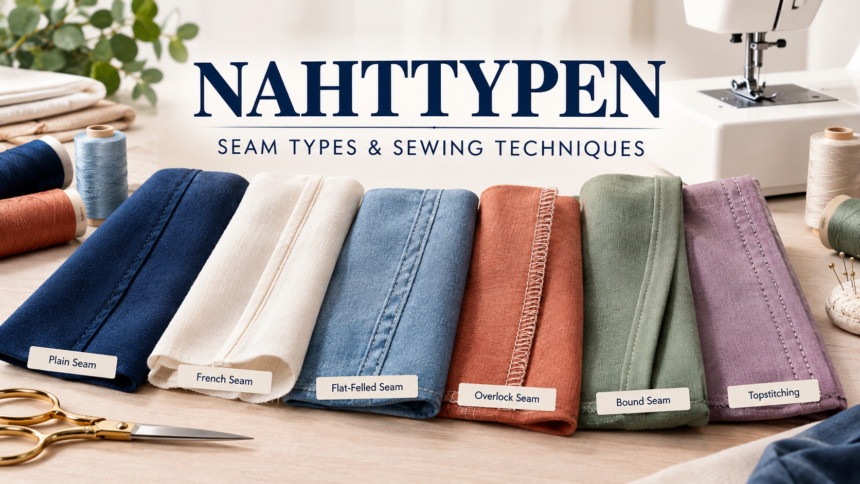
Sewing is more than joining two pieces of fabric together. The way those pieces are connected can influence the strength, comfort, appearance, and durability of the finished product. This is where Nahttypen, the German term for seam types, becomes important. Different seams serve different purposes, and selecting the right one can make a noticeable difference in everything from everyday clothing to technical textiles and home furnishings.
A seam may look simple from the outside, but its construction determines how well it handles tension, movement, repeated washing, and regular wear. A lightweight blouse requires a different approach from a pair of denim jeans, while sportswear needs seams that can stretch and recover without breaking. Understanding these differences helps beginners make better sewing decisions and allows experienced makers to achieve more professional results.
This guide explores the most common Nahttypen, how they influence fabric strength, fit, and finish, and what to consider when choosing the right seam for a particular project.
What Does Nahttypen Mean?
Nahttypen refers to different types of seams used to join fabric pieces or finish fabric edges. In sewing, a seam is generally the constructed connection between two or more pieces of material. It may consist of a single row of stitching, several rows of stitches, folded fabric edges, or additional materials used to protect the raw edges.
Seams perform both structural and visual functions. Structurally, they hold garment panels together and help distribute forces across the fabric. Visually, they influence how smoothly a garment hangs, how thick an edge appears, and whether stitching becomes a decorative feature.
Not every seam is designed to perform the same task. Some prioritize flexibility, while others focus on durability or a clean interior finish. Certain designs are suitable for delicate materials, whereas others are intended for heavy fabrics that experience repeated friction.
Understanding Nahttypen therefore means learning how seam construction, stitch selection, thread, and fabric properties work together.
Why Seam Types Matter in Sewing
Choosing a suitable seam is an important part of planning any sewing project. Even high-quality fabric can produce disappointing results when the seam is poorly selected or constructed.
Fabric Strength and Durability
Seams often experience considerable stress when a garment is worn. Areas such as shoulders, armholes, crotches, and side seams may be pulled repeatedly as the body moves. A seam that cannot withstand these forces may open, stretch out of shape, or damage the surrounding fabric.
Durable seam construction helps distribute stress and keeps fabric panels connected during normal use. However, strength does not depend on seam type alone. Thread quality, stitch density, needle selection, seam allowance, and fabric condition also play important roles.
For example, a properly constructed flat-felled seam is often suitable for denim and workwear because its folded construction encloses raw edges and provides a robust finish.
Fit and Movement
Seams influence how clothing fits and moves with the body. Their position, direction, and construction can affect shaping around the waist, shoulders, sleeves, and hips.
A seam that is too bulky may create uncomfortable pressure, while one that stretches excessively may cause a garment to lose its intended shape. Stretch fabrics also require suitable stitching that can accommodate movement without breaking.
For activewear, swimwear, and fitted garments, flexible seam construction is especially important. For tailored jackets or structured trousers, stability may be more important than extensive stretch.
Appearance and Finishing
Seams contribute to the overall appearance of a finished item. Some are intended to remain nearly invisible, while others create visible lines that emphasize the garment’s design.
A French seam can provide a neat interior finish for lightweight fabrics. A topstitched seam can add a deliberate design detail, while a bound seam can create a clean edge using contrasting or matching fabric.
The best choice depends on whether the project requires a discreet finish, a decorative detail, or a combination of both.
Common Nahttypen and Their Uses
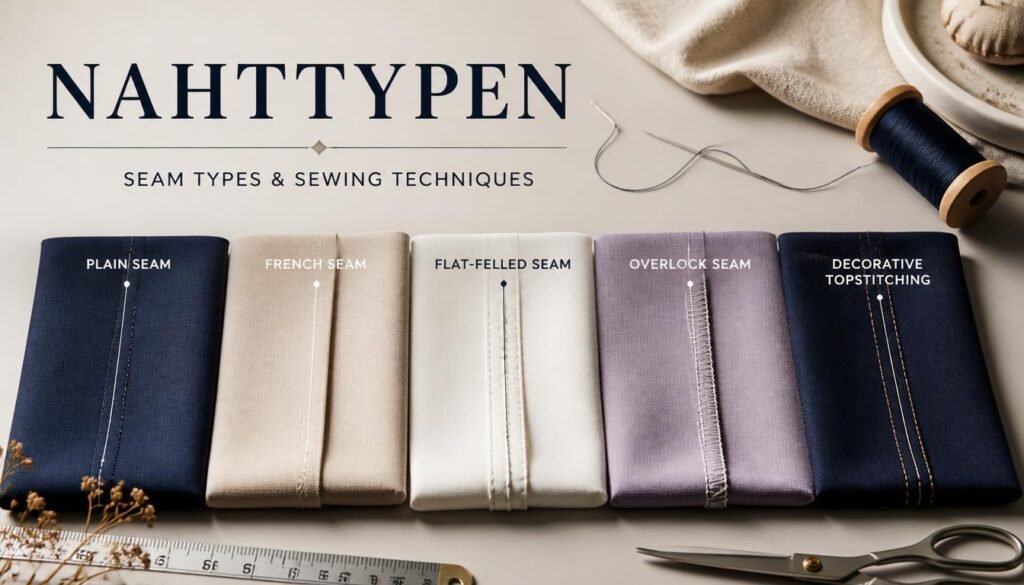
Several seam types appear frequently in clothing production, home sewing, and textile manufacturing. Each has advantages and limitations that should be considered before construction begins.
1. Plain Seam
The plain seam is one of the most common and versatile sewing methods. Two pieces of fabric are placed together, usually with their right sides facing, and stitched along the seam line. The seam allowances can then be pressed open or to one side.
This method is widely used for shirts, dresses, skirts, trousers, and many other garments. It is relatively easy to construct and works with a broad range of woven fabrics.
Its main advantage is versatility. It can create a flat connection without excessive bulk when the correct seam allowance and pressing technique are used.
However, the raw edges may fray if they are left unfinished. Depending on the fabric, they may need an overlock stitch, zigzag stitch, binding, or another edge-finishing method.
Plain seams are a practical choice for beginners because they provide a foundation for learning seam allowances, accurate stitching, and pressing.
2. French Seam
A French seam encloses the raw fabric edges inside the seam itself. The fabric is initially stitched with the wrong sides together, the excess allowance is trimmed, and the seam is turned and stitched again with the right sides together.
This creates a clean interior finish that is particularly useful for lightweight or delicate fabrics. It is commonly associated with sheer blouses, fine cotton garments, lightweight dresses, and some silk projects.
The main benefit is that the raw edges are protected from fraying and are not exposed inside the garment. This can produce a refined finish without requiring a separate overlocking step.
However, French seams create additional layers of fabric. They may be unsuitable for thick materials, bulky intersections, curved areas with limited room, or designs where a very flexible seam is needed.
Accurate trimming and consistent stitching are important because uneven allowances can make the finished seam look irregular.
3. Flat-Felled Seam
A flat-felled seam is known for its durability and enclosed raw edges. One seam allowance is trimmed, while the other is folded over it and stitched down. The finished construction lies relatively flat against the fabric.
This seam is commonly found in denim jeans, work shirts, uniforms, and garments designed for regular use.
Its strength comes partly from the way the fabric layers are secured and reinforced. The additional stitching helps maintain the connection between panels, while the enclosed edges reduce exposure to fraying.
Flat-felled seams can also provide an attractive exterior detail, especially when contrasting thread is used.
The main disadvantage is that construction takes more time and can create bulk where several seams intersect. It may also be challenging to sew neatly around tight curves or through multiple thick layers.
For heavy woven fabrics and garments that experience repeated wear, a flat-felled seam can be an excellent option.
4. Overlock Seam
An overlock seam uses specialized stitching that wraps around fabric edges. It can join fabric pieces while finishing the raw edges in the same operation.
Overlock machines are widely used in garment manufacturing and home sewing. They are especially useful for knitted fabrics, jersey garments, casual clothing, and projects where speed and edge control matter.
The wrapped threads help reduce fraying and create a tidy interior finish. Depending on the machine, stitch configuration, thread, and fabric, an overlock seam may also provide useful flexibility.
However, an overlock finish is not automatically suitable for every structural seam. High-stress areas may require additional reinforcement, and woven fabrics may need different construction methods depending on their intended use.
Machine tension and differential feed settings are important. Incorrect settings can cause seams to ripple, stretch, or gather, particularly when working with lightweight or elastic materials.
5. Bound Seam
A bound seam or bound edge uses a separate strip of fabric to cover exposed raw edges. The binding may match the main fabric or provide a contrasting decorative detail.
This technique is often used in unlined jackets, coats, bags, selected dresses, and other projects where the inside deserves a clean finish.
Binding protects edges and can improve the appearance of areas that remain visible when the garment is opened or moved. It is particularly helpful when a fully lined interior is unnecessary.
The method requires careful measuring and stitching to prevent uneven widths, puckering, or twisted edges. Binding can also add thickness, so lightweight binding material is often preferable when working with delicate fabrics.
6. Lapped Seam
A lapped seam is constructed by placing one fabric section over another and stitching through the overlapping layers. Its exact appearance and strength depend on the fabric, stitch arrangement, and amount of overlap.
Lapped construction is used in some denim garments, leatherwork, outdoor products, and technical textile applications.
Because the fabric edges overlap, the seam can offer a practical connection without requiring the allowances to be pressed open. It can also help produce a relatively low-profile finish when designed appropriately.
The overlap must be consistent to prevent uneven thickness or distorted alignment. Thick materials may require a suitable needle, strong thread, and a machine capable of handling multiple layers.
7. Flatlock Seam
Flatlock seams are commonly associated with sportswear, activewear, and garments designed for frequent movement. They create a relatively flat connection between fabric panels and can help reduce the raised ridge associated with some conventional seams.
Depending on the construction, the fabric edges may meet or overlap slightly, with stitching securing the connection.
Flatlock techniques are useful where comfort and flexibility are priorities. They are often used in athletic tops, leggings, base layers, and other fitted clothing.
Nevertheless, the term can describe different constructions in domestic and industrial sewing contexts. Not every flatlock seam provides the same strength, stretch, or edge coverage.
Selecting the right thread, machine, and stitch configuration is essential, particularly for garments exposed to repeated stretching.
8. Topstitched Seam
Topstitching refers to visible stitching placed on the outside of a garment or textile product. It may reinforce a seam, secure folded allowances, or provide a decorative effect.
Topstitching is common on jeans, shirts, jackets, bags, collars, cuffs, and pocket edges.
Its appearance depends on stitch spacing, thread color, needle size, and distance from the edge. Consistent topstitching can make a garment appear more polished and professionally constructed.
Although it can add reinforcement, topstitching should not be assumed to make every seam structurally strong. Its contribution depends on the underlying seam and the way the stitching is applied.
Uneven spacing, incorrect tension, and unsuitable thread can make the finished result look untidy.
🔗 You may also like: Choosing the Right Travertine Tiles and Fitting Them the Smart Way
🔗 You may also like: How Precise Weight Data Supports Better Manufacturing Decisions
How Nahttypen Affect Different Fabrics
Fabric properties should influence seam selection from the beginning of a project. Weight, thickness, elasticity, weave, and fraying behavior all affect how a seam performs.
Lightweight Fabrics
Chiffon, voile, fine cotton, and lightweight silk can be difficult to handle because they may shift during stitching or show needle marks easily.
French seams are often useful for these materials because they enclose the raw edges. Narrow plain seams can also work well when the fabric is stable and the edges are finished appropriately.
Using a fine needle, lightweight thread, and suitable stitch length can help prevent puckering. Testing the seam on a fabric scrap is especially valuable.
Heavy Fabrics
Denim, canvas, upholstery fabric, and heavy twill need construction methods that can handle their thickness and intended use.
Flat-felled and suitable lapped seams can be useful choices, although the best method depends on the product’s design and stress requirements.
A suitable needle and thread are essential. The sewing machine must also be capable of feeding the layers evenly without skipping stitches or damaging the material.
Reducing unnecessary layers at seam intersections can help prevent excessive bulk.
Stretch Fabrics
Knits, jersey, and elastic materials can expand during wear. A seam that cannot accommodate this movement may break even when the fabric itself stretches comfortably.
Appropriate overlock, coverstitch, or other stretch-compatible stitch constructions can help maintain flexibility.
The correct choice depends on whether the seam must join panels, finish an edge, or create a visible hem. Stretch testing is important because a seam may appear secure when flat but fail when pulled during use.
Delicate and Fraying Fabrics
Some fabrics unravel easily, making edge finishing a major consideration. French seams, bound seams, and overlocked edges can help control fraying in different circumstances.
The choice should also account for fabric thickness. A bulky bound edge may not suit a very fine garment, while a French seam may be unsuitable for thick material.
Good results come from balancing edge protection with flexibility, comfort, and appearance.
The Relationship Between Seam Types and Garment Fit
Seam construction influences how a garment follows the body’s shape. The position of a seam can create shaping, while its flexibility determines how comfortably the garment moves.
Darts, princess seams, and shaped panel seams are often used to create a closer fit. Although they are not all interchangeable with general seam-finish categories, they demonstrate how construction choices influence garment structure.
A fitted dress may use curved seams to shape the bust and waist. Trousers need seams that accommodate movement around the hips and crotch. Shirts require stable shoulder and armhole construction to maintain their shape.
If the seam is too tight, it can restrict movement or place excessive stress on the stitches. If it stretches too much, the garment may sag or lose its intended silhouette.
Pressing also matters. Pressing a seam open can reduce bulk, while pressing allowances to one side may help stabilize selected constructions. The appropriate technique depends on the pattern, fabric, and desired result.
Understanding Seam and Stitch Classifications
In textile manufacturing, seam and stitch classifications help professionals describe construction methods consistently.
ISO 4916 is associated with seam types and their classification, while ISO 4915 classifies stitch types. These standards address related but different aspects of sewing.
A seam describes how fabric components are arranged and joined. A stitch describes how threads interlock or form the connection. One seam construction may use different stitch types depending on its purpose, equipment, and production requirements.
This distinction is useful when comparing domestic sewing methods with industrial garment production. It also helps designers, manufacturers, and quality-control teams communicate more accurately.
However, knowing a classification alone does not guarantee a durable result. Fabric compatibility, seam allowance, thread quality, stitch density, and workmanship still influence performance.
How to Choose the Right Nahttypen for Your Project
Choosing a suitable seam becomes easier when the project’s practical requirements are considered before sewing begins.
Identify the Fabric
Start by checking the material’s weight, thickness, stretch, and tendency to fray. Lightweight woven fabric may benefit from enclosed edges, while stretch knits generally require a construction that can move with the material.
Consider the Purpose
A decorative cushion cover, a lightweight blouse, and a pair of work trousers have different performance requirements. Think about expected wear, washing frequency, movement, and the amount of stress the seam will experience.
Evaluate Comfort and Bulk
Seams positioned close to the skin should not create unnecessary irritation or pressure. Flat constructions may be preferable for activewear, while structured garments may tolerate more layers to achieve the desired shape.
Choose the Appropriate Equipment
A standard sewing machine can produce many plain seams and topstitched finishes. An overlocker is useful for edge finishing and joining suitable fabrics, while specialized machines may be needed for particular industrial constructions.
Choose methods that match both the project’s requirements and the equipment available.
Test Before Final Construction
Sew a sample using the actual fabric, thread, needle, and stitch settings. Pull the sample gently, inspect the edges, and check whether the seam puckers or distorts the material.
For stretch garments, test the seam through the expected range of movement. For washable items, laundering a sample may reveal shrinkage, thread problems, or changes in appearance.
Common Seam Problems and How to Prevent Them
Even an appropriate seam type can perform poorly when it is constructed incorrectly.
Puckering: Uneven feeding, excessive thread tension, or unsuitable stitch length may cause fabric to gather along the seam. Adjust the machine settings and test on a scrap.
Fraying: Exposed raw edges may unravel during wear or washing. Select an appropriate edge finish based on the fabric and garment design.
Broken stitches: A needle, thread, or stitch construction that cannot accommodate the expected stress may fail. Check the machine setup and choose a suitable seam for the material.
Bulky intersections: Multiple allowances can create thick areas that are difficult to sew and uncomfortable to wear. Grade allowances where appropriate and press them carefully.
Uneven topstitching: Inconsistent seam guides, unsuitable thread tension, or rushed sewing can affect the finish. Use a guide and maintain a steady sewing speed.
Wavy stretch seams: Stretch fabric may be pulled or fed unevenly during sewing. Appropriate machine settings, a suitable presser foot, and careful fabric handling can help reduce distortion.
Regular machine maintenance and accurate cutting also contribute to better results.
Nahttypen in Modern Fashion and Textile Manufacturing
Seam selection remains important as clothing production develops new materials and manufacturing techniques. Designers balance appearance, comfort, durability, production speed, and material efficiency when deciding how garments should be assembled.
Sportswear manufacturers often prioritize flexibility and reduced seam bulk. Workwear producers may focus on reinforcement in high-stress areas. Luxury clothing brands may emphasize discreet internal finishing, precise construction, and consistent topstitching.
Home sewing also benefits from these principles. A carefully selected seam can improve the life of handmade clothing, bags, curtains, and household textiles.
Modern equipment makes it possible to create many finishes more efficiently, but the underlying decisions remain similar. The seam must suit the material, the intended use, and the desired appearance.
Sustainability is another consideration. Durable construction and repairable seams can help extend a product’s useful life. Choosing an appropriate seam may reduce premature damage and the need for replacement, although overall environmental impact also depends on materials, manufacturing, care, and disposal.
Conclusion
Nahttypen are an essential part of successful sewing because seam construction affects fabric strength, garment fit, comfort, and overall appearance. Plain seams provide versatility, French seams offer enclosed edges, flat-felled seams support durable construction, and overlock or flatlock methods can be useful for suitable stretch fabrics and modern clothing.
There is no single seam that works best for every project. The right choice depends on the material, intended use, required durability, available equipment, and desired finish.
By understanding these differences, testing seam samples, and paying attention to thread, needles, stitch settings, and pressing, sewists can achieve more reliable results. Whether creating a simple garment at home or developing a professional textile product, choosing the appropriate seam is a practical step toward better quality and longer-lasting construction.
FAQs
What does Nahttypen mean?
Nahttypen is a German term meaning seam types. It describes the different ways fabric pieces are joined or their edges are finished in sewing and textile construction.
Which seam is best for beginners?
The plain seam is usually a good starting point because it is straightforward and widely used. Practising consistent seam allowances, straight stitching, and pressing provides a foundation for learning more advanced techniques.
Which seam is suitable for denim?
Flat-felled seams are commonly used in denim garments because they provide a durable construction with enclosed raw edges. The appropriate method still depends on the garment design, fabric weight, and machine capabilities.
Are French seams suitable for every fabric?
No. French seams work particularly well with many lightweight fabrics but can become bulky in thick materials. The fabric’s weight, flexibility, and seam placement should guide the decision.
What is the difference between a seam and a stitch?
A seam is the constructed connection between fabric components. A stitch is the thread formation used to create that connection or finish an edge. Different stitches can be used for different seam constructions.
How can I make seams last longer?
Use a seam suited to the fabric and expected stress, select an appropriate needle and thread, maintain consistent stitching, and finish raw edges where necessary. Follow suitable care instructions and inspect high-stress areas periodically.
Do seam types affect clothing comfort?
Yes. Seam thickness, placement, flexibility, and construction can affect how clothing feels against the skin and how it moves during everyday activities. Flat and flexible seams are often helpful in garments designed for active movement.