At about half past eight on the morning of 6 June 1944, a landing craft dropped its ramp in the surf off Sword Beach in Normandy and a tall man in a white sweater, carrying a rifle and a walking stick, waded ashore into the German fire. Beside him, in a kilt, with the pipes under his arm, came a twenty-one-year-old private from Glasgow named Bill Millin.
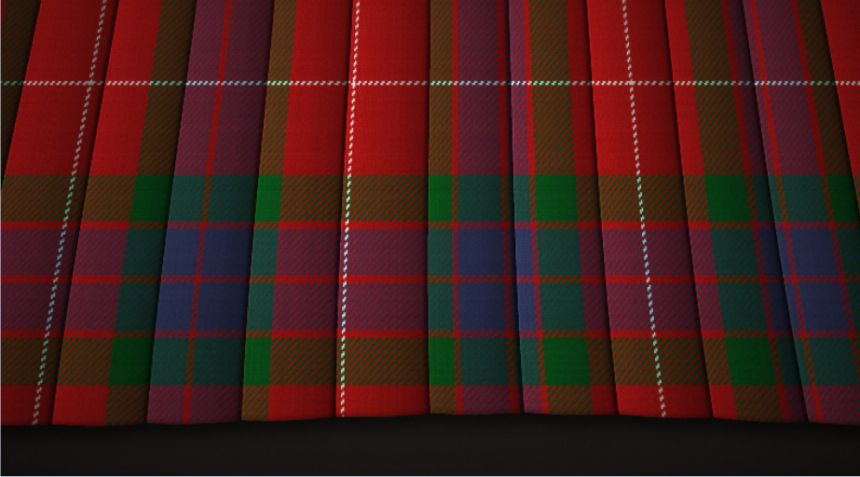
The tall man was Simon Fraser, seventeenth Lord Lovat, chief of Clan Fraser of Lovat, commanding the 1st Special Service Brigade of commandos. The War Office had forbidden pipers to play in action since the First World War, when too many had been shot. Lovat, when Millin pointed this out, is reported to have said that this was an English rule and did not apply to Scots. So Millin played. He played Highland Laddie in the water and The Road to the Isles up the beach, and he kept playing along the sand with mortar bombs falling and men dying on either side of him. He was not hit. German prisoners said afterwards that they had seen him, and had not fired, because they thought he had gone mad. The chief’s own clan cloth is the scarlet Fraser tartan, one of the brightest in Scotland.
Lovat’s brigade fought inland to the bridges over the Orne, where they were needed by noon, and he walked up to the airborne troops holding them, still with his stick, and apologised for being a couple of minutes late. Six days later he was badly wounded by a shell and out of the war. Millin lived until 2010, and there is a bronze statue of him now on the beach at Colleville-Montgomery, in his kilt, playing.
The Fox
The Frasers of Lovat had been chiefs in the country around Beauly, west of Inverness, since the fourteenth century, and they had a gift for the memorable gesture that ran in the blood. The most notorious of them was the eleventh Lord, another Simon, known to history as the Fox, who spent fifty years changing sides between the Stuarts and the Hanoverians, kidnapped and forcibly married a widow to get her estate, was outlawed, pardoned, and outlawed again, and finally, at the age of about eighty, sent his clan out for Prince Charles in 1745 while staying at home himself in case it went wrong.
It went wrong. He was caught, tried by the House of Lords, and beheaded on Tower Hill in April 1747, the last man in Britain to die that way. The crowd that came to watch was so large that a stand collapsed and killed about twenty of them, and the old man, told of it on the scaffold, is supposed to have said, “The more mischief, the better sport.” Then he recited a line of Horace and laid his head on the block. Nobody has ever been sure whether he was a villain or simply the last great Highland chief of the old kind.
The clan lost everything and got most of it back. His son raised a regiment, the 78th Fraser Highlanders, that stormed the Heights of Abraham at Quebec in 1759 and settled half of Nova Scotia afterwards, which is why there are more Frasers in Canada than in Scotland. A later Lovat raised the Lovat Scouts for the Boer War from his own stalkers and ghillies, the first sniper unit in the British Army, and it was the same instinct, a chief bringing his own people to a war, that put a piper on the beach in 1944. The Lovat estates were restored in 1774. The clan’s motto is Je suis prest, I am ready, in an old French spelling the family has never modernised, and its crest is a stag’s head. The chief today is the eighteenth Lord Lovat, the grandson of the man on the beach.
The most popular Fraser
There are several Fraser tartans, and the family has never quite agreed which is the oldest. The one everybody wears is the red one, and the archives are frank about where it came from. It is the sett published in the Vestiarium Scoticum of 1842, and they call it, without hedging, “the most popular Fraser pattern today.” They also record the scholar D. W. Stewart’s contention that it was in fact an early Grant tartan, which he traced to a portrait of a Grant laird painted in the early eighteenth century, and that the Wilsons of Bannockburn wove the pattern before 1842 without giving it a name. An older sett, on a green ground, with a stronger claim to age, is worn as the hunting tartan, and there is a Fraser of Lovat in a different arrangement of the same colours. Whatever its age, the red sett now goes casually with a laced ghillie shirt, sold by most Highland outfitters as a shirt kilt.
The red is what the clan means when it says Fraser. It is a scarlet ground crossed by bands of green and blue, with a single fine white line through the red at the pivot, and it is one of the brightest and most recognisable tartans in Scotland. Retailers offer Fraser tartan in the red, the hunting green and the Lovat, in Modern and Ancient colours, made to order as kilts, skirts, sashes, scarves and ties, or by the yard. The name has been popular far beyond the clan since a television series put a red Fraser kilt on a great many screens, and the archives, which were written before that, do not comment.
Inverness, 31 December
Callum Fraser is twenty-four, an apprentice joiner in Inverness, and his grandfather was a commando, though not one of Lovat’s, and not on the beach. The grandfather is dead. The kilt is not. It came to Callum last year, eight yards of red Fraser made in 1978 for a man of exactly his height, and it fits him, which his grandmother says is no coincidence.
He is wearing it to the Hogmanay street party, which in Inverness means the Northern Meeting Park, a stage, a band, several thousand people and a temperature a few degrees either side of freezing. What he had not got was anything to wear on top of it, because his grandfather’s Prince Charlie jacket was made for a black-tie dinner in 1978 and is not going to a street party in 2026.
What he wanted was the shirt he had seen on pipers and at the games: the loose one with the laced front and the big sleeves, which is worn out over the kilt, open at the neck, and looks like what a Highlander wore under his plaid, because it is. He found that it is called a Jacobite shirt, or a ghillie shirt, and he found it at Scottish Kilt, in a shirt kilt range that sets out both kinds: the laced ghillie shirt for daytime and casual wear, worn outside the kilt, and the wing-collar or turndown dress shirt for evening under a jacket.He ordered the ghillie in cream cotton, heavy enough for December, with the leather lace at the throat, and, on his grandmother’s advice, a plain black wool waistcoat to button over it, because a loose shirt in a Highland wind at midnight is a loose shirt.
He wears it on the night with the red kilt, the laces loose, the waistcoat buttoned, cream hose, black boots and a plain brown day sporran with his phone and his keys in it, and the shirt’s sleeves rolled to the elbow because it is, as it turns out, hot in a crowd of four thousand, whatever the thermometer says.
At the bells his grandmother, who is seventy-nine and has come to the park for the first time in twenty years, stands beside him for Auld Lang Syne and looks at the shirt.
“Your grandfather had one of those. For the games.”
“I know. I saw the photos. That’s why.”
“He’d have told you about the piper on the beach.”
“He did. Every Hogmanay.” Callum takes her hand for the song. “Lovat said it was an English rule. Millin played the whole way up.”
“And the Germans thought he was daft.”
“They didn’t shoot him, Gran. That’s the point.”
Je suis prest
The Frasers of Lovat gave Scotland a chief who lost his head at eighty with a joke, a regiment that took Quebec, and a chief who walked up a beach under fire with a piper playing because he thought the rule was English. They are not a family that has ever done things quietly.
Their red tartan is the most popular Fraser, whatever the scholars say about the Grants, and it looks as it should on a joiner from Inverness at the bells, under a laced shirt like the ones Highlanders wore beneath the plaid, with the sleeves rolled and his grandmother’s hand in his.