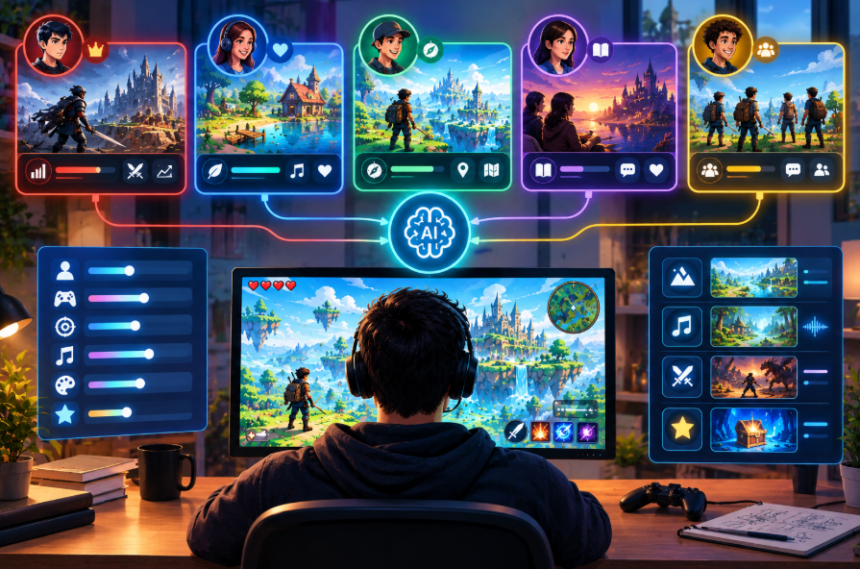
Every player is different. Someone who loves difficult challenges wants a completely different experience from someone seeking relaxation. A player who has fifty hours in a game needs different content than someone on their first session. Yet most games treat all players the same, forcing them into a single difficulty, a single progression path, a single experience regardless of what they actually want. AI is changing this by making personalization practical at scale, automatically adjusting games to individual players without requiring developers to manually create dozens of parallel experiences. That personalization transforms games from one-size-fits-all products into experiences that feel specifically designed for each person who plays them.
Why Personalization Matters More Than Scale
Traditional game design treated all players as a monolithic group. You picked a difficulty level, and that was the experience everyone got. You designed progression assuming a certain play style, and players had to adapt to your assumptions. That one-size-fits-all approach simplified development, but it meant some players felt challenged while others felt bored, some felt respected while others felt frustrated.
Personalization solves that by recognizing that players want different things and adjusting based on what each individual player actually needs. That’s not about making games easier for bad players, it’s about making games work better for whoever is playing, whatever their skill level or preference actually is. A challenging player gets the difficulty they want. A casual player gets an experience they can enjoy. Both feel like the game was built for them.
How AI Enables Personalization At Scale
Tracking What Actually Matters About Player Behavior
AI systems can analyze how a player actually engages with a game far more nuanced than traditional metrics allow. It’s not just about skill level, though that matters. It’s about whether a player prefers exploration or linear progression, whether they engage with story or skip it, whether they want social interaction or solo play, how much time they typically have per session, what keeps them engaged and what frustrates them.
That deep behavioral understanding comes from observation during play, not from asking players upfront. Players often can’t articulate what they actually want, but their behavior in-game reveals it clearly. An AI system tracking that behavior can make adjustments that feel remarkably fitting even without explicit instruction from the player.
Adjusting Difficulty Dynamically
The traditional approach to difficulty meant choosing a setting upfront and hoping it worked for your entire experience. AI-assisted difficulty adjustment watches how a player is actually performing and adjusts challenge level to maintain engagement, getting harder as they improve, backing off if they’re struggling. That dynamic adjustment means a player stays in the engagement zone where they’re challenged but not overwhelmed, which is where games are most fun.
This isn’t about making games easier for struggling players, it’s about making them appropriately challenging. A player who’s dominating should face harder challenges. A player who’s barely surviving should face slightly easier encounters. That calibration happens automatically based on observation, without requiring player intervention or menu navigation.
Customizing Progression and Content
Different players want different kinds of progression. Some want clear numerical advancement they can track. Others want to unlock cosmetics. Others want new story beats. Some want to master core mechanics deeply before encountering new ones. Others want constant novelty. AI can tailor progression to what each player actually responds to, presenting advancement that feels meaningful specifically to them.
Similarly, content can be personalized. A player who loves exploration gets more hidden areas. A player who prefers efficiency gets streamlined paths. A player who wants challenge gets optional harder variants. A player seeking story gets more narrative content. That customization doesn’t require creating entirely different games, it’s about emphasizing different elements based on individual preference.
Types of Personalization That Transform Experience
Difficulty That Stays Just Right
Dynamic difficulty is perhaps the most transformative personalization, because engagement depends so directly on difficulty being appropriate. Too hard and players get frustrated and quit. Too easy and they get bored. Maintaining that perfect balance is nearly impossible with static difficulty levels, but AI adjusts continuously based on performance, keeping players in flow state where the challenge feels just right.
Pacing That Matches Player Preference
Some players want constant action. Others want time to absorb story and explore. Some want long sessions, others play in short bursts. Pacing personalization recognizes these differences and adjusts how quickly new content appears, how much information is presented at once, how frequently major story beats or challenges appear. That customization means players feel like the game respects their play style rather than forcing a single rhythm.
Social Features Based on Actual Preference
Some players love multiplayer and social interaction. Others barely tolerate it. Rather than forcing everyone into the same social systems, AI can assess how much social engagement each player actually wants and adjust how prominent social features are, how often they’re suggested, what kinds of social interaction get highlighted. A player who loves competition sees leaderboards. A player who prefers solo play sees minimal social prompts.
Story and Narrative Adaptation
For games with narrative elements, AI can track which themes resonate with a player, what story beats engage them, what pacing works for their play style. A story-focused player gets more narrative depth and dialogue. A mechanics-focused player gets story that doesn’t interrupt flow. Neither experience feels incomplete, they’re just emphasizing different elements based on actual preference.
A Practical Example of Personalized Design
Endless Bus Simulator demonstrates what happens when games are designed with personalization in mind, adjusting to how individual players engage rather than forcing everyone into the same experience. The game shows how understanding each player’s preferences and adjusting accordingly creates something that feels specifically tailored even within a single game design.
This kind of personalized experience is increasingly achievable with modern tools when you learn how to use AI game maker platforms that handle personalization systems automatically, letting developers focus on creating the content that gets personalized rather than building complex adaptation systems from scratch.
The Player Experience of Personalization
Players notice when a game is personalized for them. It feels like the game understands what they want and adjusts accordingly. A player who’s struggling gets just a bit easier, then gets harder again as they improve, never feeling condescended to. A player who wants story gets more dialogue, but it doesn’t feel forced. A player who wants efficiency gets streamlined progression. That feeling of being understood, of the game adapting to you rather than forcing adaptation to it, creates loyalty that generic experiences rarely achieve.
This personalization extends to discovery. A player who loves competitive content sees competitive opportunities. A player seeking casual relaxation sees peaceful options. That discovery feels like the game knows them, which builds emotional connection far stronger than standard game design creates.
What Personalization Doesn’t Do
Personalization doesn’t replace good core design. A game with a broken core loop won’t be saved by personalization. It doesn’t mean every player gets their exact preference, sometimes players benefit from being challenged outside their comfort zone. It doesn’t mean eliminating difficulty entirely or removing any challenge that might frustrate anyone. It means calibrating challenges and content to what works best for each individual while still maintaining the cohesion that makes a game feel intentional.
Why This Matters For Game Industry
As players become more accustomed to personalization in all digital experiences, games that don’t adapt to individual preferences increasingly feel outdated. Players notice when a game forces them into a one-size-fits-all experience. They compare it to games that understand and adjust to them. That comparison drives them toward games with personalization and away from games without it.
This personalization is democratizing game development because AI handles the complex adaptation that used to require enormous development effort. A solo developer can now build personalization that used to require large teams, since the systems are handled automatically.
Common Misconceptions About Personalization
Some developers worry that personalization compromises the artistic vision, that adjusting for different players waters down the experience. Actually, personalization lets the core vision reach more players more effectively. A challenging game is still challenging for players who want challenge. A story-focused game still tells its story for players who engage with narrative. Personalization doesn’t compromise vision, it delivers that vision to the audience it was intended for.
Others worry that personalization creates imbalance or unfairness. In multiplayer contexts, that’s a fair concern that requires careful implementation. In single-player contexts, what matters is whether each player is engaged and satisfied with their experience, not whether all players experience identical difficulty.
Final Thoughts
AI game development for personalized player experiences means shifting from designing one game for all players to designing adaptive systems that adjust to what each individual player actually needs. That personalization creates games that feel specifically designed for whoever is playing, regardless of their skill level, preferences, or available time. Players feel understood and respected when games adapt to them. They stay longer, engage more deeply, and build loyalty toward games that recognize their individuality rather than forcing them into a standard mold. That personalization is increasingly becoming not a luxury feature but an expectation, and games without it increasingly feel out of touch with how modern players want to engage.