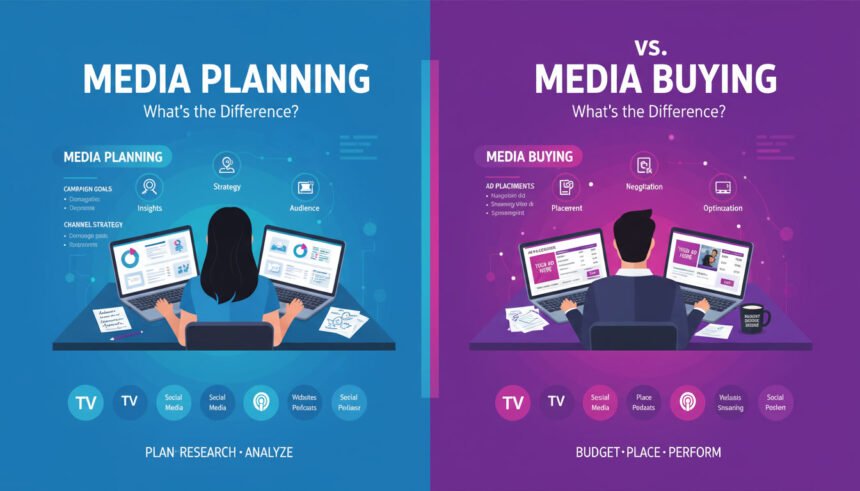
Media planning and media buying are two closely connected parts of advertising, but they are not the same job. Both help businesses reach the right audience, choose effective advertising channels, and make better use of their marketing budgets. The main difference is simple: media planning decides where, when, and why an advertising campaign should run, while media buying focuses on purchasing and managing the actual ad placements.
For businesses investing in digital advertising, television, radio, print, streaming, podcasts, or social media, understanding this difference can make campaign decisions much easier. A strong strategy often requires both planning and buying because choosing the right channel is only one part of achieving good advertising results.
What Is Media Planning?
Media planning is the strategic process of deciding how an advertising budget should be used to reach a specific audience. A media planner looks at the target audience, campaign objectives, available channels, budget, timing, and expected results before recommending where advertisements should appear.
The purpose of media planning is to create a practical advertising roadmap. Instead of immediately purchasing ad space, the planner considers questions such as who the campaign needs to reach, which channels the audience uses, how frequently people should see the message, and how much money should be allocated to each channel.
Media planning can cover traditional and digital channels. Depending on the campaign, this may include television, radio, print, social media, programmatic advertising, streaming platforms, podcasts, and other digital placements.
What Is Media Buying?
Media buying is the process of purchasing advertising space or placements based on the campaign strategy. A media buyer takes the plan and works to secure suitable placements, negotiate rates, manage bookings, and make sure advertisements appear where and when they are supposed to.
The role can involve negotiating with publishers, broadcasters, platforms, websites, advertising networks, and other media providers. In some situations, media buyers use the purchasing power of an agency to negotiate better rates or placements for clients.
Media buying is not simply about purchasing the cheapest advertising space. The buyer needs to consider the quality of the audience, placement, timing, cost, reach, and campaign objectives. In digital advertising, buying can also involve monitoring performance and adjusting campaigns based on results.
Media Planning vs Media Buying at a Glance
The easiest way to understand the difference is to look at the main responsibility of each function.
| Media Planning | Media Buying |
| Creates the advertising strategy | Executes the advertising purchase |
| Identifies the target audience | Secures ad placements |
| Selects appropriate channels | Negotiates rates and inventory |
| Determines budget allocation | Manages spending |
| Establishes campaign timing | Books and manages placements |
| Estimates reach and frequency | Monitors delivery |
| Defines campaign objectives | Optimizes purchases and placements |
| Focuses on strategy | Focuses on execution |
In simple terms, media planning answers “where should we advertise and why?” while media buying answers “how do we secure and manage those advertising placements?”
The two functions work together rather than operating as completely separate activities.
| 🔗 You may also like: Allysplay.com Gaming Hub |
| 🔗 You may also like: Gaming Updates from EtrueSports & EtrueGames |
The Main Difference Between Media Planning and Media Buying
The biggest difference is their position within the advertising process. Media planning generally comes before media buying because the plan establishes the direction for the campaign.
For example, a business may want to reach working professionals in a particular age group. A media planner might determine that a combination of social media, streaming audio, podcasts, and connected TV could provide useful audience coverage. The planner then considers the budget and campaign timing before creating a recommended media mix.
The media buyer then works with the selected channels and placements. Their responsibility may include negotiating prices, purchasing inventory, scheduling advertisements, and managing the campaign’s delivery. The buyer turns the strategic plan into actual advertising placements.
However, the relationship is not always completely linear. Media buyers can provide information about pricing, availability, inventory, and placement opportunities that influences the plan. Planning and buying can therefore inform each other throughout a campaign.
What Does a Media Planner Do?
A media planner begins by understanding the advertising objective. The objective could be increasing brand awareness, generating leads, promoting a product, driving website traffic, or supporting another business goal.
The planner then studies the intended audience and considers which media channels can reach that audience effectively. Different audiences consume media differently, so a channel that works well for one campaign may not be appropriate for another.
Budget is another important part of planning. A media planner needs to determine how much money should be assigned to different channels and how the available budget can produce useful reach and frequency.
Timing also matters. Some campaigns may run continuously, while others may focus on a product launch, seasonal period, event, or promotional window. The planner develops a schedule that aligns media activity with the campaign objective.
What Does a Media Buyer Do?
A media buyer takes the strategy and works on securing the advertising inventory required to execute it. This can involve communication with media owners, publishers, broadcasters, platforms, advertising networks, or other suppliers.
One important responsibility is rate negotiation. Agencies and experienced buyers may use industry knowledge and purchasing volume to negotiate advertising costs and placement terms. The goal is not simply to reduce the price but to obtain useful value from the available budget.
Media buyers also manage placements. Depending on the channel, they may coordinate advertisements across television, radio, digital platforms, social networks, programmatic networks, print publications, podcasts, or streaming services.
After campaigns begin, buyers may also monitor delivery and performance. If placements are underperforming or inventory changes, adjustments may be necessary.
How Media Planning and Buying Work Together
Although media planning and media buying have different responsibilities, separating them too strictly can create problems. A successful campaign requires communication between the strategic and execution sides.
The process often begins with the business objective. The planning stage identifies the audience, channels, budget, timing, and overall media strategy. Once those decisions are made, the buying process begins.
The buyer then works to secure the required placements. Information from the buying process can sometimes lead to adjustments in the original plan. For example, pricing or inventory availability may make one channel more attractive than another.
After launch, performance information can be used to improve future planning and buying decisions. This creates a cycle in which strategy, execution, measurement, and optimization work together.
| 🔗 You may also like: Quick10sec.com |
| 🔗 You may also like: Exhentaime |
Why Audience Research Matters in Media Planning
Audience research is one of the foundations of effective media planning. Advertising is more useful when businesses understand who they are trying to reach and how that audience consumes media.
A planner may consider factors such as age, location, interests, behavior, purchasing habits, and media consumption patterns. The exact information used depends on the campaign and the available data.
For example, if an audience spends significant time using digital platforms and streaming services, a campaign may need a different media mix than one targeting an audience that relies heavily on traditional television or radio.
The goal is not to advertise everywhere. It is to identify the channels that can provide meaningful access to the intended audience within the available budget.
The Role of Budget in Planning and Buying
Budget affects both media planning and media buying, but each function approaches it differently.
During planning, the budget helps determine the overall media mix. The planner may recommend how much should be allocated to different channels based on the campaign objectives and expected audience coverage.
During buying, the budget becomes an execution constraint. Buyers need to secure placements without exceeding the approved spending level. They may negotiate rates, compare inventory, and prioritize opportunities that provide better value.
A large budget does not automatically guarantee a successful campaign. Poor channel selection, weak targeting, unsuitable timing, or inefficient buying can reduce the value of advertising spend.
Traditional Media Buying vs Digital Media Buying
Media buying can look very different depending on the advertising channel.
Traditional media buying may involve television, radio, newspapers, magazines, outdoor advertising, or other offline placements. These campaigns often involve negotiations, schedules, inventory availability, geographic coverage, and agreed placement terms.
Digital media buying can involve search advertising, social media, programmatic advertising, display placements, streaming platforms, and other online channels. Digital campaigns can provide more frequent performance data and may allow advertisers to adjust targeting, budgets, and placements during the campaign.
The underlying principle remains similar: the advertiser wants to purchase media exposure that supports a specific business objective. However, the tools, data, pricing models, and optimization methods can differ significantly.
Media Planning and Programmatic Advertising
Programmatic advertising has changed how some media buying is performed. Instead of manually negotiating every individual placement, technology can automate the purchasing and delivery of digital advertising inventory.
This does not eliminate media planning. In fact, planning remains important because advertisers still need to determine their target audience, campaign objectives, budget, channels, and performance goals.
The buying process may be more automated, but advertisers still need to make strategic decisions about where their budget should be invested. Human oversight remains important for campaign quality, measurement, brand suitability, and optimization.
Media Planning for TV, CTV, and OTT
Television advertising remains an important media channel, while connected TV and over-the-top platforms have expanded the options available to advertisers.
Traditional TV planning may consider factors such as programming, audience size, geographic markets, timing, and frequency. CTV and OTT campaigns can provide additional targeting and measurement opportunities through streaming environments.
For businesses, the choice between traditional television and streaming should depend on campaign objectives and audience behavior rather than simply following the latest advertising trend.
Media planners evaluate how each channel contributes to reach and audience coverage, while media buyers work to secure the appropriate inventory and placements.
Media Planning for Audio and Podcasts
Audio advertising is another area where planning and buying work closely together. Radio, streaming audio, and podcasts can provide different ways to reach audiences.
A media planner considers which type of audio environment matches the target audience and campaign objectives. Factors such as geography, listening behavior, audience characteristics, and campaign timing can influence the decision.
The buyer then works with the relevant media providers or platforms to secure placements. Depending on the campaign, this could involve traditional radio inventory, streaming audio advertisements, or podcast advertising.
How Performance Data Influences Both Functions
Modern advertising campaigns generate significant amounts of performance information. This data can help advertisers understand whether their media investments are producing the intended results.
Media buyers may monitor delivery, costs, placements, and campaign performance. Planners can use the broader results to evaluate whether the overall media strategy is working as intended.
If one channel is producing stronger results than another, the campaign may be adjusted. This can mean shifting budget, changing placements, modifying timing, or reconsidering the media mix.
The important point is that planning does not necessarily end when buying begins. Campaign performance can create new information that improves both current execution and future planning.
| 🔗 You may also like: Robuxizz.com |
| 🔗 You may also like: Quad Equalizer |
Do Businesses Need Both a Media Planner and a Media Buyer?
The answer depends on the size and complexity of the campaign.
A small business running a simple digital advertising campaign may handle planning and buying internally or through one marketing professional. Many advertising platforms also combine planning, targeting, purchasing, and reporting within the same system.
Larger campaigns can benefit from dedicated expertise. An agency may have separate specialists for strategy, planning, buying, creative work, analytics, and campaign management.
For businesses using multiple channels, external expertise can be especially useful because media planning and buying can become complicated as the number of audiences, platforms, placements, and markets increases.
Media Planner vs Media Buyer: Skills
Media planners typically need strong analytical and strategic skills. They must understand audiences, advertising channels, budgets, campaign objectives, and performance measurement. They also need to turn business goals into practical media strategies.
Media buyers require strong negotiation, communication, organization, and analytical skills. They need to understand advertising inventory, pricing, placements, schedules, and campaign delivery.
There is considerable overlap between the two roles. Both need an understanding of advertising performance and audience behavior. The difference is primarily in emphasis: planners focus more heavily on strategy and allocation, while buyers focus more heavily on execution and purchasing.
Common Mistakes Businesses Make
One common mistake is treating media buying as simply purchasing the cheapest advertising space. A low price does not necessarily represent good value if the placement reaches the wrong audience.
Another mistake is selecting channels without first defining the campaign objective. Businesses sometimes choose platforms because they are popular rather than because they are appropriate for their target audience.
Ignoring campaign data is another problem. Media performance can change over time, and advertisers may miss opportunities if they never evaluate their results.
Finally, planning too narrowly can create an unbalanced campaign. A good media strategy should consider the relationship between audience, channel, budget, timing, creative, and measurement.
Which One Is More Important: Media Planning or Media Buying?
Neither is automatically more important. They perform different functions within the same advertising process.
Strong planning without effective buying can result in a good strategy that is poorly executed. Similarly, efficient buying without thoughtful planning can lead to advertisements being purchased at good prices but placed in channels that do not support the business objective.
The strongest campaigns connect the two. Planning establishes the direction, while buying puts that direction into action. Performance data then provides feedback that can improve future decisions.
Final Thoughts
Media planning and media buying are closely connected, but they answer different questions. Media planning determines the advertising strategy, including the audience, channels, budget, timing, and overall media mix. Media buying focuses on securing and managing the advertising placements required to execute that strategy.
For businesses, understanding the difference makes it easier to evaluate agencies, marketing teams, and advertising proposals. Whether a campaign uses digital advertising, television, CTV, OTT, radio, podcasts, social media, or a combination of channels, effective planning and buying can work together to make the available advertising budget more purposeful.
FAQs
What is the difference between media planning and media buying?
Media planning focuses on deciding the target audience, advertising channels, budget, and campaign timing. Media buying focuses on purchasing and managing the advertising placements selected during the planning process.
Is media planning done before media buying?
Yes. Media planning generally comes first because it establishes the campaign strategy. Once the channels, budget, audience, and timing are determined, media buying can begin.
What does a media planner do?
A media planner researches the target audience, selects suitable advertising channels, allocates the budget, and develops a campaign schedule. The goal is to create a media strategy that supports the business’s advertising objectives.
What does a media buyer do?
A media buyer secures advertising placements and manages the purchasing process. This can include negotiating rates, booking ad space, managing schedules, monitoring placements, and optimizing media spending.
Do businesses need both media planning and media buying?
For larger or multi-channel campaigns, having both functions can be valuable. Media planning provides the strategy, while media buying handles execution. Smaller businesses may sometimes manage both responsibilities through one person or marketing team.