If you run a restaurant, café or catering business outside the Netherlands, the word afruimwagens may look like a typing mistake. It is not. It is a normal Dutch trade word, and if you buy professional catering equipment from European suppliers, you will meet it sooner or later.
Afruimwagens are clearing trolleys — the wheeled carts that staff use to collect dirty plates, glasses, cutlery and trays from tables and take them to the washing area. This guide explains, in plain words, what afruimwagens are, how they are used, what types exist, and how to choose the right one for your business.
One confusion is cleared up at the start: some English-language websites attach strange extra meanings to this word. In the Dutch catering trade, where the word comes from, it means one clear thing. This guide sticks to that documented meaning from start to finish.
What Does the Word “Afruimwagens” Mean?
The word is Dutch, and it breaks into two simple parts. Afruimen means “to clear away” — it is the everyday Dutch verb for clearing a table after a meal. Wagen means a cart or wagon. Put together, an afruimwagen is a “clearing cart”. The word you are reading about, afruimwagens, is simply the plural: more than one clearing cart.
In English-speaking kitchens, the same equipment is usually called a clearing trolley, a bussing cart or a dish cart. German has a close cousin, the Abräumwagen, built from the German verb for clearing away. The names change by country, but the object is the same: a sturdy trolley on wheels, built to move used tableware from the dining area to the wash-up.
It is important to understand that afruimwagen is a category name, not a brand. No single company owns the word, in the same way that no company owns the words “serving trolley”. Many manufacturers make afruimwagens, and Dutch and European catering suppliers list them as a standard product group, with sizes, materials and prices shown like any other line of professional kitchen equipment.
| 🔗 You may also like: |
|---|
| Capacity Requirements Planning: A Practical Guide |
| Domikyo.com Explained: Technology, Business, Finance and Modern Digital Trends |
What Is an Afruimwagen Used For?
The job of an afruimwagen is simple to describe. During service, a member of staff pushes the trolley from table to table. Used plates are stacked on a shelf, cutlery goes into a tub, glasses are placed where they cannot slide, and food waste is kept apart. When the trolley is full, everything travels to the dishwashing area in one trip, and the empty tables can be cleaned and set again for the next guests.
Sorting at the table is the quiet skill behind the trolley. Plates of the same size stack neatly and safely. Cutlery dropped loose into a deep container does not scratch plates or get lost among leftovers. Glasses travel upright and separated, instead of being carried three at a time in someone’s hands. Waste food is scraped into its own bin, so it does not end up in the wash water more than it has to.
The result is a calmer, faster clearing process. Staff walk less, carry less and drop less. There is less clatter in the dining room, which guests notice more than most owners expect. And because one person with a trolley can clear the work of several trips by hand, the dining room turns around faster at the busiest moments of the day — exactly when speed matters most.
Where Are Afruimwagens Used?
Restaurants, cafés and bars are the most obvious users. Anywhere that guests sit down, eat and leave tableware behind, there is clearing to be done, and a clearing trolley is the standard Dutch answer to that job.
Hotels use them heavily in breakfast rooms and restaurants, where a large number of guests eat in a short window of time and staff must clear, clean and reset tables again and again. Buffets and self-service restaurants depend on them even more, because guests help themselves and leave full trays on tables.
The same trolleys work in company canteens, school dining halls, hospitals and care homes, where meals are served on trays and collected in rounds. Event venues and outside caterers use them at weddings, conferences and parties, where a room full of used tableware has to disappear quickly, often through a temporary kitchen set up for the day.
The Main Types of Afruimwagens
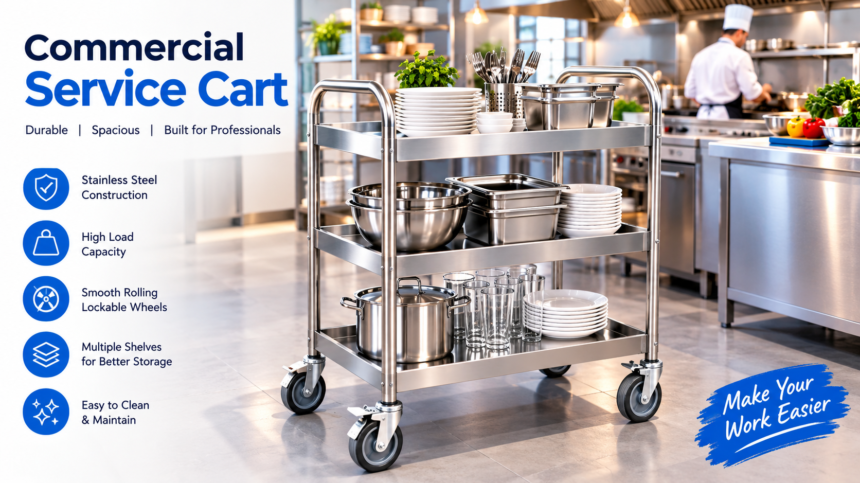
The most common type is the open shelf trolley. It has two or three flat shelves on a frame with four swivel wheels. Staff load plates, bowls and trays directly onto the shelves. This simple design suits most restaurants and cafés, because it is easy to load, easy to clean and easy to move around.
The second type is the tray clearing trolley, known in Dutch as a dienbladenafruimwagen. Instead of flat shelves, it has rails down both sides, and full trays slide in one above another, like drawers. Makers such as the German equipment manufacturer Hupfer build these trolleys around the standard tray sizes used in professional catering, including Gastronorm (GN) sizes, so that trays from the servery fit the trolley exactly. They are the workhorses of canteens, hospitals and self-service restaurants, where every meal leaves on a tray. Some models add a pull-out tray for glasses, so glassware travels safely above the dirty plates.
The third group is trolleys with tubs and bins. These carry removable plastic containers for cutlery, waste and small items, and sometimes a closed section for rubbish. Enclosed and plastic-bodied models are popular in hotels and healthcare settings, where a quieter trolley that hides the dirty dishes from view fits the environment better than an open steel frame.
Whichever type you choose, pay attention to the details that differ between models. Some shelves are pressed with raised edges so stacked plates cannot slide off in motion. Some frames have bumper corners to protect walls and door frames — a small feature that saves real repair costs in narrow corridors. Handle height matters too: a trolley that is pushed hundreds of metres a day should let staff walk upright with both hands on the bar, not lean over a low frame.
Why Stainless Steel Is the Standard Material
Walk through a Dutch catering catalogue and one word appears again and again: RVS. It stands for roestvrij staal — stainless steel. There are good reasons why it is the standard material for afruimwagens. It does not rust in a wet wash-up area. It survives daily washing, knocks from doors and lifts, and hot trays. Its smooth surface has nowhere for dirt and germs to hide, and it can be wiped or washed down quickly between services.
Quality models are built from a welded tube frame with shelves that are easy to clean underneath. Welded joints matter more than they sound: a bolted frame slowly works loose under heavy daily use, while a welded one stays rigid for years of pushing loads across kitchen floors.
Plastic trolleys are the main alternative. They are lighter, quieter and usually cheaper, which makes them a sensible choice for small cafés, offices and care settings. Their weakness is that plastic scratches over time, and deep scratches are harder to keep truly clean. Aluminium sits in the middle: light like plastic, but stronger. The honest summary is that busy professional kitchens usually choose stainless steel, and lighter-duty sites can save money with plastic.
Afruimwagen, Serving Trolley or Regaalwagen?
Three Dutch trolley words are often confused, so here is the simple split. An afruimwagen moves dirty items away from the table. A serving trolley (serveerwagen) does the opposite job: it carries clean dishes, food and drinks out to guests, and is built to look presentable in the dining room. Some businesses use one trolley for both jobs at different times of day, but the designs are aimed at different work.
A regaalwagen is a rack trolley. It lives in the dishwashing area and holds the plastic racks that go through the dishwasher, or Gastronorm containers in the kitchen. Its rails match the racks, so staff can sort glasses, cups and plates into the right rack as they unload, then slide the rack straight into the machine. In a well-run wash-up, the afruimwagen delivers the dirty load and the regaalwagen organises what happens next.
| 🔗 You may also like: |
|---|
| Target Company URL Research: How to Find and Verify the Right Business Website |
| Research Dossier for a Target Company: How to Build a Complete Company Intelligence Report |
What Can You Carry on an Afruimwagen?
Almost everything a finished meal leaves behind. Plates, bowls, cups and saucers form the main load. Glasses and bottles travel on the top shelf or in a glass tray, where they can be watched. Cutlery goes into a deep tub, ideally into water or a soaking container if your wash-up works that way. Trays either stack flat on a shelf trolley or slide into the rails of a tray trolley.
Food waste and used napkins belong in the trolley’s bin or a lined container, kept apart from the tableware that is heading for the dishwasher. Some staff also carry a cloth and a small spray bottle on the trolley, so a table can be wiped the moment it is cleared, in the same visit. The rule for every load is the same: heavy items low, fragile items where they cannot slide, and nothing stacked so high that the person pushing cannot see over it.
How to Choose the Right Afruimwagen
Start with your building, not with a catalogue. Measure the narrowest door, the lift, and the gaps between tables that the trolley must pass through. A trolley that is five centimetres too wide is a daily frustration, not a small mistake. Then think about volume: how much tableware lands on tables in your busiest hour, and how many trips you are willing to make. This is basic capacity thinking, and our guide to capacity requirements planning shows how to match equipment capacity to real demand instead of guessing.
Next, look at the wheels. Four swivel castors make a trolley easy to turn in tight spaces, and brakes on two wheels keep it still while it is being loaded on a slope or beside a table. Wheel size and material should match your floors: small hard wheels suit smooth kitchen floors, while larger, softer wheels are kinder on tiles, thresholds and outdoor paving at events.
Finally, compare the details that decide daily life with the trolley: shelf strength, the height between shelves (tall glasses and jugs need room), whether tubs lift out for emptying, and how the whole thing is cleaned. Compare models from more than one supplier before you buy, in the same way you would compare any equipment purchase — our Lamps4U guide to choosing lamps and lighting shows the level of detail a good buying guide should cover, and catering equipment deserves the same care.
Using and Looking After an Afruimwagen
Good habits make a trolley safer and longer-lasting. Load it evenly, with the heaviest stacks over the wheels and nothing hanging over the edges. Move at walking pace, and take corners wide: a trolley full of plates carries real weight, and it does not stop quickly. Moving a loaded trolley safely follows the same basic thinking as moving goods on the road, the subject of our look at Transjoaimo and its road transport services — secure the load, know roughly what it weighs, and never rush a heavy load through a crowded space.
Cleaning is part of the job, not an extra. The trolley should be washed down at the end of service, including the shelves and the frame corners where food collects. Wheels deserve a regular check: hair, string and food waste wrap around castors and slowly stop them turning freely. A trolley that is washed daily and checked weekly will roll smoothly for years; one that is ignored becomes hard to push, noisy and unhygienic all at once.
A Quick Word on Hygiene
A clearing trolley exists to keep a dining room clean, so it must never become a source of contamination itself. The basic rule of professional kitchens is separation: dirty tableware travels one way, and clean tableware, fresh food and guests’ meals travel another. A trolley loaded with dirty dishes should not be used to carry clean plates back to tables in the same run, and staff should wash their hands after handling the dirty load and before touching clean items.
This is one reason enclosed models and separate tubs exist. Waste stays in its bin, glasses stay out of the food scraps, and the trolley itself is made of materials that can be washed properly. None of this is complicated, but it has to be routine — the busiest service of the week is exactly when hygiene habits matter most.
Buying Online? Check the Supplier First
Because afruimwagens are a trade product, most buyers order them from catering-equipment suppliers rather than general marketplaces. That is usually a good thing — trade suppliers list real specifications, shelf loads and tray sizes — but it is still worth checking who you are dealing with. Some websites use trade words like this one purely to attract search traffic and sell nothing relevant at all.
Two habits protect you. First, make sure you are on the supplier’s real website and not a copy or a content page borrowing its name; our guide to finding and verifying the right business website walks through that check step by step. Second, for a larger order, gather the basic facts about the company — its trading history, contact details and reviews — before you pay; the method in our research dossier guide turns that into a simple, repeatable routine. A genuine horeca supplier will always withstand this level of checking.
Conclusion
Afruimwagens are not a mystery product and not a new invention. The word is Dutch for clearing trolleys: the wheeled carts that carry dirty plates, glasses, cutlery and trays from the table to the wash-up in restaurants, hotels, canteens, hospitals and event venues. The best models are stainless steel, sized to your trays and your building, with strong shelves, good wheels and a design your staff can clean in minutes. Choose the size for your busiest hour, keep dirty and clean work separate, and buy from a real trade supplier you have checked. Do that, and this plain piece of equipment will quietly speed up every service you run.
FAQs
What does “afruimwagens” mean in English?
It is Dutch for “clearing carts” or “clearing trolleys”. The singular is afruimwagen. The word combines afruimen (to clear away) with wagen (cart), and it names the trolleys used to collect used tableware and take it to the dishwashing area.
Is an afruimwagen the same as a bussing cart?
Yes, it is the same type of equipment. Bussing cart is the common American term, clearing trolley is common in British English, and afruimwagen is the Dutch trade term. Designs vary by maker, but the job — collecting and transporting used dishes — is identical.
What are afruimwagens made of?
Most professional models are made of stainless steel, called RVS in Dutch, because it is strong, rust-resistant and easy to clean. Plastic models are lighter and quieter and suit smaller or quieter sites, and aluminium models sit between the two.
What is the difference between an afruimwagen and a regaalwagen?
An afruimwagen collects dirty tableware from the dining area. A regaalwagen is a rack trolley used inside the dishwashing area; its rails hold dishwasher racks or Gastronorm containers so staff can sort items straight into the racks the machine uses.
How do I choose the right size of afruimwagen?
Measure your doors, lift and table gaps first, then match the trolley to your busiest hour: enough shelf or tray capacity to keep trips reasonable, without being too big to move when fully loaded. If your site uses standard trays, choose a tray trolley built for that tray size.