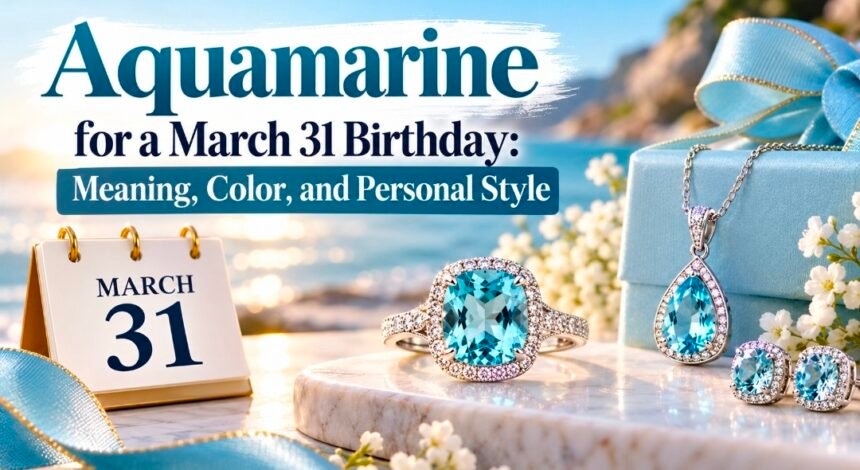
A birthday at the end of March still belongs to March’s birthstone tradition. Aquamarine, with its blue to greenish blue color, offers a clear connection to the month without dictating a particular jewelry style. It can appear quiet and understated in a small pendant or become the main feature of a larger ring.
Choosing a birthday piece becomes easier when three questions stay separate: what the stone represents, what it looks like, and how the recipient will wear it. The date supplies the personal connection. Color, design, and practical details determine whether that connection becomes something the wearer enjoys.
Why the final day of March still points to aquamarine
Monthly birthstones apply across the calendar month. March 31 does not require a different stone simply because April begins the next day. Aquamarine is a recognized March birthstone, while bloodstone provides another established March option with a very different appearance.
For readers exploring the March 31 birthstone, TrueSanity’s aquamarine guide connects the date’s monthly association with the gem’s color, symbolism, and jewelry uses. The useful distinction is between a monthly birthstone convention and separate astrological or date-based systems. Those systems can assign stones differently, so a gift should identify which tradition it follows.
That distinction also prevents an unnecessary search for an exclusive gemstone for one birthday. A piece can feel personal through an engraving, a preferred shape, or a thoughtful note. It does not need a claim that the stone belongs only to people born on that day.
Meaning without promises
Aquamarine’s name comes from Latin words associated with seawater. Its historical connection with sailors and safe journeys helps explain why it is often presented as a symbol of calm and reassurance. These associations can provide language for a birthday message, particularly when someone is beginning a new chapter.
Symbolism works best as an expression of the giver’s intention. A message about steadiness during a demanding year is personal and understandable. A claim that wearing aquamarine will remove anxiety or protect someone from harm goes beyond what a gemstone can establish.
The same restraint makes a gift more flexible. Someone who enjoys maritime history may appreciate the sea connection. Someone else may simply love pale blue. Neither person needs to adopt a belief about crystal energy to find meaning in the piece.
Reading the blue before choosing the design
Aquamarine belongs to the mineral family called beryl, which also includes emerald. The Gemological Institute of America’s aquamarine overview describes its blue and slightly greenish blue hues, its transparency, and the importance of cutting in a light-colored gem. Those features offer a better starting point than a dramatic trade name.
Begin with the color the recipient actually likes. A pale stone can suit someone who prefers subtle jewelry, even if a more strongly saturated blue commands greater attention in the market. Personal preference and market value answer different questions.
Then look at the whole stone as it moves. Does it remain attractive when tilted? Are there large areas that seem dull or see-through? Compare similar pieces in ordinary lighting as well as bright display lighting. A photograph with a cool background may make a delicate blue look stronger than it appears against the skin.
Size deserves the same practical approach. Carat describes weight, rather than the visible dimensions of the top of the stone. Ask for measurements if you are comparing pieces online. A paper outline drawn to those measurements can help you judge whether a pendant or ring will feel proportionate.
Let the wearer’s habits guide the jewelry
A ring keeps the stone in the wearer’s field of view, which can make the birthday connection especially noticeable. It also places the gem where it can meet doorframes, work surfaces, and other hard objects. A person who works with their hands may prefer a design that sits close to the finger, or may enjoy the stone more in a pendant.
Earrings can be useful when ring size is uncertain, but the details still matter. Consider the fastening, overall weight, and whether the person prefers studs or movement. For a necklace, check the chain length against pieces they already wear instead of assuming that every pendant sits in the same place.
Before settling on a design, make a short practical check:
- Confirm the recipient’s usual metal color and any known sensitivities.
- Compare the stone’s measurements with jewelry they already enjoy.
- Check clasps, earring backs, and the height of a ring setting.
- Ask about resizing, returns, and maintenance before engraving.
- Choose packaging that includes the stone’s identity and care information.
A decorative feature should earn its place. Surrounding stones, elaborate metalwork, and a large setting may appeal to one wearer and discourage another. The best clue is often the jewelry the person reaches for repeatedly, rather than the piece they admire briefly in a display.
Questions that make descriptions more useful
Ask the seller to state the gemstone’s identity and disclose any treatments. Aquamarine is commonly heated to change its color. A clear explanation allows you to understand what is being offered without treating every enhancement as evidence of a problem.
Avoid assuming that a geographic-sounding color description proves where a stone was mined. If origin matters to the recipient, ask what documentation supports the claim. Likewise, a word such as “premium” is less useful than a specific account of color, dimensions, condition, and treatment.
For a more expensive purchase, discuss whether an independent gemological report would be useful. Its purpose is to clarify relevant facts about the stone, not to guarantee future resale value. Keep the receipt and written description together so a future repairer or family member has more than a remembered sales conversation.
Care that fits an ordinary week
Aquamarine ranks 7.5 to 8 on the Mohs hardness scale, a measure of resistance to scratching. That rating does not make it immune to chips or hard impacts. Remove rings before activities that could strike or strain the setting, and store jewelry so stones do not rub against one another.
Warm soapy water and a soft brush provide a straightforward cleaning approach. Work over a bowl rather than an open drain, rinse carefully, and dry with a soft cloth. If the piece contains other gems or unusual materials, follow care instructions appropriate to the whole piece.
Ask a jeweler before using ultrasonic or steam equipment, especially when the stone’s condition or treatment history is uncertain. A loose stone, snagging prong, or damaged clasp deserves attention before the next wearing.
Making the birthday connection last
An aquamarine gift for March 31 does not need an elaborate story. The monthly association establishes its relevance, while a well-chosen shade and comfortable design make it personal. A brief note explaining why the color or form reminded you of the recipient can carry more meaning than a catalogue of symbolic powers.
Choose a piece that fits their taste, document what you buy, and make care easy to follow. Those decisions give the birthday association a place in everyday life, long after the wrapping has been put away.
| 🔗 You may also like: |
| Newborn baby gifts smart choices for a special welcome |
| Essentials hoodie new collection 2026 stylish looks for men and women |