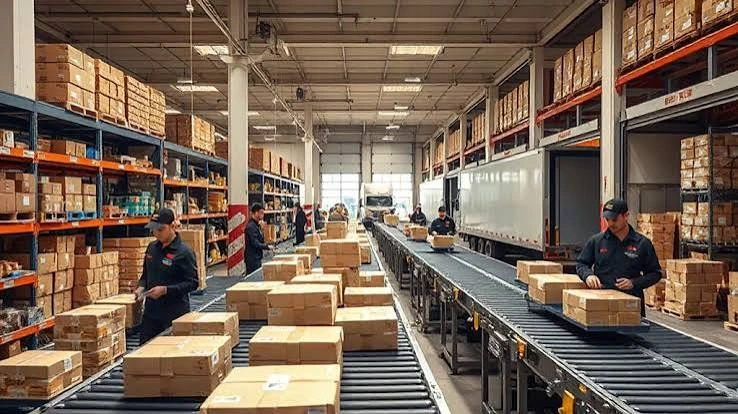
By mid-morning in many UK offices, the reception desk has quietly become a sorting depot. Boxes lean against the wall, padded envelopes stack up behind the visitor book, and someone from finance is asking whether their courier delivery has turned up yet. Nobody planned for this, but steady growth in online ordering, for both business supplies and personal purchases sent to work, has made it the norm. More facilities teams are now adopting office mailroom management software to bring order back to the front desk, and the reasons go well beyond keeping reception tidy.
Why the Volume Crept Up Unnoticed
There was no single moment when office deliveries became a problem. Hybrid working meant staff started sending personal parcels to the office rather than risking a missed delivery at home. Suppliers moved towards smaller, more frequent shipments. IT kits, marketing samples, and replacement equipment all began arriving through the same front door.
Each change was small on its own. Together, they turned a few letters a day into dozens of items that need logging, storing, and handing over to the right person.
The Real Cost of a Lost Parcel
When a parcel goes missing inside a building, the cost rarely shows up as a single line item. It appears as an hour spent searching storerooms, a replacement order placed in a hurry, an awkward conversation with a supplier who insists the item was delivered, and a frustrated employee who now trusts the process a little less.
A parcel is rarely lost in transit. It is usually lost in the last twenty metres.
Couriers have proof of delivery. What most offices lack is proof of what happened next: who received the item, where it was stored, and who eventually collected it.
Where Manual Logbooks Fall Short
Many offices still rely on a paper logbook, a shared spreadsheet, or a quick email to the recipient. These methods work when volumes are low and the same receptionist is always on duty. They struggle once cover staff, multiple floors, or high-volume days enter the picture.
| Manual process | Digital tracking |
| Handwritten entries that are hard to search | Every item logged and searchable in seconds |
| Recipients told by email, if someone remembers | Automatic notification on arrival |
| No record of who collected an item | Signature or confirmation captured at handover |
| Knowledge sits with one person | Any staff member can see the full history |
| Disputes rely on memory | Timestamped audit trail settles questions quickly |
The weakness of the manual approach is not carelessness. It simply depends on people remembering things they were never set up to remember.
What a Digital Process Actually Changes
The shift usually starts at the point of arrival. Instead of writing details into a book, reception staff scan the label with a phone or handheld device. The system recognises the recipient, logs the courier and time, and sends a notification straight away. When the employee arrives to collect, a quick signature or scan closes the loop.
For organizations handling deliveries across several sites or buildings, dedicated parcel management software platforms extend the same logic across every location, so a parcel received in Manchester can be traced as easily as one received in London.
The goal is not more admin. It is admin that happens automatically while people do their normal jobs.
Accountability Without Blame
One understated benefit of a clear chain of custody is that it protects reception and facilities staff. When a parcel goes missing in a manual system, suspicion often lands on whoever was at the desk. With a digital record, the question shifts from “who lost it?” to “what does the log show?”, which is a far healthier conversation for everyone involved.
It also helps employees take ownership. When people can see that their parcel has been waiting three days, uncollected items stop piling up in the corner.
Security and Data Protection
Parcels carry personal information, including names, home addresses, and sometimes clues about what is inside. Leaving labels exposed on an open shelf sits uneasily with UK GDPR expectations. A structured process limits who can see delivery details and keeps records stored securely rather than in an open book on the counter.
There is a physical security angle too. Knowing exactly what came in, from which courier, and who handled it makes it far easier to spot an item that does not belong.
Getting Reception Teams on Board
Any new process lives or dies on whether the front-desk team finds it easier than the old one. The most successful rollouts keep the workflow short: scan, store, notify, and hand over. Training should take minutes, not days, and temporary or cover staff should be able to pick it up without a manual.
It helps to involve reception staff early, since they know where the current bottlenecks really are.
Measuring Whether It Works
Once a digital process is running, the data tells its own story. Useful measures include:
- Average time between arrival and collection
- Number of items left uncollected after a set period
- Volume of “has my parcel arrived?” queries reaching reception
- Peak delivery days and times, which inform staffing decisions
These figures turn delivery handling from a background annoyance into something facilities managers can actually plan around.
A Front Desk That Runs Itself
Office deliveries are not going back to pre-pandemic levels, and reception was never designed to function as a logistics hub. The offices handling this well have not hired extra staff or built new storerooms. They have replaced memory and paper with a simple, consistent process that records every handover, keeps recipients informed, and gives facilities teams real visibility. The result is a quieter front desk, fewer disputes, and parcels that end up in the right hands.