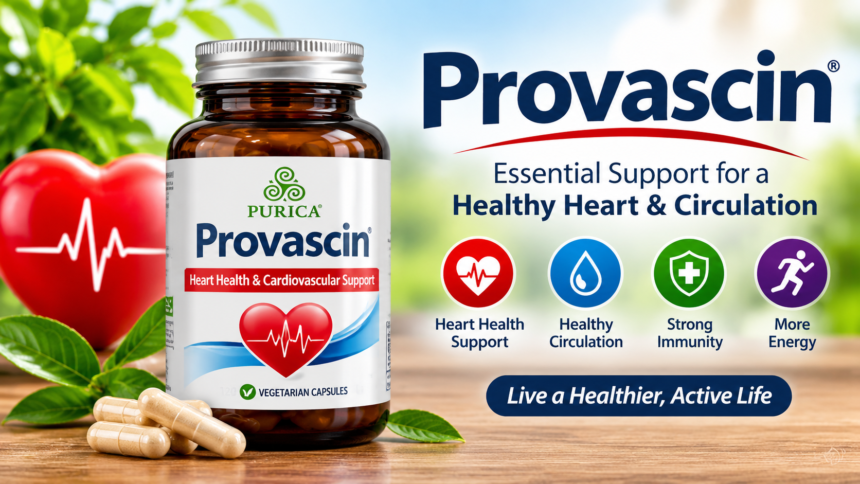
Provascin is a name associated with cardiovascular health and nutritional supplements, particularly products marketed to support healthy circulation, heart function, and cholesterol management. It has attracted attention from people interested in maintaining their cardiovascular health through nutritional support and lifestyle changes.
One product commonly associated with this name is Purica Provascin, a supplement marketed for cardiovascular wellness. Its listed ingredients include compounds such as Coenzyme Q10 (CoQ10), L-Carnitine, alpha-lipoic acid, betaine, and Chaga. These ingredients have different nutritional and biological roles, although their presence in a supplement does not automatically prove that the finished product can prevent or treat heart disease.
Understanding Provascin requires looking beyond promotional claims. Consumers should consider its ingredients, available scientific evidence, possible benefits, safety precautions, and potential interactions with medications. It is equally important to understand the difference between supporting normal body functions and treating a diagnosed cardiovascular condition.
This guide explains what Provascin is, what its ingredients are intended to do, and what consumers should know before considering it as part of a heart-health routine.
What Is Provascin?
Provascin is commonly referenced online as a cardiovascular health supplement associated with the Purica brand. It is marketed to adults interested in supporting heart health, circulation, and certain aspects of metabolic wellness.
Unlike prescription cardiovascular medicines, Provascin is presented as a nutritional supplement rather than an established treatment for conditions such as hypertension, high cholesterol, or heart disease. Its marketing focuses on nutritional ingredients that have been studied individually for their potential roles in energy production, antioxidant activity, and normal metabolic processes.
The exact product label is important because supplement ingredients, quantities, and formulations can change. Consumers should check the current packaging and manufacturer information rather than assuming that every online description reflects the same formulation.
It is also important to distinguish Provascin’s advertised benefits from clinically demonstrated outcomes. A supplement may contain scientifically studied ingredients without having sufficient clinical evidence to establish that the complete formula produces the same benefits.
| 🔗 You may also like: |
| Metformin Online: A Convenient Approach to Metabolic Wellness |
| Building stronger muscles naturally smart ways to support growth energy and recovery |
What Is Provascin Used For?
Provascin is primarily marketed for cardiovascular and general wellness support. Its advertised uses relate to several areas of health, including circulation, cholesterol balance, energy production, and metabolic function.
Some product descriptions also associate it with stress management and support for healthy blood glucose levels. However, these claims should be interpreted carefully because the effectiveness of an individual ingredient does not establish the effectiveness of the complete supplement.
Common areas associated with Provascin include:
-
Cardiovascular support: Nutritional support for normal heart and vascular function.
-
Healthy circulation: Ingredients associated with cellular energy and normal physiological processes.
-
Cholesterol management: Interest in maintaining healthy lipid levels alongside appropriate lifestyle measures.
-
Energy production: Nutrients involved in the processes cells use to produce energy.
-
Antioxidant support: Compounds that participate in protecting cells against oxidative stress.
-
Metabolic wellness: Ingredients studied for their possible roles in glucose and other metabolic processes.
These are areas of product marketing, not guaranteed results or approved treatments for cardiovascular disease.
Provascin Ingredients: What Does the Formula Contain?
Historical product information from retailers identifies eight main ingredients in the Purica Provascin formula. Each ingredient has a different purpose, ranging from cellular energy production to antioxidant activity.
The following amounts are reported per capsule in historical product listings. They should not be assumed to represent every product currently sold under a similar name.
Purica at NationalNutrition.ca+1
| Ingredient | Reported amount per capsule |
|---|---|
| L-Carnitine | 188 mg |
| Alpha-ketoglutaric acid | 125 mg |
| Organic micronized Chaga | 125 mg |
| Coenzyme Q10 | 38 mg |
| Betaine hydrochloride | 31 mg |
| DL-alpha-lipoic acid | 13 mg |
| Grape seed extract | 9 mg |
| Green tea extract | 9 mg |
Here is a closer look at the ingredients and their potential roles.
1. L-Carnitine
L-Carnitine is a naturally occurring compound that helps transport long-chain fatty acids into mitochondria, the structures inside cells responsible for producing energy.
It plays an important role in normal energy metabolism, particularly in tissues with substantial energy requirements, such as muscles and the heart.
Researchers have studied L-Carnitine for several health applications, including exercise performance and certain cardiovascular conditions. However, findings from individual studies do not establish that the amount included in Provascin improves heart function or prevents cardiovascular disease.
2. Coenzyme Q10 (CoQ10)
Coenzyme Q10 is a naturally occurring substance found in almost every cell of the body. It participates in mitochondrial energy production and also functions as an antioxidant.
Because the heart requires a continuous supply of energy, CoQ10 is frequently included in nutritional products marketed for cardiovascular wellness.
Some research has investigated CoQ10 supplementation in people with particular heart conditions. However, results vary depending on the condition, dosage, and research design. Its presence in Provascin does not establish that the complete formula improves cardiovascular outcomes.
3. Alpha-Ketoglutaric Acid
Alpha-ketoglutaric acid is a compound involved in the citric acid cycle, a central metabolic pathway through which cells generate energy.
It also participates in amino acid metabolism and other biochemical processes. These functions explain why it appears in certain nutritional and sports-related formulations.
Although it has important biological roles, there is insufficient product-specific evidence to conclude that alpha-ketoglutaric acid in Provascin improves circulation, removes harmful substances from the body, or treats cardiovascular conditions.
4. Chaga Mushroom
Chaga is a mushroom known scientifically as Inonotus obliquus. It has traditionally been used in different cultures and contains various naturally occurring compounds, including polysaccharides and antioxidant substances.
Its antioxidant properties have attracted interest in laboratory research. However, laboratory findings cannot establish that consuming Chaga prevents heart disease or produces meaningful improvements in human cardiovascular health.
People taking medications or managing autoimmune conditions should be particularly careful with Chaga-containing supplements because potential interactions and safety concerns require consideration.
5. Betaine Hydrochloride
Betaine is a naturally occurring compound involved in several metabolic processes. It participates in methylation reactions and helps regulate homocysteine metabolism.
Homocysteine is an amino acid found in the blood. Elevated levels can be associated with cardiovascular risk, although lowering a biomarker does not automatically translate into fewer heart attacks or strokes.
It is important to distinguish betaine hydrochloride from other forms of betaine, particularly trimethylglycine. They should not automatically be treated as interchangeable when interpreting research.
6. Alpha-Lipoic Acid
Alpha-lipoic acid is a naturally occurring compound involved in mitochondrial energy metabolism. It also has antioxidant properties and has been investigated for its potential effects on glucose metabolism and certain nerve-related conditions.
Some research has explored alpha-lipoic acid supplementation in people with metabolic concerns. However, the results depend on the dose, formulation, and condition being studied.
People taking diabetes medication should seek professional advice before using supplements containing alpha-lipoic acid because of potential effects on blood glucose.
7. Grape Seed Extract
Grape seed extract contains plant compounds called proanthocyanidins, which have antioxidant properties.
Researchers have investigated grape seed extracts for possible effects on blood pressure, vascular function, and other cardiovascular measurements.
However, research findings involving particular extracts and doses cannot automatically be applied to the small quantity historically listed in Provascin. More evidence is needed before making strong claims about its cardiovascular benefits.
8. Green Tea Extract
Green tea extract contains naturally occurring polyphenols, including catechins. These compounds have been studied for their potential antioxidant and metabolic effects.
Some research has examined green tea products in relation to cholesterol and other cardiovascular risk factors. Results vary, and concentrated extracts are not equivalent to drinking ordinary green tea.
Importantly, concentrated green tea extracts have been associated with liver injury in some cases. People with liver conditions should be particularly cautious and review the product’s warnings with a healthcare professional.
| 🔗 You may also like: |
| Metronidasool Medication Guide |
| Hair Loss Treatment Online: A Convenient and Effective Way to Restore Confidence |
Potential Heart Health Benefits of Provascin
Provascin’s advertised benefits are mainly connected with cardiovascular wellness, antioxidant support, and energy metabolism. Understanding these potential benefits requires separating the biological functions of its ingredients from proven results for the complete product.
Supporting Normal Heart Function
The heart is a muscle that continuously requires energy to pump blood throughout the body. Nutrients involved in cellular energy production therefore attract interest in cardiovascular research.
CoQ10 and L-Carnitine are two ingredients associated with these processes. Their inclusion helps explain why Provascin has been marketed for heart health.
However, nutritional support should not be confused with treating heart failure, coronary artery disease, or other diagnosed conditions.
Supporting Healthy Circulation
Healthy circulation allows blood to deliver oxygen and nutrients to tissues while transporting waste products away from cells.
Some ingredients in Provascin have been investigated for their possible effects on vascular function and blood flow. Nevertheless, there is not enough reliable evidence to conclude that the complete supplement improves circulation in people with cardiovascular disorders.
Persistent symptoms such as leg swelling, unexplained pain, or unusual coldness in the hands and feet should be medically assessed rather than treated with an unverified supplement.
Providing Antioxidant Support
Oxidative stress occurs when the balance between reactive molecules and the body’s antioxidant defenses is disrupted.
CoQ10, alpha-lipoic acid, Chaga, and grape seed extract contain or participate in processes associated with antioxidant activity.
This provides a scientific reason for their inclusion in wellness formulations. However, antioxidant activity in laboratory settings does not prove that a supplement prevents heart attacks, removes arterial plaque, or protects against cardiovascular disease.
Supporting Energy Metabolism
L-Carnitine, CoQ10, and alpha-ketoglutaric acid are connected with different aspects of cellular energy metabolism.
These functions are important for tissues that require substantial energy, including the heart and skeletal muscles.
However, taking a supplement containing these ingredients does not guarantee increased stamina, improved athletic performance, or reduced fatigue. Persistent tiredness should be investigated to identify its underlying cause.
Does Provascin Lower Blood Pressure or Cholesterol?
Blood pressure and cholesterol are two important factors in cardiovascular health. Because Provascin is marketed for heart support, consumers may wonder whether it can improve these measurements.
At present, the historical ingredient information does not establish that the complete Provascin formula reliably lowers blood pressure or cholesterol.
Blood pressure can be influenced by genetics, diet, physical activity, body weight, stress, sleep, and underlying medical conditions. Cholesterol levels are also affected by several factors, including genetics, nutrition, and metabolic health.
Anyone concerned about these measurements should obtain appropriate testing and discuss the results with a healthcare professional.
Can Provascin Replace Statins?
No. Provascin should not be considered an alternative to prescribed cholesterol-lowering medication.
Statins are established medicines supported by substantial clinical research demonstrating their ability to reduce LDL cholesterol and cardiovascular risk in appropriate patients.
A nutritional supplement containing CoQ10, L-Carnitine, or plant extracts does not have equivalent evidence simply because its marketing mentions cholesterol or heart health.
If someone experiences side effects from a statin or has concerns about long-term treatment, the appropriate step is to discuss alternatives with their prescriber rather than stopping medication independently.
Can Provascin Treat High Blood Pressure?
There is insufficient evidence to recommend Provascin as a treatment for hypertension.
High blood pressure can remain unnoticed for years because many people experience no obvious symptoms. Proper measurement and medical assessment are therefore more reliable than judging cardiovascular health by how someone feels.
People already taking blood pressure medication should not add Provascin without checking its ingredients and potential interactions with a doctor or pharmacist.
Does Provascin Actually Work?
The answer depends on what someone expects the supplement to achieve.
Its ingredients have biological functions and have been studied individually for different health purposes. However, evidence involving individual ingredients is not the same as evidence involving the complete Provascin formula.
A reliable clinical assessment would require controlled studies examining the actual finished product, its specific doses, participant health conditions, treatment duration, and measurable outcomes.
Historical product descriptions and customer reviews do not provide this level of evidence.
Therefore, it would be inaccurate to describe Provascin as a clinically proven treatment for hypertension, high cholesterol, poor circulation, or heart disease.
Consumers should also be cautious about articles claiming that it cleans arteries, removes toxins, or guarantees cardiovascular protection without credible supporting research.
Provascin Side Effects and Safety Considerations
Although Provascin is marketed as a nutritional supplement, that does not mean it is suitable for everyone. Its safety depends on the ingredients, quantities, individual health conditions, and other products or medications a person uses.
The historical Purica product label includes several warnings for people with particular medical conditions and those taking prescription medicines.
Purica at NationalNutrition.ca+1
Possible Side Effects
Potential adverse effects depend on the individual ingredients. Depending on the formulation and personal sensitivity, supplement users may experience:
-
Digestive discomfort or stomach upset.
-
Nausea or other gastrointestinal symptoms.
-
Allergic reactions to particular ingredients.
-
Changes in blood glucose in susceptible individuals.
-
Other ingredient-specific reactions.
These are general considerations, not a confirmed list of Provascin-specific side effects.
If someone experiences an unexpected reaction, they should stop using the product and seek appropriate medical advice. Difficulty breathing, facial or throat swelling, fainting, or severe chest pain requires urgent medical attention.
Who Should Avoid or Seek Medical Advice Before Using Provascin?
Extra caution is particularly important for:
-
Pregnant or breastfeeding individuals.
-
People with liver or kidney disease.
-
Individuals with diabetes or blood glucose concerns.
-
People taking blood pressure medication.
-
Individuals using blood thinners.
-
People with seizure disorders.
-
Individuals with autoimmune conditions.
-
People taking immunosuppressant medication.
The historical product warnings specifically identify several of these groups. Anyone considering the supplement should check the current packaging and consult a healthcare professional first.
Provascin and Medication Interactions
Supplement interactions are an important consideration, especially when a product is marketed for cardiovascular health.
Some nutritional ingredients can influence blood pressure, blood glucose, or other physiological processes. Combining them with prescription medicines may increase the possibility of unwanted effects.
For example, people using anticoagulants, antiplatelet medicines, diabetes treatments, or blood pressure medication should have the complete ingredient list reviewed before taking Provascin.
It is also important to consider other supplements. Taking multiple products containing the same ingredients can result in unnecessary duplication.
A doctor or pharmacist can evaluate the actual ingredients and doses to determine whether the combination is appropriate.
| 🔗 You may also like: |
| The small things that make a big difference in oral health |
| How can private clinics build patient trust online |
How to Buy Provascin More Responsibly
Before purchasing Provascin, consumers should establish whether they are buying the original Purica product or another product using a similar name.
Historical retailer listings provide information about the Purica formulation, but at least one previously listed retailer, National Nutrition, currently reports that it no longer carries the product.
Purica at NationalNutrition.ca+1
This makes checking current availability and product authenticity particularly important.
Check the Product Label
Look for the following information before making a purchase:
-
Complete ingredient list and quantities.
-
Manufacturer or distributor information.
-
Serving size and directions.
-
Safety warnings and allergy information.
-
Expiration or best-before date.
-
Batch or lot identification.
-
Applicable regulatory information.
Do not rely entirely on old product photographs or descriptions copied between online retailers.
Choose a Trustworthy Seller
Purchase health products through reputable retailers that provide clear manufacturer information and legitimate product packaging.
Be cautious of websites promising guaranteed results, permanent cholesterol reduction, completely clear arteries, or cures for heart disease.
A genuine product should have identifiable ingredients and transparent safety information. A discount, positive review, or attractive advertisement is not proof of quality or effectiveness.
Provascin vs. Pravastatin: Understanding the Difference
An important distinction is that Provascin and pravastatin are not the same product.
A nutritional supplement historically marketed by Purica for cardiovascular wellness. Its historical formulation included several nutritional and plant-derived ingredients.
A prescription statin medicine used to lower cholesterol and reduce cardiovascular risk in appropriate patients.
Pravastatin works by inhibiting an enzyme involved in cholesterol production in the liver. It has established clinical uses and is prescribed according to an individual’s medical needs.
Provascin, on the other hand, is not a statin and should not be described as a cholesterol-lowering prescription medicine.
If someone is searching for pravastatin, they should verify the medication name with their pharmacist or healthcare professional rather than purchasing Provascin as a substitute.
Conclusion
Provascin is a cardiovascular wellness supplement historically marketed by Purica, with a formulation containing ingredients such as L-Carnitine, CoQ10, Chaga, alpha-ketoglutaric acid, and alpha-lipoic acid. These ingredients have different roles in cellular energy production, antioxidant activity, and normal metabolic processes.
However, their individual research findings do not establish that the complete Provascin formula prevents heart disease, lowers cholesterol, or treats high blood pressure. Its potential benefits should therefore be considered carefully, without relying on exaggerated marketing claims.
Anyone considering Provascin should check the actual product label, verify its ingredients, and review possible interactions with a healthcare professional. For people managing cardiovascular conditions, evidence-based medical treatment, appropriate monitoring, a balanced diet, and regular physical activity remain essential parts of long-term heart health.
FAQs
What is Provascin used for?
Purica Provascin was marketed as a nutritional supplement for cardiovascular wellness, antioxidant support, and healthy metabolic function. Its advertised uses should not be confused with proven treatments for heart disease.
What are the main ingredients in Provascin?
Historical Purica product information lists L-Carnitine, CoQ10, Chaga mushroom, alpha-ketoglutaric acid, betaine hydrochloride, alpha-lipoic acid, grape seed extract, and green tea extract.
Does Provascin lower cholesterol?
There is insufficient product-specific clinical evidence to establish that Provascin reliably lowers cholesterol. People with high cholesterol should follow an appropriate medical and lifestyle management plan.
Can Provascin improve blood circulation?
Some of its ingredients have been investigated for their possible roles in vascular health. However, there is insufficient evidence to confirm that the complete supplement improves circulation or treats circulatory disorders.
Is Provascin the same as pravastatin?
No. Provascin is the name of a nutritional supplement historically marketed by Purica, whereas pravastatin is a prescription statin used to lower cholesterol.
Can Provascin cause side effects?
Possible adverse effects depend on its ingredients and the individual using it. People should review the product warnings and discuss potential risks with a healthcare professional before use.
Can I take Provascin with blood pressure medication?
The combination should be reviewed by a doctor or pharmacist. The historical Purica product warnings specifically advise consultation for people taking blood pressure medication.
Is Provascin still available?
Availability can vary by retailer and location. Some historical retailers no longer carry the product, so consumers should verify current manufacturer information and seller authenticity before purchasing.