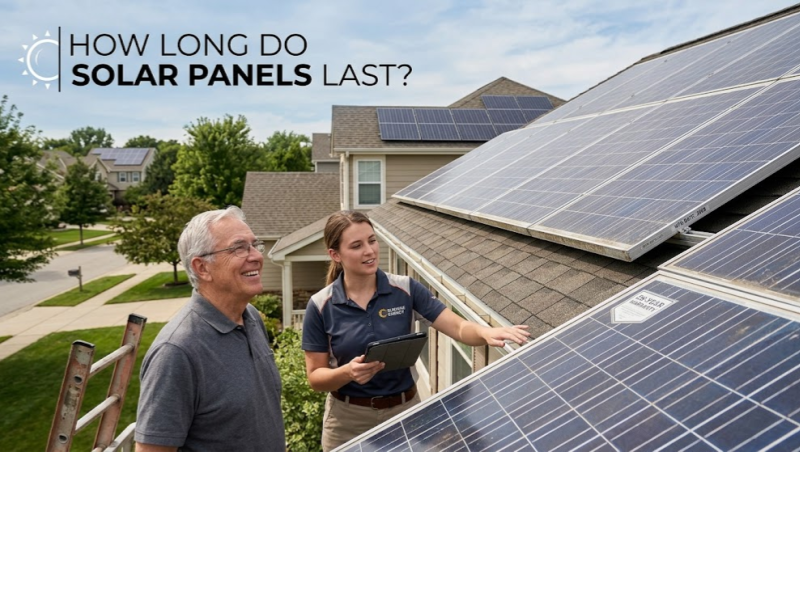
Solar panels are generally built for long-term use, with many products carrying performance warranties of 25 years. That does not mean they stop producing electricity afterwards.
The panels gradually lose some of their generating capacity as they age. A well-designed system can therefore continue producing useful electricity after its original warranty period, although the amount it generates may be lower than when it was new.
For a homeowner, the age of the panels is only part of the story. The condition of the roof, inverter, and electrical equipment can have just as much influence on how long the installation remains useful.
25 Years Is Not An Expiry Date
The number 25 often appears in solar panel warranties, but it is easy to misunderstand what it represents.
A performance warranty normally sets a minimum level of output that the manufacturer expects the panel to retain over a specified period. It does not promise that the panel will produce exactly the same amount of electricity throughout those years.
Some UK specifications require panels to retain at least 87% of their initial output after 25 years, while also setting a maximum annual decline in performance.
That distinction matters when deciding whether an older system still has value. A panel producing less electricity than it did on day one has not necessarily reached the end of its useful life.
The First Thing To Watch Is Generation
Suppose a system has been producing steadily for years and then its electricity generation suddenly falls. Its age might seem like the obvious explanation, but it is not necessarily the cause.
A new obstruction can reduce sunlight reaching the roof. An inverter fault can affect the electricity reaching the home. Damage to a panel, cable or connection can also change the system’s output.
The timing gives you a useful clue.
A slow decline over many years is consistent with normal ageing. A sharp change deserves investigation before anyone starts talking about replacing the panels.
That simple distinction can prevent an unnecessary replacement.
Other Equipment May Need Attention Earlier
The panels are visible, so they tend to get all the attention. The equipment that controls the electricity they produce can have a different lifespan.
An inverter, for example, may have a shorter warranty than the panels themselves. One current UK government specification lists a 25-year panel warranty alongside a 10-year inverter warranty.
This does not mean an inverter will automatically fail after its warranty ends. A warranty period and actual working life are not the same thing.
It does mean that anyone calculating the long-term cost of solar should leave room for repairs or replacement of other equipment. Replacing one component is very different from replacing the entire system.
The Roof Can Change The Equation
A solar installation may still be performing well after 15 or 20 years while the roof underneath it starts to need work.
That can create an awkward situation. The panels may have several productive years left, but roof repairs could require them to be removed and installed again later.
This is one reason a roof assessment before installation has lasting value. It is not only about checking whether panels can be fitted today. You are also looking at whether the building is suitable for keeping them there for many years.
Good solar panel services should take the existing roof into account rather than treating the panels as a standalone purchase.
What Makes One Installation Age Better Than Another?
The equipment selected at the start matters, but so does the work behind it.
Poor positioning, avoidable shading, unsuitable mounting or badly handled electrical connections can create problems that have nothing to do with the natural ageing of the panels.
The original paperwork can also become important later. Keep the system design, product details, warranties, commissioning records and other handover documents somewhere safe.
If an issue appears ten years later, knowing exactly which panels and inverter were installed can make diagnosis and warranty checks much easier.
Current UK guidance recognises the role of installation standards, with MCS standards covering areas such as solar PV design, installation, commissioning and handover.
When Does Replacement Actually Make Sense?
There is no universal year when every solar system should be removed.
A replacement may deserve consideration when the panels have suffered physical damage, generation has fallen considerably, major equipment has become unreliable, or newer panels could produce substantially more electricity from the same roof.
The economics can change too. If an inverter fails after many years, you might compare the cost of replacing that component with the cost and expected output of a newer system.
Roof work creates another decision point. If the roof already needs major renovation, removing an old solar array may make more sense than paying to take it down and reinstall it later.
The decision should come from the condition and performance of the installation, not simply its birthday.
Can Solar Panels Last 30 Years?
They can continue producing electricity beyond the 25-year period commonly seen in warranties, but nobody should treat 30 years as a guaranteed lifespan for every product.
Large solar projects can have operating periods extending towards 40 years, and UK policy guidance specifically recognises that panel performance declines over time and that panels may be replaced during a project’s lifetime.
A domestic installation is a different situation, so that figure should not be transferred directly to a house. It does, though, reinforce an important point: solar equipment can remain useful beyond its original performance warranty.
What Should You Expect From An Older System?
Solar panels can keep producing useful electricity well beyond their warranty period. If the system is working properly and generation remains steady, there may be no reason to replace it simply because it is old.
When planning solar PV panel installation, check the expected long-term output, equipment warranties, and the condition of your roof. Twenty-five years is a warranty milestone, not a fixed end date.