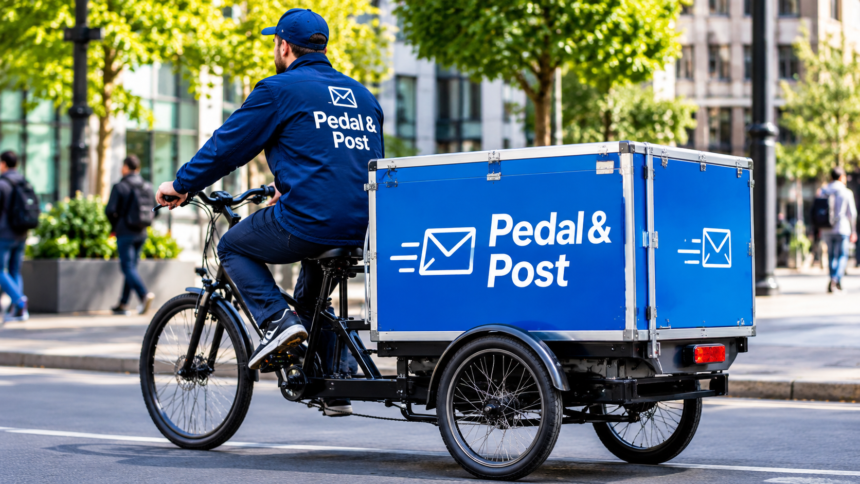
The collapse of Pedal & Post marked a significant moment for the UK’s sustainable delivery industry. After more than a decade of operating in Oxford, the environmentally focused courier company brought its journey to an end in January 2026. Its closure affected around 60 workers across Oxford and London, disrupted local delivery operations, and raised questions about the financial challenges facing businesses built around sustainable transport.
Founded in 2013, Pedal & Post developed a different approach to parcel delivery. Instead of relying mainly on traditional diesel vans, the company used electric cargo bikes to transport packages through busy urban streets. It worked with major delivery providers, local businesses, and healthcare organisations, demonstrating that cargo bikes could handle demanding commercial delivery operations.
However, the loss of a major business contract with micromobility company Voi created a serious financial problem. The contract represented a substantial share of the company’s revenue and profit contribution. Despite exploring different ways to continue operating, the business could not find a financially sustainable solution.
The Pedal and Post collapse is therefore more than the story of a courier company closing its doors. It highlights the risks of depending on major clients, the financial pressures of operating a growing logistics business, and the challenges of turning an environmentally beneficial service into a sustainable commercial operation.
What Happened to Pedal & Post?
Pedal & Post was an Oxford-based sustainable courier company that stopped trading in January 2026 after losing an important client. The company announced that it could no longer maintain its operations and confirmed that both its Oxford and London sites had closed.
Founder and chief executive Chris Benton explained that the loss of the client had fundamentally changed the company’s financial position. Although the business explored different options to continue trading, none provided a realistic way forward.
The closure affected approximately 60 people across its employed and self-employed workforce. The company had built its operations around cargo-bike deliveries, providing services to businesses and larger delivery networks.
The announcement attracted considerable attention because Pedal & Post had operated for around 14 years and had become a familiar part of Oxford’s urban delivery network. Its closure also came shortly after the company expanded its operations into London.
The company subsequently entered a creditors’ voluntary liquidation process. Official Companies House records confirm that the winding-up process commenced on 20 February 2026, with Brett Lee Barton and Margaret Carter appointed as joint liquidators.
This formal process placed the company’s remaining affairs under the control of the appointed insolvency practitioners.
| 🔗 You may also like: |
| Why buying negative Google reviews can save your struggling business |
| Startupbooted Financial Modeling |
The History of Pedal & Post: From a Small Idea to an Established Courier Business
Pedal & Post was founded in Oxford in 2013 by Christopher Benton. The business developed around a straightforward idea: many deliveries within busy cities did not need large delivery vans.
Urban roads frequently experience congestion, while traditional delivery vehicles contribute to traffic, air pollution, and parking difficulties. Benton saw an opportunity to use cargo bikes to move packages more efficiently through city streets.
The company gradually developed its delivery operations and built relationships with businesses that needed reliable local transport services. Its cargo bikes became particularly useful for smaller parcels and deliveries involving short distances.
Building a Different Delivery Model
Rather than treating bicycles as an alternative for occasional small deliveries, Pedal & Post developed a commercial logistics operation around them.
Its riders transported parcels, business orders, and other goods through Oxford. Electric assistance made it easier to carry heavier loads and complete regular delivery routes without relying on conventional vans.
The company also developed services for larger delivery organisations that needed local distribution support. This helped it move beyond individual customers and become part of wider parcel delivery networks.
Over time, the business demonstrated that cargo bikes could support regular commercial operations rather than simply serve as an environmentally friendly marketing idea.
Growth and Expansion into London
Oxford remained the company’s main operating base for much of its history. However, its business model eventually attracted opportunities beyond the city.
In July 2025, Pedal & Post announced its expansion into London. The company expected its new operations to complete more than 100,000 zero-emission deliveries annually at the initial stage.
The expansion represented an important development because London offered a much larger urban delivery market. It also created opportunities to work with businesses seeking lower-emission alternatives for local distribution.
However, expansion also increased the importance of maintaining sufficient contracts, delivery volumes, and financial resources. The company entered a difficult period only months after beginning its London operations.
Why Did Pedal and Post Collapse?
The main reason behind the Pedal and Post collapse was the unexpected loss of a major contract with Voi, a micromobility company known for its electric scooters and transport services.
According to information reported by Fleet News, Voi issued a 30-day termination notice to end its contract with Pedal & Post. The decision was described as an operational change rather than a response to poor service or delivery performance.
For Pedal & Post, however, the financial consequences were substantial.
1. Losing a Major Contract with Voi
The Voi contract was an important part of Pedal & Post’s business operations. When the agreement was terminated, the company suddenly faced a significant reduction in its expected income.
Founder Chris Benton informed shareholders that the lost contract represented approximately 25% of the company’s overall revenue.
This was a serious problem for a business that depended on maintaining regular delivery work to support its employees, equipment, operating locations, and other expenses.
Losing such a large customer also created an immediate challenge because replacing the contract would require finding another client capable of generating comparable business.
Even if smaller contracts remained available, they might not have produced enough revenue to replace the lost work quickly.
2. A Larger Impact on Profitability
The financial effect was not limited to lost sales.
Benton also explained that the Voi contract contributed approximately 36% of the company’s overall profit margin contribution.
This distinction is important when understanding why the business struggled to survive.
Revenue represents the money a company receives from its services, while profit contribution helps show how much particular business activities support its financial position after relevant costs.
Losing a contract responsible for a quarter of revenue and an even larger proportion of margin can create a difficult financial situation.
The company still had operating expenses, staff commitments, equipment costs, and other responsibilities. However, its ability to cover these expenses had been significantly weakened.
3. Limited Opportunities to Find Replacement Revenue
Replacing a major customer is not always a quick process, particularly in the logistics industry.
A courier company must secure delivery agreements, organise routes, arrange suitable staffing, and demonstrate that it can meet a client’s service requirements.
Large contracts can also involve detailed operational arrangements that take time to establish.
Pedal & Post needed to find new business while managing the financial consequences of losing Voi. The company also needed a reliable route towards long-term sustainability rather than temporary income.
According to Benton’s communication to shareholders, the business could no longer raise the necessary funds or identify a suitable financial solution.
4. Financial Pressure Despite Years of Operation
One of the most surprising aspects of the closure was that Pedal & Post had survived for approximately 14 years.
The company had continued operating through challenging economic conditions, including the COVID-19 pandemic. It had also built partnerships, expanded its delivery services, and raised investment to support its development.
However, a long operating history does not automatically protect a company from financial difficulties.
Businesses can become vulnerable when a large proportion of their income depends on a limited number of customers. Even an established company can face serious problems when an important agreement ends unexpectedly.
In this case, the loss of Voi changed the company’s financial outlook so significantly that continuing operations was no longer considered practical.
How Many Jobs Were Lost After the Closure?
The Pedal & Post shutdown resulted in approximately 60 job losses across its Oxford and London operations.
The affected workforce included both employed staff and self-employed workers involved in the company’s delivery activities.
For these individuals, the closure meant losing an established source of income and facing uncertainty about future employment.
The impact was particularly significant because Pedal & Post had developed a business model that placed importance on its workforce and delivery riders.
Founder Chris Benton acknowledged the difficult situation and said the company wanted to manage the closure responsibly. Its priorities included achieving the best possible outcome for workers, exploring opportunities to transfer contracts, and securing appropriate value from its remaining assets.
The closure also affected the wider network of people and organisations connected to the business, including suppliers, shareholders, clients, and commercial partners.
What Happened to Pedal & Post’s Investors?
The closure created substantial uncertainty for the company’s investors.
Pedal & Post had previously raised approximately £500,000 through a crowdfunding campaign in 2023. This funding supported the company’s development and its ambitions to grow its sustainable delivery operations.
However, the liquidation process placed those investments at risk.
Benton informed shareholders that they were unlikely to recover their investments. He also acknowledged that he had personally contributed an additional £30,000 to support the business before its closure.
Richard Lofthouse, a major shareholder who had supported Pedal & Post from its early development, expressed shock at the announcement.
His comments reflected the disappointment of investors who had supported the company’s long-term mission and expected it to continue developing its operations.
Why Investors May Not Recover Their Money
When a company enters creditors’ voluntary liquidation, its remaining assets are handled through a formal insolvency process.
Liquidators are responsible for dealing with company assets, claims, and outstanding financial obligations according to the applicable legal rules.
Creditors generally have priority over shareholders when available funds are distributed. Shareholders receive money only if sufficient value remains after the relevant liabilities have been dealt with.
If a company does not have enough assets to meet its obligations, investors can lose some or all of their investment.
The final outcome depends on the company’s financial position and the liquidation process. Pedal & Post’s shareholders were warned that a return on their investments was unlikely.
| 🔗 You may also like: |
| Growth Navigate Funding |
| Global Trader Programme |
The Impact on Oxford’s Parcel Delivery Services
The closure did not affect only the company’s employees and investors. It also created practical problems for organisations that depended on its local delivery services.
Pedal & Post had developed relationships with several commercial partners, including major parcel delivery providers.
Its cargo bikes were particularly useful for transporting parcels through Oxford’s busy streets and areas with restrictions on conventional vehicles.
When the company stopped trading, these partners needed to reorganise their local delivery arrangements.
Evri Experienced Temporary Delivery Disruption
One of the most visible consequences involved Evri, which had partnered with Pedal & Post to deliver parcels in Oxford’s Zero Emission Zone.
The partnership began in January 2024. It involved dedicated electric cargo bikes transporting parcels to customers in the restricted delivery area.
Following Pedal & Post’s sudden closure, Evri acknowledged that some local customers experienced temporary delivery disruption.
The company apologised for the inconvenience and explained that it had reorganised its local delivery arrangements. It subsequently reported that normal service was resuming.
This situation demonstrated how the closure of a specialist logistics provider can affect other businesses that depend on its local infrastructure.
A national delivery company may have a large distribution network, but it can still rely on smaller regional partners to complete specific parts of its delivery operations.
The Role of Cargo Bikes in Pedal & Post’s Business Model
Cargo bikes were central to the identity and operations of Pedal & Post.
These vehicles are designed to carry goods using specially built storage areas, trailers, or reinforced frames. Electric assistance helps riders transport heavier loads and travel through urban environments.
For short-distance deliveries, cargo bikes can offer several practical advantages.
Reducing Dependence on Delivery Vans
Traditional delivery vans require road space, parking areas, and access to urban streets. In crowded city centres, these requirements can make local deliveries difficult.
Cargo bikes can move through narrower streets and avoid some of the parking problems experienced by larger vehicles.
Pedal & Post estimated that its Oxford operations saved approximately 100,000 van miles annually through its cargo-bike delivery model.
Reducing unnecessary van journeys can also help lower transport-related emissions and improve the local urban environment.
Supporting Healthcare and Essential Deliveries
Pedal & Post’s work extended beyond ordinary commercial parcels.
The company had provided services to organisations including Oxford University Hospitals NHS Trust. Its operations included important medical deliveries, demonstrating that cargo bikes could serve specialist transport requirements.
Cycling Industry News also reported that the company had helped reduce delivery times for certain temperature-controlled medical goods compared with traditional van transport.
Such services highlighted the potential value of alternative delivery methods when speed, reliability, and local access are important.
However, the collapse also showed that operational usefulness alone cannot guarantee the financial stability of a logistics business.
What Does the Pedal and Post Collapse Mean for Sustainable Logistics?
The closure raises an important question: if cargo-bike deliveries offer environmental and practical benefits, why can a company built around them still fail?
The answer is that sustainability and profitability are separate business challenges.
A delivery model may reduce emissions and improve urban transport while still facing difficulties with customer concentration, operating costs, contract renewals, and access to investment.
Sustainable Businesses Need Financial Resilience
Environmental benefits can attract customers, investors, and public support. However, a sustainable logistics company still needs enough regular income to pay workers, maintain vehicles, operate delivery hubs, and manage its daily expenses.
Depending heavily on a small number of major clients can create serious financial risks.
If one customer represents a significant share of revenue, losing that relationship can threaten the entire business.
Diversifying Customers Can Reduce Risk
One important lesson for logistics companies is the value of customer diversification.
Working with several independent clients can reduce the financial impact of losing any single contract.
For example, a cargo-bike delivery company might serve local retailers, online stores, healthcare providers, restaurants, and national parcel networks.
These different customer groups may generate varying levels of demand, but a broader customer base can provide more protection against unexpected contract changes.
The Market for Cargo-Bike Deliveries Continues to Develop
Pedal & Post’s closure does not mean that cargo-bike logistics has no future.
Major delivery companies have continued exploring lower-emission transport options, including electric cargo bikes and urban delivery hubs.
Pedal & Post itself recognised this development in its closing statement, explaining that the industry had changed considerably since the company began operating in 2013.
Its experience helped demonstrate how bike-based delivery systems could work at a commercial scale.
The challenge for future operators will be building business models that combine environmental benefits with dependable contracts, sensible operating costs, and sufficient financial reserves.
What Lessons Can Other Courier Companies Learn?
The Pedal and Post collapse offers several important lessons for businesses operating in logistics, transportation, and other service industries.
1. Avoid depending on a small number of major customers. Large contracts can help businesses grow quickly, but excessive dependence creates risk. Companies should develop relationships with different customer groups to protect themselves against unexpected changes.
2. Maintain sufficient financial reserves. Businesses need funds to manage unexpected revenue losses, operating expenses, and periods of reduced demand. Financial reserves can provide additional time to find replacement customers.
3. Expand carefully. Entering new markets can create growth opportunities, but expansion also brings additional costs and operational responsibilities. Companies should ensure that their financial position can support expansion before committing significant resources.
4. Treat sustainability as a complete business strategy. Environmental benefits can attract customers, but long-term success also requires competitive pricing, reliable services, efficient operations, and strong commercial relationships.
| 🔗 You may also like: |
| VAT in 2026: A Practical Guide for Growing UK Small Businesses |
| How precise weight data supports better manufacturing decisions |
What Is the Current Status of Pedal & Post?
Pedal & Post is no longer operating as an active courier business. Its Oxford and London sites have closed, and its former delivery operations have ended.
The company entered creditors’ voluntary liquidation, with official records confirming the commencement of winding up on 20 February 2026.
Brett Lee Barton and Margaret Carter of BK Plus were appointed as joint liquidators. Their responsibility is to manage the company’s remaining affairs in accordance with the liquidation process.
For customers, this means they should not expect to arrange new deliveries through Pedal & Post. Businesses that previously used its services have needed to find alternative delivery providers.
Former employees and shareholders may also need to contact the relevant parties handling the liquidation if they have questions about outstanding payments, claims, or investments.
Conclusion
The Pedal and Post collapse demonstrates how quickly an established business can become financially vulnerable when it loses an important customer. Despite operating for around 14 years, building commercial partnerships, and establishing a recognised position in sustainable urban delivery, the company could not overcome the financial consequences of losing its Voi contract.
Its closure affected workers, investors, delivery partners, and customers while bringing an end to an important part of Oxford’s cycling logistics network.
However, the company’s experience does not mean that cargo-bike deliveries have reached the end of their potential. Pedal & Post helped demonstrate that low-emission transport could support demanding commercial delivery operations. Its lasting contribution is the example it provided to the logistics industry.
The future of sustainable urban delivery will depend not only on environmental innovation but also on financially resilient business models, diversified customers, and dependable commercial partnerships.
FAQs
Why did Pedal & Post shut down?
Pedal & Post closed after losing a major contract with Voi. The agreement represented approximately 25% of the company’s revenue and 36% of its profit contribution, making its termination financially damaging.
When did Pedal & Post close?
The company announced its closure in January 2026 after 14 years of operations. Its Oxford and London sites subsequently closed, and its creditors’ voluntary liquidation commenced on 20 February 2026.
Who founded Pedal & Post?
Christopher Benton founded Pedal & Post in Oxford in 2013. He also served as the company’s chief executive.
How many jobs were lost?
Approximately 60 employed and self-employed workers across Oxford and London were affected by the company’s closure.
What happened to Pedal & Post’s Voi contract?
Voi issued a 30-day termination notice to end its contract with Pedal & Post. The decision was described as an operational change rather than a response to the company’s delivery performance.
Did Pedal & Post work with Evri?
Yes. Pedal & Post partnered with Evri to deliver parcels in Oxford’s Zero Emission Zone using electric cargo bikes. Following its closure, Evri experienced temporary local delivery disruption before reorganising its services.
Is Pedal & Post still operating?
No. Pedal & Post has ceased trading, and its former Oxford and London operations have closed. The company is going through the formal liquidation process.