For international trading companies, managing tax costs is just as important as expanding into new markets. Many businesses look for countries that offer competitive tax systems, strong financial infrastructure, and a stable business environment. Singapore has become one of the world’s leading destinations for global trade by combining these advantages with attractive government incentives.
One of the most valuable initiatives available to qualifying businesses is the Global Trader Programme (GTP). Administered by Enterprise Singapore, this incentive encourages international trading companies to establish and expand their regional or global operations in Singapore. Instead of paying the standard corporate income tax rate on qualifying trading income, approved companies may benefit from significantly reduced tax rates, helping them improve profitability and remain competitive in global markets.
Beyond tax savings, the programme also gives businesses access to Singapore’s world-class banking system, efficient logistics network, highly skilled workforce, and extensive international trade agreements. These advantages make Singapore an ideal base for companies involved in commodities, energy, agricultural products, metals, electronics, and other cross-border trading activities.
This guide explains how the Global Trader Programme works, how it helps international trading companies reduce tax costs, who can apply, and why it continues to be one of Singapore’s most attractive business incentives.
What Is the Global Trader Programme?
The Global Trader Programme (GTP) is a corporate tax incentive introduced by Enterprise Singapore to encourage international trading companies to use Singapore as their regional or global trading headquarters.
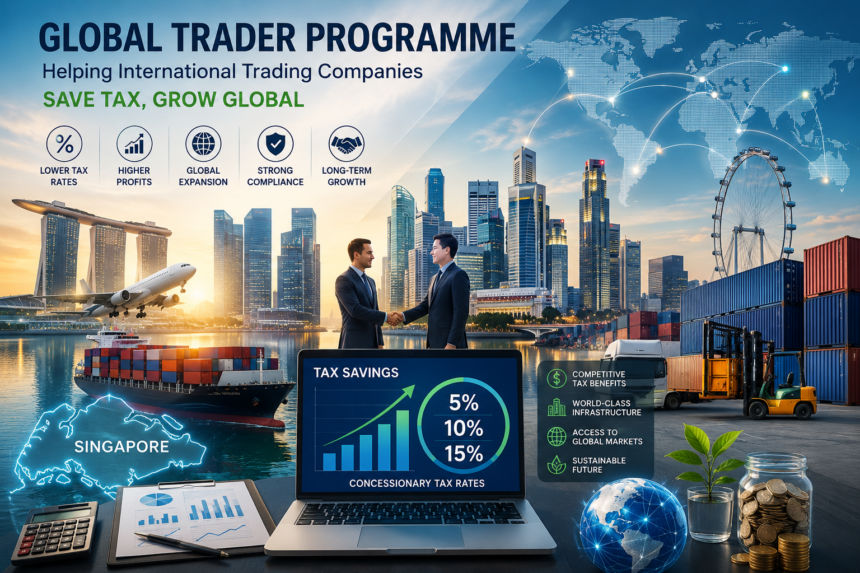
Instead of paying Singapore’s standard corporate income tax on eligible trading profits, approved companies receive a concessionary tax rate on qualifying income. Depending on the company’s business scale and investment commitments, this rate may be 5%, 10%, or 15%.
The programme is designed to strengthen Singapore’s position as a leading international trading hub while encouraging businesses to create local employment opportunities, increase business spending, and develop long-term operations within the country.
Unlike general tax incentives, the Global Trader Programme focuses specifically on companies that actively participate in international trading. Businesses involved in commodity trading, supply chain management, energy markets, agricultural products, metals, chemicals, electronics, and related sectors may qualify if they meet Enterprise Singapore’s requirements.
The programme also supports activities beyond buying and selling physical goods. Certain trading-related services, structured commodity financing, and approved derivative trading activities may also qualify under the incentive, depending on the nature of the business.
How the Global Trader Programme Works

The Global Trader Programme rewards companies that establish meaningful business operations in Singapore rather than simply registering a local company.
When a business applies for the programme, Enterprise Singapore carefully reviews several factors, including:
- The company’s international trading activities
- Annual trading volume
- Business growth plans
- Local employment commitments
- Business spending within Singapore
- Long-term contribution to the economy
If approved, the company receives a concessionary tax rate for a specified period. During this time, qualifying trading income is taxed at the approved incentive rate instead of the standard corporate tax rate.
The exact tax rate depends on the scale of the company’s operations and the commitments made during the application process. Larger businesses that make significant investments and create more economic value may qualify for lower tax rates.
Companies must continue meeting their agreed commitments throughout the incentive period. Enterprise Singapore regularly reviews participating businesses to ensure they maintain their trading activities, employment levels, and operational presence in Singapore.
This approach allows the government to support companies that actively contribute to Singapore’s economy while encouraging long-term investment rather than short-term tax planning.
Why Singapore Created the Global Trader Programme
International trade plays a major role in Singapore’s economy. Due to its strategic location, excellent infrastructure, and business-friendly environment, Singapore has become one of the world’s busiest trading centers.
The government introduced the Global Trader Programme to attract multinational trading companies that could strengthen the country’s position as a global trading hub.
By offering competitive tax incentives, Singapore encourages businesses to establish regional headquarters, trading desks, risk management teams, procurement offices, and supply chain operations within the country.
This benefits both businesses and Singapore’s economy.
For companies, the programme reduces tax costs while providing access to one of the world’s most efficient business environments.
For Singapore, the programme creates skilled jobs, increases local investment, supports financial services, and strengthens the country’s international trade ecosystem.
As global trade continues to evolve, the Global Trader Programme remains an important tool for attracting international businesses looking for long-term growth in Asia and beyond.
How the Global Trader Programme Helps Companies Save Tax
The biggest advantage of the Global Trader Programme (GTP) is the opportunity to reduce corporate tax on qualifying trading income. Instead of paying Singapore’s standard corporate income tax rate, approved companies can benefit from concessionary tax rates of 5%, 10%, or 15%, depending on their business commitments and the terms of their approval.
For businesses that handle large international trading volumes, even a small reduction in tax can translate into significant annual savings. These savings can then be reinvested into expanding operations, improving technology, hiring experienced professionals, or entering new international markets.
The programme is particularly valuable for companies with high-value transactions, as lower tax costs improve overall profitability and help businesses remain competitive in global markets.
Improved Cash Flow and Business Growth
Lower tax expenses directly improve a company’s cash flow. Instead of allocating a larger share of profits to taxes, businesses have more capital available for strategic investments.
Many companies use these additional funds to:
- Expand trading operations into new countries.
- Invest in digital trading platforms and automation.
- Strengthen risk management systems.
- Recruit experienced trading professionals.
- Improve logistics and supply chain efficiency.
- Support research into new commodities and markets.
Better cash flow also gives businesses greater flexibility during periods of market volatility, helping them respond more effectively to changes in global demand and pricing.
Increased Global Competitiveness
International trading is highly competitive, with companies constantly seeking ways to reduce operating costs while maintaining high service standards.
The Global Trader Programme helps businesses remain competitive by lowering one of their largest operating expenses—corporate tax.
When companies save more on taxes, they can offer more competitive pricing, invest in customer relationships, and improve operational efficiency. This advantage can make a significant difference when competing with businesses based in other international trading hubs.
Key Benefits of the Global Trader Programme
The programme offers more than tax savings. It provides several long-term advantages for international trading companies.
Reduced Corporate Tax
The primary benefit is the concessionary corporate tax rate on qualifying trading income, allowing businesses to retain more of their profits.
Access to Singapore’s Financial Ecosystem
Singapore is home to leading international banks, investment firms, and financial institutions. Companies operating under the GTP benefit from easy access to trade finance, foreign exchange services, and risk management solutions.
World-Class Logistics
Singapore’s ports, airports, and logistics infrastructure support fast and efficient movement of goods across global markets. This helps trading companies reduce shipping delays and improve supply chain performance.
Skilled Workforce
Businesses can hire experienced professionals in areas such as commodity trading, procurement, finance, compliance, and supply chain management.
Strong International Reputation
Operating from Singapore enhances business credibility. The country’s transparent legal system and stable regulatory environment make it an attractive location for international partners and investors.
Who Is Eligible for the Global Trader Programme?
The Global Trader Programme is intended for companies that actively participate in international trading and are willing to establish a meaningful business presence in Singapore.
Although every application is assessed individually, Enterprise Singapore generally considers factors such as:
- The company’s international trading experience.
- Annual trading turnover.
- Nature of traded products.
- Business expansion plans.
- Number of skilled professionals employed in Singapore.
- Local business expenditure.
- Long-term commitment to operating in Singapore.
Meeting these expectations demonstrates that the company will contribute to Singapore’s economy beyond simply benefiting from lower tax rates.
Qualifying Trading Activities
The programme supports a wide range of international trading activities. Depending on the business model, qualifying activities may include:
- Physical commodity trading.
- Import and export operations.
- Commodity brokering.
- Supply chain management.
- Structured commodity financing.
- Approved derivative trading.
- Procurement and distribution activities.
- International sourcing and trading services.
This flexibility allows companies from various industries to benefit from the programme if their activities meet Enterprise Singapore’s guidelines.
Products Commonly Covered
Eligible businesses often trade products such as:
- Energy products
- Crude oil and refined petroleum
- Natural gas
- Agricultural commodities
- Coffee and cocoa
- Grains and edible oils
- Metals and minerals
- Chemicals
- Electronics
- Industrial raw materials
Recent updates have also expanded the programme to include certain environmental trading products, reflecting the growing importance of sustainable and green markets.
How to Apply for the Global Trader Programme
Companies interested in the GTP typically follow these steps:
Step 1: Establish a Singapore Presence
The company should have a registered business entity and genuine operational activities in Singapore.
Step 2: Prepare Supporting Documents
Applicants usually provide financial information, business plans, trading records, employment details, and projections demonstrating future growth.
Step 3: Submit an Application
The application is submitted to Enterprise Singapore for assessment.
Step 4: Evaluation Process
Enterprise Singapore reviews the company’s trading activities, investment plans, economic contribution, and long-term commitment before making a decision.
Step 5: Approval and Ongoing Compliance
If approved, the company receives the agreed concessionary tax rate for the approved period. Businesses must continue meeting the programme’s conditions throughout the incentive period to maintain their benefits.
Why Singapore Is a Leading Global Trading Hub
Singapore has earned a reputation as one of the world’s most trusted locations for international trade. Its strategic position at the crossroads of major shipping routes makes it an ideal base for businesses serving customers across Asia, Europe, the Middle East, and beyond.
In addition to its location, Singapore offers a stable political environment, transparent legal system, modern infrastructure, and a business-friendly regulatory framework. These advantages reduce operational risks and make it easier for companies to manage global trading activities.
The country is also home to one of the world’s busiest ports, a highly connected international airport, and a sophisticated financial sector. Businesses can access trade financing, insurance, logistics providers, and professional services within a well-developed ecosystem. Combined with an extensive network of free trade agreements and double taxation treaties, these factors make Singapore an attractive destination for companies looking to expand internationally.
Latest 2026 Updates to the Global Trader Programme
The Global Trader Programme continues to evolve to support changing business needs and global tax standards.
One of the most significant developments is the programme’s extension through 31 December 2031, providing long-term certainty for businesses planning investments in Singapore.
The programme has also expanded to recognize certain Environmental Attribute Certificates (EACs) as eligible trading products. This reflects the growing importance of sustainable business practices and supports companies involved in renewable energy and environmental markets.
Another important consideration is the implementation of the OECD Pillar Two global minimum tax framework. Large multinational enterprise groups with annual global revenues above the applicable threshold may be subject to a 15% global minimum tax, which could reduce the tax advantage provided by lower GTP rates. Companies should carefully assess how these international tax rules affect their overall tax strategy before applying.
These updates demonstrate Singapore’s commitment to maintaining a competitive business environment while aligning with international tax standards.
Important Things to Consider Before Applying
Although the Global Trader Programme offers valuable tax benefits, businesses should evaluate whether the programme aligns with their long-term objectives.
Before submitting an application, companies should consider:
- Whether their trading income qualifies under the programme.
- The level of business activity they plan to maintain in Singapore.
- Employment and local spending commitments.
- Compliance requirements throughout the incentive period.
- The potential impact of international tax regulations on expected savings.
Preparing a detailed business plan and maintaining accurate financial records can improve the likelihood of a successful application. Many businesses also seek professional tax and legal advice to ensure they understand the programme’s requirements and ongoing obligations.
Conclusion
The Global Trader Programme (GTP) is one of Singapore’s most attractive tax incentives for international trading companies. By offering concessionary corporate tax rates on qualifying trading income, the programme helps eligible businesses reduce operating costs, improve cash flow, and strengthen their global competitiveness.
However, the programme is more than just a tax incentive. It encourages companies to build a genuine business presence in Singapore by investing in local talent, increasing business spending, and contributing to the country’s position as a leading international trading hub. In return, businesses gain access to a stable economy, world-class infrastructure, efficient financial services, and a strategic gateway to global markets.
As international trade continues to evolve, companies must also consider broader developments such as sustainability initiatives and global minimum tax rules when planning their long-term strategies. For businesses that meet the eligibility requirements and are committed to expanding their operations in Singapore, the Global Trader Programme can provide both immediate tax savings and long-term commercial advantages.
FAQs
What is the Global Trader Programme (GTP)?
The Global Trader Programme is a tax incentive administered by Enterprise Singapore that offers eligible international trading companies concessionary corporate tax rates on qualifying trading income.
What tax rates are available under the GTP?
Approved companies may receive concessionary corporate tax rates of 5%, 10%, or 15%, depending on their business scale, investment commitments, and approval terms.
Which businesses can apply for the Global Trader Programme?
Companies involved in international trading, including commodity trading, energy, agriculture, metals, chemicals, electronics, and related trading activities, may qualify if they establish a significant business presence in Singapore and meet Enterprise Singapore’s requirements.
Does the Global Trader Programme only benefit large multinational companies?
No. While many multinational corporations participate, mid-sized international trading companies may also qualify if they satisfy the programme’s eligibility criteria and demonstrate long-term economic contributions.
Why is Singapore a preferred location for international trading companies?
Singapore offers a strategic geographic location, a stable legal and regulatory environment, advanced logistics infrastructure, strong financial services, competitive tax policies, and extensive international trade agreements, making it one of the world’s leading global trading hubs.