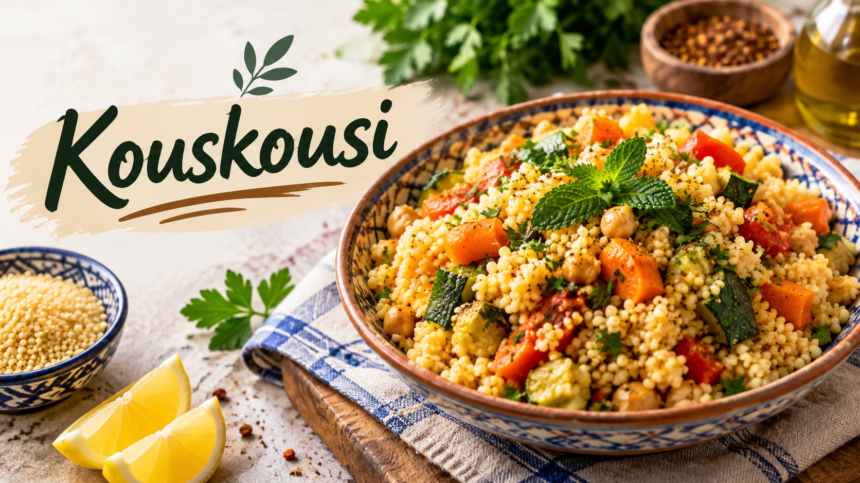
Kouskousi is a term that can create confusion because its meaning changes depending on the food, language, spelling, or source being discussed. In some contexts, Kouskousi refers to couscous, the well-known North African food made from tiny semolina granules. In other contexts, it may refer to Greek kouskousaki, a small round pasta used in soups, salads, and everyday meals.
Understanding Kouskousi becomes easier when you look beyond the name and examine its ingredients, shape, preparation method, and cooking instructions. Traditional couscous is generally steamed, while kouskousaki is usually boiled like pasta. This distinction matters when buying or preparing the product because two foods with similar names can require completely different cooking methods.
This guide explains the meaning of Kouskousi, its connection with couscous and kouskousaki, common ingredients, traditional preparation, cooking methods, uses, nutrition, gluten considerations, and practical shopping tips. The goal is to make the term easier to understand while showing why checking the product label is often the most reliable way to identify exactly what you have.
What Is Kouskousi?
Kouskousi does not always describe one universally defined food. Some sources use the spelling as another way of referring to couscous, while similar terminology such as Greek kouskousaki describes a small, round type of pasta. Because the names can overlap, the exact meaning depends on the product, regional usage, language, and information provided on its packaging.
When identifying Kouskousi, ingredients and cooking instructions are usually more useful than the name alone. A product made from semolina and designed to be steamed or prepared with hot liquid may be couscous. A small round wheat product that needs boiling is more likely to be kouskousaki or another pasta-style food.
Kouskousi vs Couscous: What Is the Difference?
Traditional couscous is made from small granules of semolina, commonly from durum wheat. It is traditionally steamed, although many modern products are pre-steamed and dried for convenience. Instant couscous can usually be prepared by adding hot water or broth, covering the container, waiting for the granules to absorb the liquid, and then fluffing them with a fork.
Kouskousaki is different because it is generally a small, round pasta rather than steamed couscous granules. It is normally cooked in boiling water or broth until tender. The texture is therefore more pasta-like, often with a slightly firmer bite. This difference in cooking method is one of the simplest ways to distinguish the two products.
History and Cultural Background of Couscous
Couscous has a long history in North African food traditions and is strongly associated with the Maghreb region, including Morocco, Algeria, Tunisia, and Mauritania. Preparation methods and recipes vary between communities, families, and regions. Couscous can appear in everyday meals as well as gatherings and celebrations, where food preparation and sharing have important cultural meaning.
In 2020, UNESCO added the knowledge, skills, and traditions connected with couscous to its Representative List of the Intangible Cultural Heritage of Humanity. The recognition involved Algeria, Mauritania, Morocco, and Tunisia. It covers more than a single recipe, including preparation methods, tools, food practices, sharing traditions, and skills passed from one generation to another.
What Is Greek Kouskousaki?
Greek kouskousaki is commonly described as a small, round pasta that can be used in soups, stews, salads, and side dishes. Its shape and cooking method distinguish it from traditional couscous. Instead of being prepared through the steaming process associated with couscous, kouskousaki is generally boiled in water or broth until it reaches the desired tenderness.
Traditional family versions of small Greek pasta can involve ingredients such as wheat, water, eggs, or milk, depending on the recipe. Commercial products can differ considerably, so the ingredient label remains important. Kouskousaki can be combined with vegetables, meat, seafood, legumes, herbs, sauces, or broth to create different types of meals.
What Ingredients Are Used in Kouskousi?
Most foods associated with the Kouskousi name are wheat-based. Traditional couscous is commonly made from semolina, usually produced from durum wheat, with water used to form the small granules. The preparation process creates the characteristic texture and appearance associated with couscous. Commercial products may be processed differently, particularly when they are designed for quick preparation.
Greek kouskousaki can also be made primarily from durum wheat semolina and water, while some versions may include flour, eggs, milk, or salt. Because recipes and commercial formulations vary, checking the package is important. Anyone with wheat or ingredient allergies should carefully read the complete ingredient list and allergy information before preparing or consuming the product.
How Is Traditional Couscous Made?
Traditional couscous preparation involves moistening semolina and working it into small granules. The granules are then steamed rather than simply boiled. A traditional couscoussier contains a lower section for broth or other cooking ingredients and an upper perforated section where the couscous is steamed, allowing moisture and steam to pass through the granules.
Traditional preparation may involve more than one steaming stage. The couscous can be separated, moistened, and returned to the steamer to improve its texture. Modern instant couscous is different because it is generally pre-steamed and dried before packaging. This makes it much faster to prepare at home using hot water or broth.
How Do You Cook Kouskousi?

The correct cooking method depends on which Kouskousi product you have. Instant couscous usually requires hot water or broth, followed by a short resting period with the container covered. After absorbing the liquid, the grains are separated with a fork. Olive oil, lemon, herbs, spices, or broth can be added to improve flavor without making the preparation complicated.
Kouskousaki should generally be treated more like pasta. It can be boiled in water or broth until tender, with the exact cooking time depending on the product. It can also be added to soups and stews. Following the package instructions is important because different shapes, brands, and processing methods can require different amounts of liquid and cooking time.
What Does Kouskousi Taste Like?
Couscous generally has a mild wheat flavor, which makes it useful as a base for strongly seasoned foods. The small granules readily absorb broth, sauces, vegetables, herbs, spices, and other ingredients. Its final flavor therefore depends heavily on the liquid and seasonings used during preparation rather than on the couscous itself.
Kouskousaki usually has a more pasta-like character and can provide a firmer, slightly chewy texture when cooked properly. Common flavor combinations include olive oil, lemon, garlic, parsley, mint, tomato, black pepper, broth, and warm spices. The neutral taste allows it to work with vegetables, meat, seafood, legumes, and many different sauces.
Common Uses of Kouskousi
Couscous is commonly served with vegetables, chickpeas, meat, broth, and spices. It can also form the base of salads containing ingredients such as cucumber, tomato, herbs, lemon, and olive oil. Because couscous absorbs surrounding flavors, it can work as both a simple side dish and a substantial part of a larger meal.
Kouskousaki has a broader pasta-style role in many dishes. It can be added to soups and stews or served with chicken, lamb, seafood, lentils, chickpeas, mushrooms, tomatoes, peppers, spinach, zucchini, and cheese. Its small shape makes it particularly suitable for dishes where smaller pasta pieces are preferred over larger noodles or shapes.
Regional Variations and Food Traditions
Couscous recipes vary significantly by region, household, and occasion. Moroccan preparations may combine couscous with vegetables, chicken, lamb, chickpeas, broth, and warm spices, sometimes including sweet ingredients such as raisins. Algerian versions can include vegetables such as pumpkin, turnips, or beans, while Tunisian preparations may feature stronger heat and ingredients such as harissa.
These examples should not be treated as fixed rules because traditional dishes often change from one family or community to another. Ingredients depend on local availability, season, family preferences, and cultural traditions. The same basic couscous can therefore appear in very different meals while still maintaining its central role as a versatile wheat-based food.
Is Kouskousi Healthy?
The nutritional value of Kouskousi depends on the specific product, portion size, and ingredients used in the overall meal. Wheat-based couscous and pasta mainly provide carbohydrates along with some protein. Whole-wheat versions may provide more dietary fiber. The vegetables, legumes, meats, sauces, oils, and other ingredients served alongside them can significantly change the nutritional profile.
Kouskousi should not automatically be considered a special health food. It can, however, fit into a balanced diet when combined with nutrient-rich ingredients. Vegetables and legumes can increase fiber and micronutrients, while protein sources can make a meal more filling. Added butter, cheese, cream, oils, or fatty meats can increase the total fat and calorie content.
Is Kouskousi Gluten-Free?
Most traditional couscous and Greek kouskousaki products are made from wheat, meaning they naturally contain gluten. People who avoid gluten should therefore check the ingredient label instead of assuming that a product is safe because of its name or small grain-like appearance. Wheat-based couscous should generally not be treated as a gluten-free food.
Some alternative products may use ingredients such as rice, corn, or legumes instead of wheat. These products can provide a similar cooking experience while fitting different dietary requirements. However, people who must strictly avoid gluten should also check packaging information for possible cross-contact warnings and choose products specifically labeled as gluten-free when appropriate.
Kouskousi Compared With Rice, Quinoa, and Pasta
Couscous is often compared with rice, quinoa, and pasta because all can serve as bases for meals. However, they are not the same type of food. Couscous is made from semolina granules, while rice is a cereal grain, quinoa is a seed, and pasta is typically made from a dough containing wheat or other grains.
The best option depends on the dish, texture, preparation time, and dietary requirements. Couscous can be convenient and absorbs surrounding flavors well, while rice offers different grain varieties and textures. Quinoa provides a distinct seed-based option, and pasta comes in many shapes. Kouskousaki occupies a pasta-like category because of its ingredients and cooking method.
Common Mistakes When Preparing Kouskousi
One common mistake is assuming that every product called Kouskousi or a similar name can be prepared like instant couscous. Some products require boiling, while others need hot liquid and resting time. Using the wrong method can result in an unpleasant texture. Checking the package instructions before cooking is therefore one of the simplest ways to avoid problems.
Other mistakes include adding too much liquid, overcooking kouskousaki, using too much pasta in soup, or failing to season the cooking liquid. Over-stirring can also affect texture depending on the product. Following the recommended water ratio and cooking time usually produces better results, especially when trying an unfamiliar Kouskousi product.
How Should Kouskousi Be Stored?
Dry Kouskousi products should generally be kept in a cool, dry place and protected from moisture. After opening, a sealed container or tightly closed original package can help preserve quality. Keeping dry grains or pasta away from heat, humidity, and strong odors is useful because these conditions can affect both texture and storage life.
Cooked couscous or kouskousaki should be cooled and refrigerated promptly rather than being left at room temperature for long periods. When reheating, a small amount of water or broth can help restore moisture. Pasta added to soup may continue absorbing liquid during storage, so leftovers can become thicker than the original dish.
How to Choose Kouskousi at the Store
When buying Kouskousi, the product label is more useful than the name alone. Look at the ingredients, shape, preparation instructions, and allergy information. If the package says the product can be prepared by adding hot liquid and resting, it is likely a pre-cooked couscous-style product. If it requires boiling, it may be kouskousaki or another type of pasta.
You should also consider whether you want regular or whole-wheat options and what type of meal you are preparing. A small couscous-style product may work well for salads and quick side dishes, while round pasta can be better for soups and stews. Comparing ingredients and instructions helps prevent confusion between similarly named foods.
Conclusion
Kouskousi is a useful term to understand because it can refer to different but related foods depending on the source and regional terminology. In some contexts, it describes couscous made from small semolina granules, while Greek kouskousaki is a small round pasta. Their similar names can cause confusion, but their preparation methods provide an important distinction.
The easiest way to identify a Kouskousi product is to examine its ingredients, shape, and cooking instructions. Couscous is commonly steamed or prepared with hot liquid, while kouskousaki is usually boiled like pasta. Once you identify the product correctly, it becomes easier to choose suitable recipes, understand its texture, and prepare it successfully.
FAQs
Is Kouskousi the Same as Couscous?
Not always. Some sources use Kouskousi as another spelling or reference for couscous, while similar terminology can describe Greek kouskousaki, a small round pasta. The exact meaning depends on the source and product. Checking the ingredients and cooking instructions is the most practical way to determine what a particular Kouskousi product actually is.
Is Kouskousi a Grain or Pasta?
Traditional couscous may look similar to a grain, but it is made from processed semolina rather than being a whole grain like rice. Greek kouskousaki is generally considered a small pasta because it is produced and cooked as pasta. The distinction becomes clearer when you examine the ingredients, shape, and preparation method.
What Is Kouskousi Made From?
Traditional couscous is commonly made from durum wheat semolina and water. Kouskousaki can also use durum wheat semolina, while some versions may contain flour, eggs, milk, or salt. Recipes and commercial products vary, so the ingredient label should always be checked when you need precise information about a particular product.
How Do You Cook Kouskousi?
The cooking method depends on the specific product. Instant couscous is commonly prepared with hot water or broth and allowed to rest until the liquid is absorbed. Kouskousaki is generally boiled like pasta. Because products differ, following the package instructions is the safest way to achieve the intended texture.
Does Kouskousi Contain Gluten?
Most standard Kouskousi products associated with couscous or kouskousaki contain wheat and therefore gluten. Gluten-free alternatives can be made from ingredients such as rice, corn, or legumes. Anyone who needs to avoid gluten should carefully check the label and choose a product specifically identified as gluten-free.
Is Kouskousi Healthy?
Kouskousi can be part of a balanced meal, but its nutritional value depends on the product, serving size, and accompanying ingredients. Whole-wheat versions may provide more fiber, while vegetables, legumes, and protein can make the meal more nutritious. Added oils, cheese, cream, or fatty meats can increase calories and fat.