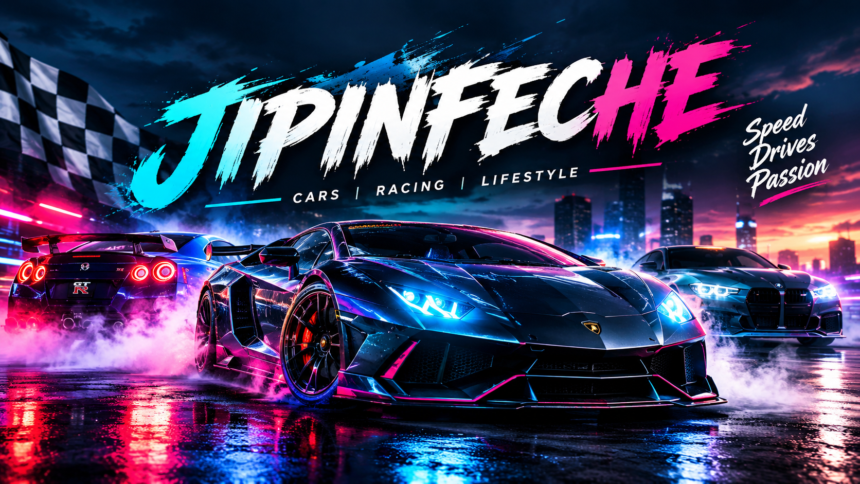
If you have seen the word Jipinfeiche on a game page, a video title or a forum post, you may have wondered what it is. It looks like the name of an unknown racing game. It is not. Jipinfeiche is the Chinese name for one of the most famous racing series in the world: Need for Speed.
The word is written in Chinese as 极品飞车. Said out loud, it sounds like “Jípǐn Fēichē”. When people type it with plain English letters, with no tone marks and no space, it becomes “Jipinfeiche” — one long word that hides its meaning from anyone who does not read Chinese.
This guide explains the name in simple words. You will learn what Jipinfeiche means, why the same game series has different names in different countries, which games carry the name, and how to search for it without landing on the wrong pages. You will also learn what Jipinfeiche is not, because a lot of wrong ideas about this word are floating around the internet.
| 🔗 You may also like: |
|---|
| Gaming updates from EtrueSports and EtrueGames |
| Tracqueur Explained: Is It a Real Word, a Tracker, or Just a Typo? |
What Jipinfeiche Actually Is
Jipinfeiche is the Latin-letter spelling of 极品飞车, the official Simplified Chinese title of the Need for Speed series. The publisher, Electronic Arts (EA), uses this name on its Chinese Need for Speed pages, on Chinese game store listings and on the boxes and menus seen by players in mainland China.
So the short answer is simple. Jipinfeiche and Need for Speed are the same franchise. One name is English, the other is Chinese. They are not two series, and Jipinfeiche is not a copy or a rival of Need for Speed. It is the name Chinese players have known for years.
It is also not the name of one single game. Need for Speed is a long series with many games, and the Chinese title covers the whole series, in the same way the English name does. When a Chinese page talks about one exact game, it adds extra words after the main title — just as English pages write Need for Speed Heat or Need for Speed Unbound.
What the Name Means, Word by Word
The full Chinese title has two parts, and each part tells you something about the games.
The first part, 极品 (jípǐn), means something of the finest quality — top-grade, the very best of its kind. The second part, 飞车 (fēichē), means a car that moves so fast it feels like it is flying. Put together, a rough word-for-word meaning is “top-grade flying cars”.
No one in China reads the title as a puzzle, though. To a Chinese player, 极品飞车 simply is Need for Speed, in the same way the English words simply mean the series to you. Local names like this are chosen to sound exciting in the local language, not to be translated back word by word. That is why online translations of the name can sound strange: the feeling of the name matters more than the exact words.
The spelling “Jipinfeiche” drops two things: the tone marks over the vowels, and the space between the two halves. Chinese pinyin — the system that writes Chinese sounds in English letters — would write it as “Jípǐn Fēichē”. Search engines and web addresses often remove the marks and join the words, which is how the flat, puzzling form “jipinfeiche” was born.
One Franchise, Several Names Around the World
Need for Speed is a good example of how big game series change their names as they travel. In mainland China, written in Simplified Chinese, the series is 极品飞车 — Jipinfeiche. In Taiwan and other places that use Traditional Chinese, EA uses a different name: 極速快感, which says something close to “extreme speed feeling”. In Japan, the earliest games in the series were even sold under yet another name, Over Drivin’.
None of these are mistakes. Publishers choose local titles that sound natural and exciting to local players, and a name that works in one language often sounds flat or odd in another. Racing is easy to understand in every country, but the words on the box still have to sell the thrill.
This is also why searches can feel messy. A fan video from China, a store page from Taiwan and a guide from Japan may all talk about the same game under three different names. Once you know the names belong to one family, the confusion disappears. The same name-confusion happens with other online words too — our guide to the name Nerwey shows how one strange-looking word can send searchers in completely wrong directions.
A Short History of the Series Behind the Name
Need for Speed began in 1994 with a game called The Need for Speed. It was made by a Canadian studio, Distinctive Software, and published by Electronic Arts. At a time when most racing games were simple, it stood out for its real, licensed cars and its sense of speed on open roads.
Over the years the series grew into one of the best-selling racing franchises ever made, with more than 150 million copies sold across all its games. Different studios took turns building it — including EA Black Box, Criterion Games and Ghost Games — and each era had its own flavour. Some games focused on exotic cars and clean racing. Others leaned into street racing culture, heavy car customisation and long police chases, which became the series’ trademark.
Games like Underground and Most Wanted made the series a giant in the 2000s, especially among younger players who loved tuning cars and outrunning the police. Later games tried new ideas: open worlds, story modes, day-and-night racing and online crews. The most recent main game for PC and consoles is Need for Speed Unbound, released in December 2022, with a bold cartoon-meets-realism art style.
Through all of those changes, the Chinese name stayed the same. A player in Beijing who bought the series in the 2000s and a player who downloads it today both know it as 极品飞车. That long, steady use is why the word Jipinfeiche keeps appearing in search results year after year.
Jipinfeiche on Mobile: Need for Speed Mobile
The name is busiest today on mobile. In China, the series’ big phone game is called 极品飞车:集结 — “Jipinfeiche: Jijie” in pinyin, sold in English as Need for Speed Mobile or Need for Speed: Assemble. The extra word means “assemble” or “gather together”, a fitting name for an online game built around meeting other racers.
The game was made by TiMi Studio, part of Tencent, under licence from EA. It launched in China on 11 July 2024. It is an open-world racing game whose map is based on the world of Need for Speed Heat, and it offers around 150 licensed cars from about 30 real brands. EA and Tencent also worked with Mercedes-Benz to bring a version of the game into Mercedes cars in China, playable on the car’s own screens.
One honest warning belongs here. At the time of writing, the game has no confirmed worldwide release date, and players outside China and a few test regions are still waiting for official news. If a website promises you a “global Jipinfeiche download” today, be careful — it is very likely not the real game. This kind of promise is a common trick, and it works the same way it did with dead services whose names still float around, as our look at what happened to ChatPic explains. Only download games from official app stores and publisher pages.
| 🔗 You may also like: |
|---|
| Voozon Explained: What Voozon.com Is, and What It Is Not |
| The latest breakthroughs in quantum computing |
What Jipinfeiche Is Not
Because the word looks mysterious, the internet has invented meanings for it. Some websites describe Jipinfeiche as a life philosophy, a way of working, or a general idea about speed and success. There is no evidence for any of that. The word is a game title. It belongs to a racing series, and every checkable source — the publisher’s own pages, game stores, Tencent’s announcements — points to the same simple fact.
It is also worth clearing up three smaller mix-ups. Jipinfeiche is not a separate racing franchise competing with Need for Speed; it is Need for Speed. It is not one single game you can buy on its own; it is the family name for many games. And it is not a company; the company behind it is Electronic Arts, working with local partners such as Tencent for the mobile game in China.
When a name has no clear owner in English-language search results, low-quality sites rush in with confident nonsense. The cure is always the same: ask what the word is attached to in the real world. For Jipinfeiche, it is attached to game boxes, store pages and thirty years of racing games. That is the whole story — and it is enough.
How to Search for Jipinfeiche the Right Way
If you want good results, search with the game, not just the name. Adding the title of the exact game you mean — for example, the Chinese name plus “Unbound”, “Heat” or “Mobile” — will cut out most of the junk. Searching with the Chinese characters 极品飞车 works even better on video sites and Chinese platforms, where most of the real content lives.
Before you trust a download link or a “free version” page, check whose site you are really on. Our guide to how to research a company’s real website address walks through the checks step by step, and they take less than a minute. The real game is sold through official app stores and EA’s own pages; anywhere else, you are probably being sold a fake.
It also helps to keep a simple note of the exact title and region you are looking for, because names change between countries. A plain note-taking tool — our look at a simple digital notebook shows the idea — can save you from mixing up the Chinese, Taiwanese and global versions later.
Finally, if you follow racing communities on social apps, learn the apps’ menus well so you can find saved posts and messages again; our guide to finding your way around Instagram is a handy start for one of the biggest. Chinese fan communities are very active, and with translation tools in every modern browser, their guides and videos are open to you even if you do not read the language.
Why Racing Fans Still Care About This Name
It would be easy to treat Jipinfeiche as a trivia question, but it points at something real. China is one of the biggest gaming markets in the world, and mobile racing there is huge. The success of the mobile game under this name shows that the series still has pulling power more than thirty years after it began — in a market where it has always been known by a completely different name from the one on Western boxes.
The name also shows how global games really work. A series is not one fixed product with one fixed title. It is a family of games, rebuilt again and again for new machines, new players and new languages. The thrill stays the same — fast cars, close races, the police on your tail — but the words on the cover change so that every player, in every country, gets a name that feels like it was made for them.
The Games That Made the Name Famous
Under the Jipinfeiche name sit some of the most loved racing games ever made. Need for Speed Underground, from 2003, moved the series into night-time city streets and made car tuning — paint, body kits, neon lights — the heart of the game. Its sequel and then Most Wanted, in 2005, added long, dramatic police chases and a story told through live-action videos; for many players, Most Wanted is still the high point of the whole series.
Hot Pursuit, in 2010, let players race as the police as well as the runners, in fast, clean arcade races. Payback and Heat followed in the late 2010s, with Heat splitting its world into legal day races and risky night races — the same world that the Chinese mobile game later borrowed for its map. Unbound, in 2022, mixed realistic cars with comic-book-style effects and characters.
Every one of these games was sold in China under the same four characters: 极品飞车. That is the real weight of the name. It is not attached to one hit but to a line of hits across twenty years, which is why older players, younger players and mobile players all recognise it at once.
Playing the Chinese Versions: What to Expect
If you decide to try a Chinese version, expect a few practical differences. The menus and voices will be in Chinese, although big releases sometimes offer other languages. The mobile game is sold through Chinese app stores and needs a local account in most cases, and its online servers and events are run for the Chinese market, so timing and content can differ from anything sold in the West.
The name changes again just outside the mainland. The Taiwan release of Need for Speed Mobile, published by Garena, followed on 31 October 2024 — and in Traditional Chinese markets the series name is the other title, 極速快感. So a game that is “Jipinfeiche” in Beijing is sold under a different name in Taipei, while being the same game underneath.
None of this should put you off. Modern phones translate menus on screen, fan wikis list every car and event in English, and the racing itself needs no language at all. But it does pay to know which version you are buying before you spend money, so there are no surprises after the download.
Conclusion
Jipinfeiche is not a mystery game, a philosophy or a new rival to a famous series. It is 极品飞车, the Chinese name for Need for Speed, written in plain English letters. The name means something like “top-grade flying cars”, it has covered the whole series in China for years, and today it is busiest on mobile, where Need for Speed Mobile launched in China in 2024. Once you know that the two names are one franchise, every search result that uses the word falls into place.
FAQs
What is Jipinfeiche?
Jipinfeiche is the plain-letter spelling of 极品飞车 (Jípǐn Fēichē), the official Simplified Chinese title of Electronic Arts’ Need for Speed racing series. It is the same franchise, under its Chinese name.
What does Jipinfeiche mean in English?
Word by word, 极品 means “top-grade” or “finest quality” and 飞车 means a car moving so fast it seems to fly — so a rough meaning is “top-grade flying cars”. In real use, it simply means Need for Speed.
Is Jipinfeiche a separate game from Need for Speed?
No. It is not a separate game or a rival series. It is the name the whole Need for Speed series uses in mainland China, covering every game in the franchise, from the 1994 original to Need for Speed Unbound and the mobile game.
What is the newest game with the Jipinfeiche name?
On phones, it is Need for Speed Mobile (极品飞车:集结), made by Tencent’s TiMi Studio under licence from EA and launched in China in July 2024. On PC and consoles, the latest main release is Need for Speed Unbound, from December 2022.
Why do some websites call Jipinfeiche a philosophy or lifestyle idea?
Because the word looks mysterious in English, some low-quality sites invent meanings for it to attract clicks. There is no evidence behind those claims. Every checkable source — EA’s own Chinese pages, game stores and Tencent’s announcements — shows it is the Chinese title of a racing game series.