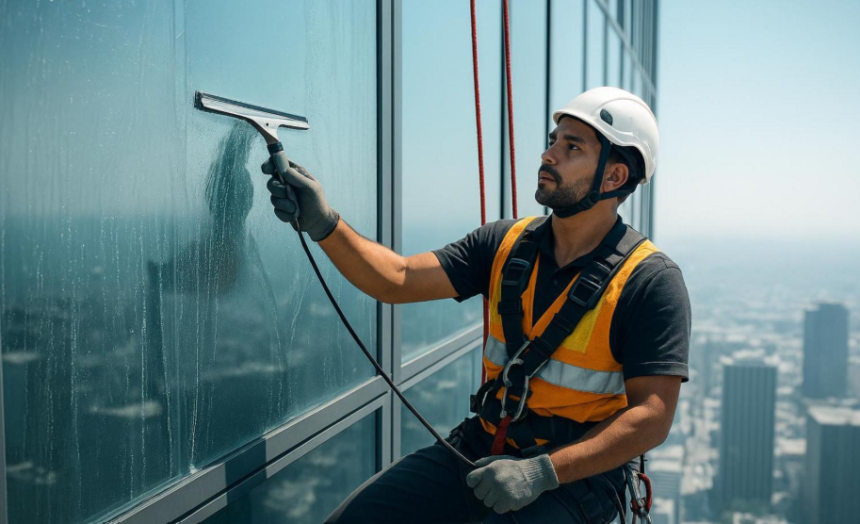
Professional high-rise window cleaning helps commercial buildings look their best by removing air pollution, mineral deposits, and dirt that make glass look dull. It also helps protect the building’s materials and structure. Clean glass is more than a cosmetic feature. A well-maintained exterior shows that a company takes care of its property, lets more daylight into the building, and helps prevent lasting damage from acid rain, oxidation, and airborne particles. Using specialist access systems, purified water, and gentle cleaning methods, trained technicians turn dirty, marked facades into bright, attractive surfaces that create a good impression on tenants, investors, and clients.
High-level facade cleaning also provides ongoing protection for commercial property. On complicated urban towers, services such as high-rise and abseiling window cleaning in London by RAIL allow difficult areas to be cleaned without disturbing the building or putting people at street level in danger. Regular washing stops small pollution particles from settling into the glass surface. This helps modern towers keep their clear views, sharp reflections, and strong energy performance for many years.
Why Clean Windows Matter in Commercial Buildings
Creates a Stronger First Impression
A commercial tower’s facade is the first physical impression of the companies inside it. When possible tenants, important clients, or visitors from overseas arrive at a skyscraper, the condition of the glass quickly shapes their view of the property’s management and the businesses based there. Streaks, water marks, and pollution stains suggest poor care and delayed maintenance. This can weaken the professional image of respected corporate tenants.
Clear, streak-free glass shows the building’s design and gives a modern curtain wall its bright, reflective, or transparent appearance. In a competitive rental market, a clean exterior creates a higher-quality setting that can support better rental prices and help keep tenants. A bright facade tells people that the owners pay attention to detail, take safety seriously, and spend money on proper building care.
Maximizes Natural Light and Workplace Comfort
Research into building performance shows that outside soot and dirt can reduce the amount of daylight passing through glass by about 7% to more than 30%, depending on the building’s position and exposure. When windows are covered by a layer of dust and pollution, office floors become darker and need more artificial lighting. Lower light levels can also change how people experience the space, making large offices feel closed in, dull, and cold.
Regular professional cleaning removes this layer and lets daylight reach deeper into the building. Good natural light supports the body clocks of occupants, may reduce eye strain, and can help people stay alert and positive at work. In buildings with daylight-controlled lighting, clear windows also allow automatic systems to lower the use of electric lights, which can reduce running costs.
Protects Glass, Frames, and Seals
Glass looks smooth and solid, but its surface can still suffer chemical damage. Rainwater can carry exhaust fumes, sulfur dioxide, sea salt, and minerals from concrete and masonry onto the glass. When these materials dry in strong sunlight, they can cause etching, lasting calcium marks, and oxidation. Over time, this damage can permanently affect the glass.
Professional cleaning removes acidic material before it bonds tightly to the surface. Regular work also helps protect rubber gaskets, sealant, and anodised aluminium frames from early decay and corrosion. Clearing dirt from drainage holes stops water from collecting around seals. This helps reduce the risk of leaks and failure of insulated glass unit seals.
Supports Health, Safety, and Building Appearance
The outside of an urban tower can collect allergens, vehicle soot, mould spores, and bird or pest waste around its sills, seals, and recessed areas. If moisture remains in blocked window tracks, it can support mould and other microbial growth. In some cases, this material may move towards air intake points and vents, affecting indoor air quality. Cleaning the exterior removes these biological and chemical residues before they become a larger sanitation problem.
Clean windows also support building safety. Clear glass reduces the haze and glare that can make it harder for occupants to see outside or for security teams to watch the area around the building. A clean and well-kept exterior shows that the property provides a healthy setting for workers and respects people using the surrounding streets.
Protects Property Value and Long-Term Investment
Commercial skyscrapers are major investments intended to generate income for decades. Poor care of the building envelope speeds up the wear of exterior materials. Repairing badly etched or heavily stained curtain wall glass can cost up to four times more than regular washing. Replacing panels at height may require cranes, road closures, specialist glazing work, and very high labour costs.
A planned high-rise cleaning programme helps asset managers keep windows and facade materials in good condition and reduce the need for major capital work. When valuers, lenders, or possible buyers review a commercial tower, clear records of facade cleaning and building-envelope care show that the property has been managed responsibly. This can support a higher property value.
What Makes High-Rise Window Cleaning Challenging?
Height, Access, and Complex Building Designs
High-rise window cleaning starts where normal ground-level equipment stops. The work may involve buildings from seven floors to more than eighty floors high. Modern towers often have unusual shapes, such as projecting sections, inward-sloping glass, outside sun fins, and deep setbacks. Reaching these surfaces calls for specialist access systems rather than ordinary hanging equipment.
Technicians may need to reach recessed spandrel glass, work beneath overhangs, and clean curved curtain walls while suspended far above busy streets. Keeping steady contact with the glass requires carefully planned ropes, suction tools, and stabilising equipment. Without sound planning, cleaners may swing in the wind or find that parts of the facade are blocked by projecting design features.
Hard Water Stains, Mineral Deposits, and Pollution
Glass at height is exposed to a steady flow of air pollution and mineral-laden water. In busy cities, vehicle exhaust, factory emissions, and mist from cooling towers settle on the facade. Rain then runs over concrete, brick, and masonry, picking up calcium and silicate minerals. These materials collect on the glass and leave heavy marks and deposits.
Sunlight can bake these minerals onto the surface and turn them into hard silicate crusts that ordinary soap and water cannot remove. Cleaning them calls for specialist products, mild acids, and controlled rubbing. The cleaner must remove the deposit without harming the glass beneath it. Poor methods can leave the surface cloudy or scratched and can turn a cleaning job into an expensive repair.
Weather, Wind, and Changing Site Conditions
Conditions high above the ground can be very different from those at street level. A light breeze on the pavement can become a strong and uneven wind near the top of a tower because of air movement around the building and rising warm air. Strong wind can make suspended platforms and abseilers swing and may cause them to strike the glass facade.
Changes in air pressure, sudden drops in temperature, lightning, and thick fog can also put workers at serious risk. Teams must watch local weather reports and use digital wind meters during the job. Hot weather creates a separate problem. Strong sunlight can dry cleaning liquid on the glass before it is rinsed, leaving soap marks that require the area to be cleaned again.
Cleaning Around Occupants, Vehicles, and Public Areas
A skyscraper stands above busy pavements, roads, and loading areas. A dropped squeegee, carabiner, or bucket from a high floor could cause fatal injury when it reaches the ground. High-rise work must be carefully controlled so that tools and materials do not fall into public areas.
Cleaners also need to work without disturbing the people inside the building. Passing outside boardrooms, executive offices, or hotel rooms requires good timing and respect for privacy. The team must work quietly and discreetly, avoiding movements that could alarm occupants or interrupt important meetings and business activities.
How Professionals Keep High-Rise Window Cleaning Safe
Fall Protection, Harnesses, and Inspection Procedures
High-level window cleaning depends on strict personal fall protection systems. Workers wear industrial full-body harnesses that spread the force of a fall across the pelvis, chest, and thighs. Each person uses a main suspension line and a separate backup fall-arrest system. This means the worker is not dependent on one connection.
Before every shift, the team checks all rigging equipment. Workers inspect static Kernmantle ropes, wire lines, descenders, ascenders, carabiners, and shock-absorbing lanyards for fraying, heat damage, chemical corrosion, or wear. Any item showing damage, or any item exposed to a heavy fall force, is removed from service and disposed of under the company’s safety rules.
Site-Specific Risk Assessments and Work Plans
Every high-rise presents different risks. Professional contractors prepare a site-specific work plan and job safety analysis before setting up any ropes. The technical team checks the roof layout, approved anchor points, parapet strength, electrical lines, microwave antennas, and HVAC exhaust vents. These checks help identify anything that could affect breathing, rope movement, or worker safety.
The plan sets out rescue steps, backup communication methods, crew changes, and ways to control hazards. It also shows the planned rope routes, edge protection to stop ropes rubbing on sharp parapets, and safe drop lines. Finding these problems before equipment is installed reduces the need for unsafe changes during the job and gives the crew clear instructions.
Weather Monitoring and Wind Limits
Work at height follows set weather limits. Wind speed is checked with handheld or fixed digital anemometers. Many suspended operations stop when steady winds reach about 15 to 20 miles per hour, or when sudden gusts make it hard to control the worker or platform. Work stops at the first sign of a thunderstorm, lightning, freezing rain, or heavy rain.
Temperature also affects safe working conditions. In winter, water sprayed onto a facade can freeze and create slippery ice on the building. It can also form falling icicles that put people below at risk. In summer, high air temperatures and heat reflected from glass can lead to heat exhaustion and dehydration. Workers need regular water breaks and shorter working periods at height.
OSHA Compliance, Training, and Insurance Coverage
Reliable high-rise cleaning companies base their training, equipment, and procedures on recognised safety rules. These may include OSHA requirements, such as 29 CFR 1910 Subpart D for walking-working surfaces, and IWCA I-14.1 standards. Technicians may also hold qualifications from rope access organisations such as IRATA or SPRAT. These qualifications show training in rope work, rescue, and practical site skills.
Commercial property managers also need to protect themselves from claims linked to contractor work. Established high-rise cleaning companies carry commercial general liability insurance, excess umbrella cover, and workers’ compensation insurance for work at height. Before work begins, they should be able to provide safety records, low Experience Modification Rates, and formal compliance documents checked by outside parties.
Ground-Level Exclusion Zones and Public Protection
Protecting people on the ground is just as important as protecting workers in the air. Cleaning companies set up a restricted area below each active drop zone. They use visible barriers, warning tape, and clear signs. Where work takes place above entrances or public paths, the team may add overhead protection, debris netting, or canopies to catch drips and falling items.
Ground safety marshals stay in place for the full period of the work. Using two-way radios, they communicate with the suspended team, direct pedestrians around the restricted area, and stop vehicles from parking below ropes or equipment. They also report new hazards on the ground. All hand tools, squeegees, and scrapers used at height are attached to harnesses or buckets with approved wrist lanyards.
Which Methods Do Professional High-Rise Window Cleaners Use?
Rope Access for Difficult-to-Reach Facades
Industrial rope access, often called abseiling, has changed the way high-rise facades are maintained. Based on techniques used in climbing and caving, it allows trained workers to descend, climb, and move across vertical surfaces with strong but lightweight ropes. Unlike large mechanical platforms, rope access needs little equipment on the roof and has a small visual impact, making it useful for quick and flexible work.
This method works well on towers with sharp angles, deep projecting sections, internal lightwells, and decorative roof structures where standard platforms cannot reach. Specialist teams such as Rope Access in London use controlled descenders and may use suction cups or stabilising lines to hold their position against the glass. Rope access lets them reach narrow corners and isolated windows with good control.
Suspended Platforms and Building Maintenance Units
Buildings with broad, straight facades and long runs of curtain wall glass often use Building Maintenance Units, or BMUs, and temporary suspended platforms. A BMU is a permanent motorised crane system fixed to roof tracks. It lowers and raises a two-point work platform along the outside of the building.
These platforms give several workers a stable place to work and can carry water tanks, polishing tools, and other large equipment. Many modern BMUs have soft rubber rollers that run along guide tracks on the mullions. These rollers help stop the platform drifting into the glass in moderate wind. BMUs are useful for large cleaning projects on very tall buildings where the work may take several weeks.
Water-Fed Poles for Lower and Mid-Level Windows
Water-fed pole systems are widely used for lower and middle sections of commercial buildings, often from the ground up to about 60 or 80 feet. They are useful for podiums, main entrances, and medium-height office blocks. The poles are made from light, stiff carbon-fibre sections, allowing workers to guide a cleaning brush from the ground without a lift or suspended platform.
Purified water travels through small tubes inside the pole to a soft brush at its end. The worker gently loosens bird waste, road film, and dust, then rinses the glass with pure water. Since the operator stays on the ground, this method reduces fall risks, speeds up the work, and avoids the damage that heavy lifting platforms can cause to pavements and planted areas.
Deionized Water Systems for Streak-Free Results
Professional commercial window cleaning usually avoids ordinary tap water. Tap water contains minerals such as calcium, magnesium, chlorine, and other dissolved substances. When it dries on glass, it can leave cloudy spots. To avoid this, cleaning companies use reverse osmosis and deionisation systems.
These mobile systems send water through sediment filters, carbon filters, reverse osmosis membranes, and deionising resin. The process removes dissolved solids and can produce water with a Total Dissolved Solids reading of zero parts per million. Pure water attracts dirt and helps lift it from the surface. After the glass is scrubbed and rinsed, the water dries without leaving soap or mineral marks, giving the pane a clear, streak-free finish.
Specialized Techniques for Tinted, Coated, and Delicate Glass
Many modern towers use specialist glass with low-emissivity coatings, reflective metal finishes, ceramic patterns, solar films, or security laminates. Harsh products such as abrasive powders, strong alkaline cleaners, or ammonia can damage, remove, or cloud these thin coatings.
Professional teams follow cleaning rules made for sensitive glass. They avoid using razor scrapers on tempered or coated panes because tiny pieces of manufacturing material can cause scratches. Instead, they use neutral-pH biodegradable products, non-scratch pads, and purified water. By choosing tools and products that suit the exact glass type, cleaners protect both its appearance and its heat-control performance.
How Professional Cleaning Supports Building Maintenance
Inspecting Glass, Frames, Tracks, and Seals
A trained high-rise window cleaner can also act as a close-up inspector of the building envelope. Cameras, drones, and street-level checks give a broad view, but suspended workers operate only inches from the facade. They can inspect each part of the outside shell and spot problems that may otherwise remain hidden until they cause major damage.
During each descent, technicians look at and touch the sealant around frames, structural silicone glazing, expansion joints, and drainage systems. They can see if rubber setting blocks have moved, if sealant has separated from aluminium mullions, or if dirt is blocking drainage paths. This turns ordinary window cleaning into a useful early check of the facade.
Identifying Cracks, Corrosion, Leaks, and Other Damage
Finding damage early can save property owners many thousands of pounds in emergency work. During cleaning, technicians look for small impact cracks, nickel-sulfide fractures in tempered glass, damaged edges, and early failure of insulated glass unit seals. Internal condensation or haze between panes can point to seal failure. Workers also look for bubbling paint, corrosion on metal frames, and loose decorative pressure caps.
Many leading cleaning contractors record these findings as part of the job. They take clear digital photographs and identify the exact drop, floor, and facade section where the damage appears. The information is placed in a facade defect report and sent to the facility manager. Small seal splits or damaged spandrel panels can then be repaired before they lead to serious water entry or create a danger for the public.
Integrating Window Cleaning into a Facility Care Plan
Modern facility management works best when different maintenance tasks are planned together. High-rise window cleaning should be part of the building’s preventive maintenance software and long-term repair budget instead of being arranged only after a problem appears. Scheduling it alongside air-conditioning filter changes, roof checks, and facade inspections can make better use of staff and equipment.
When facade cleaning is coordinated with other work, equipment such as boom lifts, roof cranes, and rigging may be shared between contractors. Window cleaners can also record information for structural engineers or help with small sealant repairs where their training allows. Planning the work together reduces repeat site visits, limits disruption for tenants, and keeps building records up to date.
Separating Routine Cleaning from Repairs and Restoration
Professional cleaning managers need to know when normal cleaning ends and glass restoration begins. Routine work uses neutral detergents, microfiber tools, and deionised water to remove everyday dust and grime. If glass has suffered heavy oxidation, concrete runoff, or deep acid-rain etching, normal squeegee work will not bring back its clear finish.
Trying to remove thick mineral deposits with ordinary cleaning tools may lead inexperienced workers to use rough pads or strong scraping. This can permanently damage the glass. Professional facade companies separate routine cleaning from restoration work. If deep staining is found, they may offer a separate treatment using cerium oxide polishing compounds, specialist restoration pastes, and a new water-repellent coating to improve the glass finish.
What Does Commercial High-Rise Window Cleaning Cost?
Building Height, Window Count, and Access Method
The price of commercial high-rise window cleaning depends on several physical features of the building. Height and total glass area are important, but the access method often has the greatest effect on cost. Straight towers with working roof-mounted BMUs usually have a lower cost per square foot because the platform can move quickly from one drop to the next.
Towers that need complex rope access, large ground exclusion areas, or hired boom lifts have different costs. A building with inward-sloping glass, large projecting sections, or deep decorative recesses takes more time to rig. Extra tiebacks and suction equipment may be needed to keep workers stable, increasing the hours required for each drop and the total project price.
Glass Condition, Stain Removal, and Cleaning Frequency
The current state of the glass also affects the estimate. A facade cleaned every three months usually needs routine work to remove light dust and seasonal dirt. These visits are quicker and easier to price, making them a good match for normal maintenance budgets.
A building that has gone years without proper cleaning may have thick soot, concrete deposits, and hard-water etching. Restoring it can require chemical treatments, hand polishing, and several stages of stain removal. This takes more time and specialist materials. The first deep clean can cost two or three times as much as a normal maintenance visit.
How a Maintenance Contract Can Improve Cost Predictability
A multi-year service agreement or recurring annual contract can offer financial benefits to commercial property managers. One-off jobs often cost more because the contractor must repeat paperwork, arrange a new mobilisation, and work around changing availability. A planned contract gives the owner clearer service prices and makes the maintenance budget easier to manage.
Regular contractors also learn the building’s anchor points, facade design, and tenant requirements. Over time, they can plan drops more efficiently and refine their safety procedures. Regular cleaning also prevents heavy mineral buildup, reducing the chance that the owner will later need expensive glass restoration. This can lower the total cost of maintaining the building over its life.
What to Check in a Professional Cleaning Quote
Property managers should look beyond the lowest price when comparing high-rise cleaning quotes. A cheap offer may leave out important work, provide too little insurance, or rely on rushed methods. A trustworthy proposal should show the complete scope in a clear, itemised format.
The quote should say whether it covers only the main glass or also includes frames, mullions, drainage holes, and sills. It should name the access method, show proof of workers’ compensation and umbrella insurance for work at height, explain how the public will be protected, and state what water treatment system will be used. A quote without a site-specific safety plan or proof that anchor points have been checked should not be accepted.
How to Choose a Professional High-Rise Window Cleaning Company
Verify Training, Licenses, Insurance, and Safety Records
Choosing a commercial facade contractor requires careful checks. Facility managers should ask for proof of recognised staff qualifications, including IRATA or SPRAT certificates for rope access workers. They should also check records of fall protection and suspended scaffold training that meet OSHA requirements. Every member of the descent team should know how to carry out a self-rescue and help another worker in an emergency.
Insurance must be checked as well. Ask for certificates sent directly by the contractor’s broker that clearly cover high-level exterior window cleaning and suspended work. The policy should include commercial general liability, commercial vehicle cover, workers’ compensation, and a strong excess umbrella policy. Ask for the company’s safety history, including OSHA 300 logs and its Experience Modification Rate, to check whether it has a low number of incidents.
Request a Site Assessment and Detailed Scope of Work
Do not accept a high-rise cleaning quote based only on satellite images or a view from the street. A reliable company will carry out an in-person survey of the roof and structure before preparing its price. The survey should check roof access, the age and test records of anchor points, BMU power supplies, and local facade hazards.
After the survey, the company should provide a written Scope of Work. It should list equipment locations, drop times, access methods for each side of the building, expected water use, and the products planned for hard-water stains. It should also explain how the team will manage entrances, loading areas, public paths, and notices to tenants. Clear details reduce confusion once work begins.
Confirm Equipment, Environmental Practices, and Scheduling
A professional cleaning company invests in well-maintained equipment and responsible work methods. Ask how old its ropes, platforms, and descent equipment are, and request maintenance and inspection records. Check that the team uses reverse osmosis and deionisation systems to produce a clean finish without leaving sticky detergent residue that attracts more dirt.
Environmental rules also matter. Many cities ban dirty water and soapy runoff from entering storm drains. Ask whether the contractor uses non-toxic, fully biodegradable products and how it contains runoff where local rules require this. Discuss working hours as well. Early morning or weekend visits may be useful if weekday work would disturb tenants or customers.
Review References, Communication, and Service Guarantees
A contractor’s record on similar buildings can give a useful guide to its future work. Ask for references from property managers, asset directors, and structural engineers who manage towers with similar height, size, and design. Contact them to ask about punctuality, crew behaviour, safety standards, and how the company handles weather delays.
Check how the provider communicates and what its service guarantee covers. A dependable contractor should appoint a project manager who remains available during the work and sends progress updates. The agreement should include a clear quality promise. If the final inspection finds streaks, missed panes, or unfinished edges, the company should correct them without an extra charge. A reliable and responsive contractor helps the property maintain a clean, professional appearance year after year.
Read Also:- magazinerate.co.uk