Damage in transit remains one of the most common reasons for complaints and returns in online retail. It is a particular problem for small, light and yet sensitive products such as accessories, cosmetics, discs or electronic components. Large outer packaging increases shipping costs and takes up warehouse space, so many sellers choose bubble mailers instead. This article explains how padded envelopes work, which products suit them and how to choose the right size and outer material.
What is a bubble mailer?
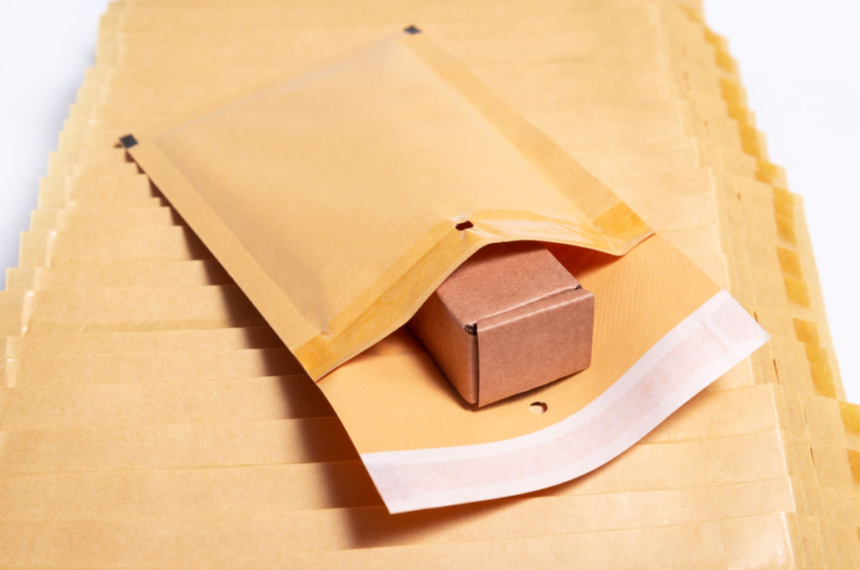
A bubble mailer, also called a bubble envelope or padded envelope, is a shipping envelope lined on the inside with a layer of air-cushion film. The small pockets of air act as a shock absorber: knocks and vibrations during transport are partly absorbed before they reach the product. The outer layer protects against moisture and dirt, and a self-adhesive strip lets the packer seal the envelope in one movement, with no extra tape. Because the whole package is thin and light, it adds very little to the shipping weight.
Which items are bubble mailers suited to?
Bubble mailers work best with flat or compact items of low weight. Typical examples are small accessories, cosmetics, CDs and DVDs, jewellery or minor electronic parts. For retailers dealing with many small orders this is a clear advantage: parcels stay flat, often fit through a letterbox and can be prepared quickly in the warehouse. That reduces the cost per shipment and the amount of space needed to store packaging.
Where the limits lie
A bubble mailer is not a universal solution. Items with sharp edges or protruding parts may pierce the cushioning layer, and heavy articles put strain on the seams. Very fragile goods, such as glass or ceramics, usually need more protection than a single layer of air cushioning can offer. In such cases a sturdier form of packaging with additional protective material is the better choice. Sellers should divide their range into product groups and define the minimum packaging required for each group.
Choosing the right size and outer material
Size matters for protection. The envelope should be slightly larger than the product, so that it can be inserted without force, but not so large that the item moves around inside. A loose envelope lets the product knock against its walls, while an envelope that is too tight forces the packer to squeeze the item in and flattens the air cushions. It helps to measure the largest and smallest products in a given group and choose a few standard sizes. The full range of classic bubble envelopes is described at https://www.filmar-group.pl/en/products/shipping-mailers/classic-bubble-envelopes/ on the Filmar Group website, where buyers can compare the options against their own assortment.
The outer layer is usually made of plastic film or paper. Film is resistant to moisture and generally harder to tear. Paper has a more natural look and is often chosen by brands that want to emphasise a more sustainable image. For international shipments, where a parcel travels further, strength of material and the quality of the adhesive strip deserve particular attention.
Practical packing tips
Even the best envelope will not protect a product that is packed badly. The item should sit in the centre with no pressure on the edges. Do not overfill the envelope: if it is too full it will seal poorly and the cushioning loses its effect. Place the address label on a flat, clean area of the outer surface. For more delicate items, wrap them first in a thin layer of paper or film. A single packing instruction for the whole team keeps results consistent and reduces errors.
Cost, stock and sustainability
For regular shipping it pays to buy bubble envelopes in larger quantities, for example from a wholesaler or directly from a manufacturer. The unit price usually falls and fewer orders are needed. Limiting the number of sizes in use simplifies stock control and speeds up packing. Companies with sustainability goals can look at the share of recycled material and whether the packaging can be recycled after use. Such claims are worth confirming with the supplier, for example through certificates.
Summary
Bubble mailers are a practical choice for light, compact and moderately fragile products. The key is matching size and outer material to the assortment. Standardising formats and using one packing instruction across the team helps to limit damage, costs and the time needed to prepare shipments.