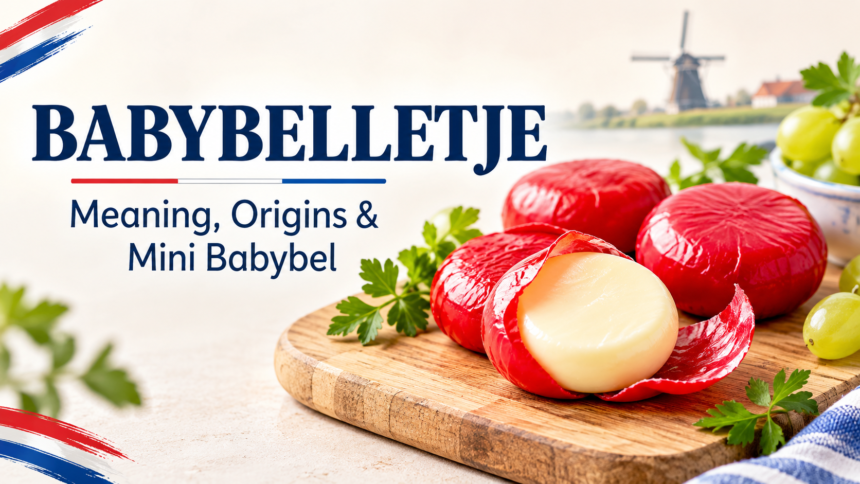
The word Babybelletje has attracted attention because it can be interpreted in more than one way. Its spelling resembles the familiar Babybel cheese brand, while its ending resembles a Dutch word associated with a small bell. This combination makes the term interesting for people exploring Dutch vocabulary, searching for information about Mini Babybel cheese, or trying to understand how informal words develop online.
Understanding Babybelletje requires separating its possible linguistic meaning from its association with a well-known cheese snack. In Dutch, belletje is a diminutive form of bel, meaning “bell.” The word can refer to a little bell and, in certain contexts, can also be associated with making a phone call. Meanwhile, Mini Babybel is a recognizable individually wrapped cheese product sold under the Babybel brand.
Although these connections help explain why people search for Babybelletje, the term does not necessarily have one universally established definition. Its meaning depends on where it appears and how the person using it intends it to be understood.
This article explores the meaning of Babybelletje, its Dutch-language origins, its possible connection to Mini Babybel cheese, common uses, nutritional considerations, and practical facts that readers should know.
What Is Babybelletje?
Babybelletje is best understood as a context-dependent term rather than a word with one confirmed meaning in every situation. Its spelling combines elements that may remind readers of the Babybel name and the Dutch word belletje. However, the spelling alone does not establish that it is an official product name or a standard Dutch expression.
In informal online writing, people sometimes create playful variations of existing brand names, familiar words, and diminutives. Babybelletje fits the pattern of a word that could be used affectionately or descriptively, especially when discussing small objects or the familiar Babybel cheese snack.
The exact meaning depends on the surrounding sentence. Someone discussing Dutch vocabulary may be referring to a little bell, while someone talking about lunchbox snacks may be using the term informally in connection with Babybel cheese.
It is important not to assume that every search result or online article uses the word in the same way. A useful explanation identifies these possible interpretations without presenting an informal nickname as an officially recognized product or dictionary definition.
Dutch Origins and the Meaning of Belletje
To understand the linguistic side of Babybelletje, it helps to examine the Dutch word belletje separately. Dutch is a West Germanic language spoken primarily in the Netherlands and Belgium, and it uses diminutives in everyday conversation. These forms can communicate size, familiarity, affection, or informality.
The word bel means “bell” in Dutch. Adding the diminutive ending produces belletje, which can mean “little bell.” Depending on the sentence, the word may also have a different practical meaning, including an informal reference to a phone call.
For example, Dutch speakers may use expressions involving belletje when talking about calling someone. This illustrates why a word’s meaning cannot always be understood from a direct translation alone.
How Diminutives Work in Dutch
Diminutives are common in Dutch. They can turn an ordinary noun into a smaller or more affectionate-sounding version. The ending varies depending on the original word, its pronunciation, and spelling.
Consider these examples:
- Huis means house, while huisje means little house.
- Boek means book, while boekje means little book or booklet.
- Bel means bell, while belletje can mean little bell.
These examples demonstrate a normal feature of Dutch vocabulary. However, the existence of the word belletje does not automatically establish Babybelletje as a standard dictionary entry. The complete term may be a playful combination or an informal expression used in a particular setting.
Is Babybelletje a Traditional Dutch Word?
There is an important distinction between a recognizable Dutch word and a longer expression constructed from familiar Dutch elements.
Belletje has an understandable linguistic meaning, but the complete spelling Babybelletje should be interpreted cautiously. Without reliable evidence of established usage, it is more accurate to describe Babybelletje as a context-dependent or Dutch-style expression than to claim it is a traditional Dutch word.
This distinction is particularly useful for readers researching unfamiliar terms online. Search results may repeat the same explanation without demonstrating whether the term is widely used by native speakers.
| Internal Link |
|---|
| 🔗 You may also like: BlessingTide.com: Meaning, Features, and Online Presence |
| 🔗 You may also like: Bodenxt Explained: Features, Uses, and Online Information |
Babybelletje and Mini Babybel Cheese
One reason people may associate Babybelletje with cheese is the similarity between the two names. Babybel is an established cheese brand known for small, individually wrapped portions. The Dutch-style ending in Babybelletje can give the longer word a playful, diminutive sound.
Mini Babybel is the familiar product name used for these small cheese snacks. Their round shape, distinctive wax coating, and convenient packaging make them easy to recognize. They are commonly eaten as snacks or included in packed lunches.
The cheese itself is a real, established product, but Babybelletje should not automatically be treated as its official commercial name. The standard product name is Mini Babybel.
What Is Mini Babybel Made From?
Mini Babybel Original is made from dairy ingredients, including pasteurized milk, salt, cultures, and enzymes used in cheesemaking. Exact ingredient statements can vary by product and market, so checking the package is the best way to confirm the formulation of a particular variety.
The milk is processed into cheese curds, shaped into small portions, and prepared for packaging. The individual portions are then covered with a protective wax coating and wrapped for retail sale. This packaging helps protect the cheese and makes each portion convenient to carry.
The wax is packaging, not an edible part of the snack. It should be removed before eating the cheese.
Why Is Mini Babybel So Recognizable?
Several characteristics make Mini Babybel easy to identify. Its small, round shape differs from the larger blocks or slices commonly found in supermarket cheese sections. Its individual packaging also makes portioning straightforward.
The red wax coating on the Original variety is particularly distinctive, although different products may use different packaging colors. The combination of a small cheese wheel and an easy-to-open wrapper has helped make the product familiar to many consumers.
For this reason, people searching for Babybelletje may actually be looking for information about Mini Babybel, its ingredients, its packaging, or ways to serve it.
Are Babybelletje and Mini Babybel the Same Thing?
Not necessarily. The terms should be distinguished according to context.
- Babybel: The established cheese brand name.
- Mini Babybel: The recognized name used for the small cheese product.
- Bel: The Dutch word for bell.
- Belletje: A Dutch diminutive associated with a little bell and used in other contexts.
- Babybelletje: A context-dependent expression that may be associated informally with Babybel.
If you are buying the cheese, reading a nutrition label, or searching for a specific product, use the name Mini Babybel. If you encounter Babybelletje in an article or social media post, read the surrounding text to determine what the writer means.
Mini Babybel Nutrition and Ingredients
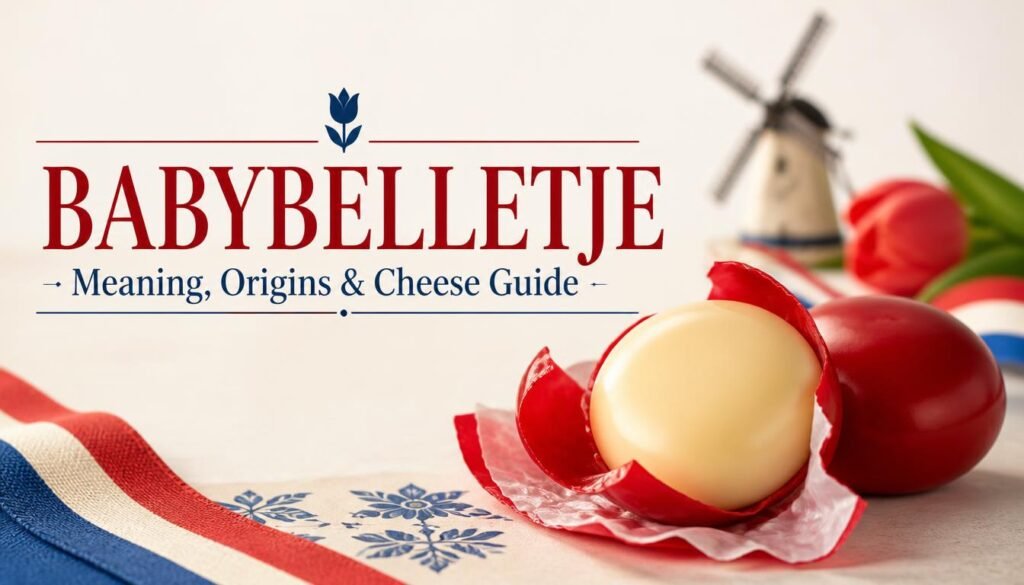
Nutrition is another reason readers may search for information about Babybelletje. If the term is being used to refer to Mini Babybel cheese, understanding its nutritional profile can help people decide how it fits into their eating habits.
Mini Babybel Original supplies protein, calcium, and other nutrients found in dairy foods. However, it also contains fat, including saturated fat, and salt. Its nutritional value should therefore be considered as part of the overall diet rather than judged by a single nutrient.
A typical 20-gram serving of Mini Babybel Original in the United States contains approximately 70 calories and 4 grams of protein. The product’s nutrition figures differ by country and variety, so the label on the package should take priority.
Protein and Calcium
Protein contributes to the maintenance and growth of body tissues, while calcium supports normal bones and teeth. Dairy cheese can supply both nutrients in a relatively small portion.
Mini Babybel may be a convenient option for someone who wants a portion-controlled cheese snack. Pairing it with fruit, vegetables, or whole-grain crackers can create a more varied snack with additional fiber and nutrients.
Fat and Sodium
Cheese naturally contains fat, and some varieties provide substantial amounts of saturated fat relative to their serving size. Mini Babybel also contains sodium, which is relevant to people monitoring their salt intake.
These characteristics do not mean that cheese must be avoided. Rather, portion size and the rest of the diet matter. People with specific dietary requirements can compare product labels and choose a variety that suits their needs.
Is Mini Babybel Suitable for Everyone?
Mini Babybel Original is a dairy product, so it is not suitable for people with a milk allergy. People who are lactose intolerant may have different levels of tolerance to individual dairy products and should consider their own needs.
The brand also offers plant-based alternatives in some markets. These are separate products with different ingredients and nutritional profiles, so they should not be assumed to be nutritionally identical to dairy cheese.
Parents should also consider the risk of choking when serving small, firm or round foods to young children. Remove the wax completely and prepare the cheese in age-appropriate pieces. Young children should always be supervised while eating.
Popular Uses of Mini Babybel Cheese
If you are exploring Babybelletje because of its connection to Mini Babybel, its uses extend beyond eating it directly from the wrapper. The small portions can be included in simple meals, packed lunches, and snack plates.
1. Lunchbox Snacks
Mini Babybel can be packed with fruit, crackers, cucumber slices, or other lunchbox foods. Its individual packaging makes it convenient for school lunches, work meals, and travel snacks.
For children, the cheese should be prepared according to age-appropriate food safety guidance. Remove the wax completely and cut the cheese into small pieces when necessary to reduce choking risks.
2. Quick Snacks Between Meals
A small cheese portion can be useful when you want something simple without preparing a full meal. Pairing cheese with an apple, pear, carrots, or whole-grain crackers adds variety and can help create a more balanced snack.
The best combination depends on your preferences, appetite, and dietary requirements.
3. Party Platters
Mini Babybel can be served on a snack platter alongside grapes, crackers, olives, vegetables, and other cheeses. Its round shape adds visual variety, while its individual portions make serving straightforward.
Always remove the wax before eating. If cheese is served at a gathering, follow appropriate food storage and refrigeration guidance.
4. Creative Food Presentation
Some people cut small cheese portions into shapes or use them as decorative elements in lunchbox arrangements. These ideas can make ordinary snacks more visually appealing without requiring complicated recipes.
However, the wax coating should never be treated as an edible decoration. Remove it completely before preparing the cheese for consumption.
How to Store Mini Babybel Properly
Proper storage helps maintain cheese quality and food safety. Mini Babybel should generally be refrigerated according to the package instructions, including when it is stored at home after shopping.
For packed lunches or travel, use an insulated lunch bag with an appropriate cold source when needed. Avoid leaving perishable cheese at room temperature for extended periods, particularly in warm conditions.
Once the protective packaging has been opened and the wax removed, the cheese should be eaten promptly. Discard cheese that shows signs of spoilage or has been stored under unsuitable conditions.
Why Is Babybelletje Appearing in Online Searches?
Unfamiliar words often attract attention because people want to know whether they refer to a product, a language expression, a nickname, or a new internet trend. Babybelletje combines recognizable elements, making it especially likely to prompt questions about its meaning.
Several factors may explain this interest.
First, the word looks familiar. Readers may recognize Babybel from supermarket shelves but be unfamiliar with the longer spelling.
Second, it resembles a Dutch diminutive. People interested in translation and foreign-language vocabulary may want to understand the ending and its relationship to belletje.
Third, online articles may use the term differently. One article might focus on the Dutch language, while another discusses Mini Babybel cheese. Repeated explanations can make an informal term appear more established than the available evidence supports.
For writers and readers, the best approach is to check the context, distinguish confirmed facts from interpretation, and avoid assuming that search popularity proves a word has a formal definition.
Common Misunderstandings About Babybelletje
A few misconceptions can arise when linguistic terms and brand names overlap.
- Babybelletje is not necessarily an official cheese name. Mini Babybel is the established commercial product name.
- The Dutch meaning does not explain every use. Belletje can mean a little bell, but context may give it another interpretation.
- The word’s spelling does not prove its history. A plausible linguistic construction is not enough to establish that a term is traditional or widely used.
- The wax coating is not food. It must be removed before eating Mini Babybel cheese.
- All Babybel varieties are not nutritionally identical. Ingredients and nutrition information can vary by product and market.
Keeping these distinctions clear makes it easier to understand the term without confusing informal language with verified product information.
Conclusion
Babybelletje is an interesting example of how language, brand recognition, and online searches can overlap. Its spelling suggests a connection with the Dutch word belletje, which can mean “little bell,” while its resemblance to Babybel makes an association with Mini Babybel cheese understandable.
The important distinction is that these connections do not establish one universal meaning for the complete term. Mini Babybel is an established cheese product, while Babybelletje is better approached as a context-dependent expression unless a particular source establishes a more specific use.
Whether you encountered Babybelletje in a Dutch-language discussion, a food article, or an online search, examining the surrounding context is the most reliable way to understand it. By separating linguistic interpretation from verified product information, readers can understand the term without relying on unsupported claims.
FAQs
What does Babybelletje mean?
Babybelletje is a context-dependent term. Its spelling suggests a connection with the Dutch word belletje, meaning little bell, and it may also be used informally in connection with Babybel cheese.
Is Babybelletje a Dutch word?
The element belletje is Dutch. However, the complete term Babybelletje should not automatically be treated as a standard Dutch dictionary word without evidence of established usage.
Is Babybelletje the same as Mini Babybel?
Not officially. Mini Babybel is the recognized name of the individually wrapped cheese snack. Babybelletje may be used informally or in a particular context, but it is not the standard product name.
What type of cheese is Mini Babybel?
Mini Babybel Original is a small, individually packaged semisoft cheese made from dairy ingredients. The brand also sells other varieties, including plant-based alternatives in certain markets.
Is Mini Babybel healthy?
It can fit into a balanced diet by providing protein and calcium. However, it also contains fat and sodium. Whether it is a suitable choice depends on portion size, overall dietary habits, and individual nutritional needs.
Can you eat the red wax around Mini Babybel?
No. The wax is protective packaging and should be removed before eating the cheese. It is not intended to be consumed.
How should Mini Babybel be stored?
Keep it refrigerated according to the package instructions. When transporting it, take appropriate precautions to maintain a safe temperature, particularly in warm weather.
Why do people search for Babybelletje?
People may be looking for its possible Dutch meaning, its connection with Mini Babybel cheese, or an explanation of how the term is used online. The intended meaning depends on the context.