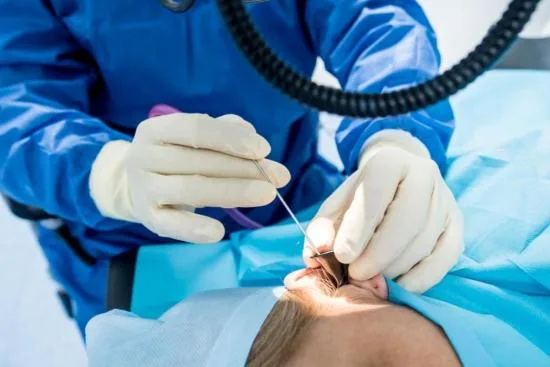
Most medical travel follows a familiar shape. You fly out, you have the procedure, you rest for a few days, you fly home and the result is either there or it is coming. Phonosurgery does not work that way, and people who plan it like a rhinoplasty trip tend to be caught out by the same three things.
You will not be allowed to speak for a period afterwards. The surgery is only half the treatment, and the other half happens at home over months. And you cannot assess the result in Istanbul, or in the month after, because the voice keeps changing long after the swelling has gone. None of this argues against travelling for voice surgery. It argues for planning the trip around the aftercare rather than around the flight.
The assessment has to happen before you book anything
Voice surgery is not a procedure you can be quoted for from a photograph or a description. A proper pre operative assessment involves looking at the vocal folds while they are actually vibrating, usually with videostroboscopy, along with acoustic analysis that measures your habitual pitch, your range and the quality of the sound.
That matters because the assessment sometimes changes the plan entirely. A voice problem that sounds like it needs surgery may turn out to be a technique issue that therapy resolves, or there may be a lesion on the folds that has to be treated before any pitch altering work is considered. A provider willing to price a procedure before anyone has looked at your larynx is selling you something rather than assessing you.
If a full assessment is not possible before you travel, the sequence should be a remote consultation with recordings and any existing imaging, followed by an in person examination on arrival, with the explicit understanding that the plan can change at that point.
Voice rest means exactly what it says
After most pitch altering procedures there is a period of complete voice rest, followed by a graduated return to speaking. This is the part people underestimate, and it has practical consequences for a trip abroad.
- Complete voice rest means no speaking at all, including whispering, which puts more strain on the folds than quiet speech does.
- It also means no throat clearing and no coughing where avoidable, both of which slam the vocal folds together.
- You will need a way to communicate that is not your voice. A phone with a notes app works, but plan for it rather than discovering it at passport control.
- Air travel is dry, and dry air is the enemy of healing vocal folds. Hydration and, where advised, humidification matter more than usual on the flight home.
The exact duration is set by the surgeon and by the procedure, so this is a question to ask specifically rather than to assume. What you should not assume is that you will be able to hold a conversation the day after surgery.
Speech therapy is not an optional extra
This is the single biggest planning gap in voice surgery abroad. Surgery changes the physical structure of the vocal folds. It does not teach you how to use the voice that results, and for most people the outcome they actually want depends on both.
That therapy is delivered over weeks or months, in a language you speak fluently, and it does not stop when you land at home. So the question to settle before you travel is who provides it. Some patients arrange a speech and language therapist locally and begin working with them before surgery, which is usually the better arrangement because there is a baseline to work from. Others rely on remote sessions. Either can work. What does not work is arriving home with no plan and hoping the voice settles on its own.
Ask any provider directly what therapy is included, whether it is delivered in person or remotely, over what period, and what they expect you to arrange yourself. Anyone researching voice surgery Turkey should treat that answer as being as important as the surgical plan itself, because it is the part that continues after you leave.
You cannot judge the result while you are still there
Immediately after surgery the voice is typically hoarse, weak and unlike either the voice you had or the voice you are aiming for. That is expected. Swelling settles over weeks, the tissue remodels over months, and the voice continues to change during that whole period. Technique adapts on top of all that.
What this means practically is that the pre departure appointment is a check on healing, not a verdict on the outcome. Judging the result at two weeks, or at six, is the most common reason people convince themselves something has gone wrong when the process is running normally. It is also why reputable surgeons will not discuss revision until a defined interval has passed.
| Stage | What it tells you |
|---|---|
| First days | How the tissue is healing. Nothing about the eventual voice |
| Voice rest period | Nothing. The voice is deliberately not being used |
| Graduated return | Early indication of pitch, but quality is still settling |
| Following months | The voice stabilises and therapy does most of its work |
| Defined review point | The first fair assessment, set by your surgeon |
What to establish before you pay a deposit
- Who performs the surgery, and whether their specialism is laryngology rather than general ENT or aesthetic surgery.
- What the pre operative assessment consists of, and whether videostroboscopy and acoustic analysis are part of it.
- The specific procedure being proposed and why it was chosen over the alternatives for your larynx.
- The exact voice rest protocol and how long you should plan to stay before flying.
- What speech therapy is included, in what form, over what period, and what you must arrange yourself.
- When the result will be formally reviewed, and what the position is if revision is discussed at that point.
Practical planning notes
- Travel with somebody if you can. During voice rest, having another person able to speak on your behalf removes a great deal of friction.
- Do not book anything voice dependent for a considerable period afterwards. That includes presentations, interviews, teaching and performing.
- Tell your employer honestly what the recovery involves. A period of not speaking is difficult to conceal and easier to plan around.
- Keep recordings. A clear recording of your voice before surgery, made under consistent conditions, is genuinely useful for tracking progress later.
- Check what your travel insurance covers. Standard policies exclude planned procedures, and specialist medical travel cover is a separate product.
The bottom line
Voice surgery abroad can work well, and the surgical part of it is often the most straightforward component to arrange. The parts that decide whether you are satisfied a year later are the assessment that happens before anyone quotes you, the voice rest you actually observe, and the therapy you do at home for months afterwards. Plan the trip around those three things rather than around the price of the flight, and you are planning it correctly.