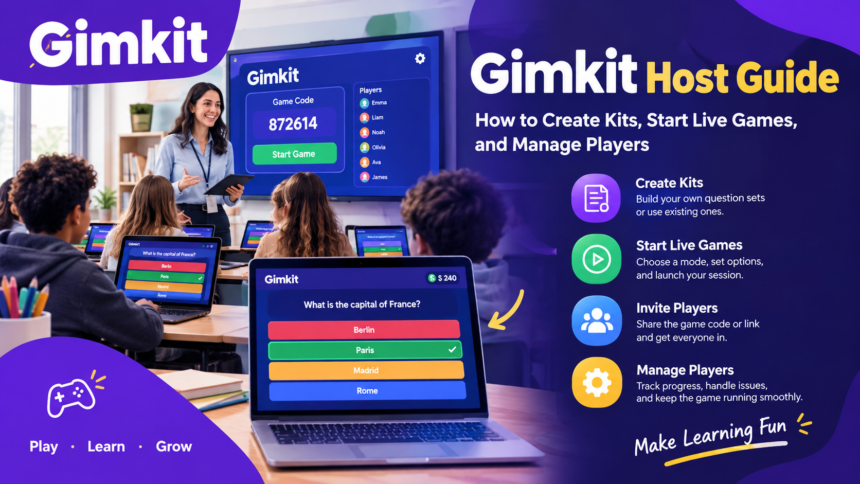
Gimkit Host is a popular search term among teachers, students, and people who want to organize interactive quiz games. Gimkit combines educational questions with game-based activities, allowing participants to review lessons while enjoying a more engaging learning experience. Teachers can use it to practice vocabulary, review science concepts, strengthen mathematics skills, and assess students’ understanding of different subjects.
Hosting a Gimkit game involves several steps, including preparing questions, selecting a game mode, configuring the available settings, inviting players, and managing the session. Understanding these steps can help hosts avoid common mistakes and create a smoother experience for everyone.
Whether you are using Gimkit for the first time or looking for better ways to manage live games, this guide explains how hosting works, how to create Kits, how participants join a session, and how to handle common problems.
What Is Gimkit Host?
A Gimkit host is the person who organizes and manages a game session. In a classroom environment, the host is usually a teacher who chooses the questions, selects a game mode, adjusts the available settings, and invites students to participate.
Gimkit uses the term Kit to describe a collection of questions and answers. These question sets can cover subjects such as mathematics, science, English, history, geography, and general knowledge. A host can prepare a Kit for a particular lesson or select an existing question set that matches the learning objective.
Once the Kit is ready, the host can launch a live game using an available mode. Participants enter the session through the joining method provided by the host and answer questions according to the selected game’s rules.
The host is responsible for preparing the activity, helping participants understand the instructions, and monitoring the session. Depending on the selected mode, additional controls may be available for managing participants, viewing progress, and ending the game.
How Does Gimkit Hosting Work?
The Gimkit hosting process begins with selecting a question set. The host then chooses a game mode and reviews the available settings before opening the lobby. Once the lobby is ready, participants can join using the displayed game code or another supported joining option.
After participants enter the session, the host can check the lobby and confirm that the group is ready. The game begins when the host starts the session. Players then answer questions and interact with the game according to the selected mode.
Different modes may have different rules, objectives, and controls. Some emphasize individual performance, while others focus on teamwork or completing shared objectives. The best choice depends on the age group, subject, available time, and purpose of the activity.
Preparing the game before inviting participants can make the experience more organized. A suitable Kit, clear instructions, and appropriate settings help reduce interruptions once the session begins.
| Internal Link |
|---|
| 🔗 You may also like: Whatsontech: Technology News and Digital Trends |
| 🔗 You may also like: TechNewsOutlets.com USA: Technology News and Online Resources |
How to Create a Gimkit Kit
Creating a Kit is an important part of hosting a successful game. A well-organized question set helps participants focus on the subject instead of struggling with unclear instructions or unrelated questions.
Step 1: Sign In to Your Account
Open Gimkit and sign in to your account. New users can follow the registration process available on the platform. Once signed in, locate the dashboard and look for the option to create a Kit.
The interface may change as the platform receives updates, so the exact location or wording of the creation option may differ. Follow the instructions displayed in your account.
Step 2: Choose a Topic
Decide what participants should learn or review during the game. Your topic might include multiplication, fractions, grammar rules, scientific vocabulary, historical events, or another subject.
A focused topic makes it easier to prepare relevant questions and maintain a consistent difficulty level. For example, a Kit about fractions should primarily contain questions about comparing, simplifying, or calculating fractions rather than unrelated mathematics topics.
Step 3: Add Questions and Answers
Enter your questions and provide the available answer choices. Mark the correct answer wherever the question editor requires it.
Use straightforward language and make sure every question has a clear purpose. Avoid ambiguous wording, duplicate questions, and answer choices that could confuse participants unnecessarily.
For a vocabulary Kit, you might ask students to select the correct definition of a word. A science Kit could test knowledge of plant growth, the solar system, or basic chemical concepts. Mathematics questions can include calculations that match the students’ current level.
Step 4: Review the Question Set
Before saving the Kit, check every question carefully. Confirm that the correct answers are marked accurately and that the answer choices make sense.
Pay attention to spelling, punctuation, and the difficulty of the questions. If you are preparing a Kit for younger students, use simple wording. For advanced learners, you can include more challenging questions that require applying knowledge rather than simply remembering facts.
Step 5: Save Your Kit
Save the question set and confirm that it appears in your account. Use a descriptive title so you can identify it easily when preparing future games.
Organizing Kits by subject, class, or lesson can save time when you host games regularly. Before starting a session, review the selected Kit again to ensure that it matches your intended activity.
How to Host a Live Gimkit Game

After preparing your question set, you can move to the hosting process. The following steps explain the general procedure for setting up and running a live game.
Step 1: Select the Correct Kit
Open your account dashboard and locate the Kit you want to use. Choose the available option for playing the Kit live.
Make sure the selected question set matches the lesson or activity. If you are reviewing material before an examination, choose questions that cover the relevant concepts instead of mixing unrelated subjects.
Selecting the correct Kit at the beginning prevents unnecessary interruptions and helps participants concentrate on the intended learning objective.
Step 2: Choose a Game Mode
After selecting your Kit, review the available game modes. Each mode can offer a different experience, so consider what you want participants to achieve.
A simple mode may be appropriate for a short revision activity, while a mode involving teamwork or strategy may suit a longer classroom session. If you are unfamiliar with a particular mode, review its instructions before using it with a large group.
Mode availability may depend on the platform’s current features and your account. Choose from the options actually displayed in your account rather than assuming that every mode is available.
Step 3: Configure the Game Settings
Review the available settings before opening the session. Depending on the mode, these may include the game duration, ending conditions, participant access, and other gameplay options.
Choose settings that suit the class and the time available. A short classroom warm-up may require a different setup from a full lesson review.
It is also helpful to consider the experience of your participants. Younger students may benefit from simple instructions and a straightforward game mode, while older students may enjoy activities that involve additional strategy.
Step 4: Open the Game Lobby
Continue through the hosting process until the game lobby appears. The lobby displays the information participants need to enter the session.
The available joining methods may include a game code, a QR code, or a direct joining option. The host should use the details provided by the current session rather than sharing an old code.
For an in-person class, the host can display the joining information on a classroom screen. For a remote lesson, the information can be shared through the communication method normally used by the class.
Step 5: Invite Participants
Ask participants to follow the joining instructions. They may need to enter the current game code, provide a display name, or complete any additional steps shown on their screens.
Wait until the expected participants have entered the lobby. If someone cannot join, confirm that they are using the correct information and that the session remains active.
Before starting, explain the game’s objective and answer any questions about how the activity works.
Step 6: Start the Game
Once the lobby is ready, use the available start control to begin the session. The precise button location may vary according to the selected mode and the current interface.
After the game begins, participants can answer questions and progress according to the mode’s rules. Keep the host screen accessible so you can monitor the activity and respond to any problems.
How Players Join a Gimkit Host Session
Joining a Gimkit game is generally straightforward when participants have the correct information.
The host first prepares the session and displays the joining details. Participants then follow the provided instructions, enter the current game code if required, and choose a name or complete any other steps displayed by the platform.
Once the joining process is complete, participants should appear in the lobby. The host can check the list before starting the game.
A QR code may be convenient for students using mobile devices because it reduces the need to type a code manually. A direct joining option can also help participants access a remote session more easily.
If a participant cannot enter the game, check whether the code is correct and whether the host has started or ended the session. A code from a previous game may no longer be valid.
How to Manage Players During a Live Game
Managing players properly helps maintain a positive and organized gaming environment. A host should make sure participants understand the activity, follow classroom expectations, and know what to do if a technical problem occurs.
Check Player Names Before Starting
Review the names displayed in the lobby before beginning the game. If an unfamiliar name appears, confirm whether it belongs to an expected participant.
Establish simple naming rules before sharing the joining information. For example, students may be asked to use a recognizable classroom name rather than an inappropriate nickname.
Use the participant management options available in your session when you need to address unwanted participation.
Monitor the Game Progress
During the session, use the controls provided for the selected mode. Depending on the game, you may be able to view player progress, access a leaderboard, manage certain settings, or end the activity.
Keep the learning objective in mind while monitoring the session. If the game becomes too competitive or participants appear confused, pause to clarify the rules when the available controls permit it.
Handle Late Arrivals
Some modes may provide options for allowing participants to join after a game has started. Check the available settings before launching the session.
If late joining is supported, provide the current joining information to the participant. If it is not supported, explain the situation and decide whether restarting the game is practical.
Planning for late arrivals can be especially helpful in large classes or online lessons, where students may experience delays connecting to the session.
End the Game Properly
A game may finish automatically when its objective is reached, or the host may be able to end it manually. The exact behavior depends on the selected mode.
After the session ends, give participants a chance to discuss difficult questions and review important concepts. This helps turn the game into a learning activity rather than an exercise focused only on scores.
Best Tips for Hosting a Successful Gimkit Game
A successful Gimkit session begins with preparation. These practical tips can help hosts create a more effective and enjoyable activity.
Match Questions to the Learning Objective
Choose questions that reinforce the lesson. If the purpose is to review vocabulary, focus on word meanings, spelling, and usage. For a mathematics activity, use problems that reflect the skills participants are expected to practice.
Relevant questions make the session more useful and help participants understand why the activity matters.
Keep Instructions Simple
Explain how to join the game, what participants need to do, and how the activity will end. Avoid lengthy instructions that make it difficult for participants to remember the essential steps.
If you are using a new game mode, briefly explain its main objective before starting.
Select an Appropriate Game Mode
Consider the participants’ age, familiarity with Gimkit, and the amount of time available. A simple mode may work well for beginners, while experienced players may prefer more complex gameplay.
The goal is to select a mode that supports learning rather than creating unnecessary confusion.
Encourage Healthy Competition
Competition can make a quiz more engaging, but it should not become the only measure of success. Encourage students to improve their understanding, learn from mistakes, and help their classmates when appropriate.
Avoid embarrassing participants who receive lower scores. A supportive environment helps more students feel comfortable participating.
Test the Setup Before Class
Check your Kit, game mode, and available settings before the session begins. Make sure you know how to display the joining information and start the game.
If possible, prepare the activity a little early so you have time to address any problems.
Prepare an Alternative Activity
Internet problems, device issues, or platform interruptions can affect a live session. Keep a short alternative activity ready, such as a printed quiz or a classroom discussion.
A backup plan allows the lesson to continue even if the game cannot be started immediately.
Common Gimkit Hosting Problems and Their Solutions
Technical problems can happen even when a host has prepared everything correctly. Understanding common issues can make them easier to resolve.
Gimkit Game Code Is Not Working
Check that the code has been entered correctly and belongs to the current session. Confirm that the host has not ended the game and that participants are following the correct joining process.
If the code still fails, ask the host to check the lobby and provide the current joining details.
Players Cannot Join the Session
Confirm that participants have a working internet connection and are using the correct joining information. Check whether the game is still active and whether any account or session requirements need to be completed.
If several participants experience the same issue, investigate the host’s connection or a possible platform problem before troubleshooting every device individually.
The Wrong Kit Was Selected
If you discover that the wrong question set is being used, decide whether it is better to restart the session. For a lesson-specific review, using the correct Kit is more important than continuing with unrelated questions.
Before restarting, verify the Kit and settings carefully.
The Game Is Not Loading
Ask participants to check their internet connections and wait briefly for the session to load. If appropriate, they can refresh the page, although refreshing during an active game may interrupt their progress.
Check whether the problem affects one device or multiple participants. If everyone is experiencing the same issue, the problem may be related to the host’s connection or the platform itself.
The Host Cannot Find a Setting
Game controls may vary between modes and interface updates. Review the current hosting screen and the instructions associated with the selected mode.
Avoid assuming that a control available in one mode must also appear in another. If a feature is not displayed, it may not be supported in the current session or account.
Is Gimkit Host Useful for Classroom Learning?
Gimkit hosting can support classroom revision, knowledge checks, and interactive practice. The combination of questions and game mechanics may encourage students to participate more actively than they would during some traditional review activities.
Teachers can use Kits to identify topics that students find difficult. For example, if several participants struggle with the same vocabulary questions, the teacher can revisit those words before moving to a new lesson.
However, a quiz game should complement other teaching methods rather than replace them. Some subjects require detailed explanations, extended writing, discussion, or practical activities that cannot be fully assessed through a short game.
The best results come when the host connects the activity to a clear learning goal and reviews important questions afterward.
Final Thoughts
Gimkit Host provides a practical way to organize interactive quiz games for classroom revision and group learning. By creating relevant Kits, selecting suitable game modes, checking the available settings, and sharing accurate joining information, hosts can make their sessions easier to manage.
The most effective games have a clear purpose, understandable rules, and questions that support the lesson. With careful preparation and a short review after the activity, Gimkit can become a useful addition to a wider learning strategy.
FAQs
What Does Gimkit Host Mean?
Gimkit Host refers to the person who organizes and manages a live Gimkit game. The host selects a Kit, chooses a game mode, configures the available settings, shares joining information, and starts the session.
How Do I Host a Live Gimkit Game?
Sign in to your account, select a Kit, choose the live-play option, and select an available game mode. Review the settings, open the lobby, share the joining information, and start the game when participants are ready.
How Do Players Join a Gimkit Game?
Players follow the host’s joining instructions. Depending on the session, they may enter a game code, scan a QR code, or use a direct joining option.
Can I Create My Own Gimkit Kit?
Yes. You can create a question set around a particular subject, add questions and answers, review the content, and save the Kit for use in supported games.
Can a Gimkit Host Manage Players?
The host can use the participant and game controls available for the selected mode. These controls may include viewing the lobby, monitoring progress, accessing a leaderboard, and ending the session.
Why Is My Gimkit Game Code Not Working?
The code may be incorrect, outdated, or associated with a session that has ended. Confirm the current code with the host and make sure you are following the correct joining process.
Is Gimkit Host Free?
Gimkit’s available features depend on the current account type and platform rules. Check the options displayed in your account to determine which hosting features are available to you.
Can I Host Gimkit Games for Remote Students?
Yes, live games can be useful for remote learning when the selected mode supports the intended activity. Share the current joining information through your normal classroom communication method and make sure participants understand how to enter the session.