Medical words from other languages can be confusing, and wondrand is a good example. It looks unfamiliar to most English readers, yet its meaning is simple and its role in healthcare is real. Wondrand is a Dutch medical term that means “wound edge”: the border where an open wound meets the healthy skin around it. Nurses and clinicians look at this border closely because it can show whether a wound is healing well or running into trouble. This guide explains what wondrand means, where the word comes from, how it is used in medical records, what a healthy wound edge looks like, and when a wound needs professional attention. It is written for general readers, nursing students and anyone who has come across the term in a Dutch document and wants a clear answer.
What Is Wondrand?
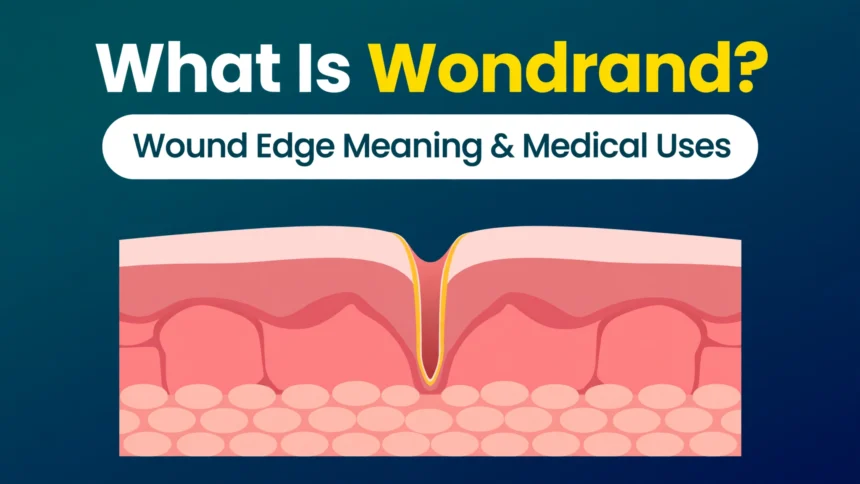
Wondrand is a Dutch compound noun that means “wound edge” in English. It describes the visible boundary between the damaged tissue of an open wound and the intact skin that surrounds it. If you picture a cut or an ulcer, the wondrand is the rim around the opening: not the wound itself, and not the healthy skin further away, but the line where the two meet.
Healthcare professionals pay attention to this border because it is one of the most informative parts of a wound. New skin cells move in from the edges as a wound closes, so the condition of the edge can suggest whether healing is moving forward or has stalled. A smooth, pink, advancing edge usually points to progress. An edge that is swollen, pale, rolled or detached can signal a problem that needs a closer look.
It is important to be clear about what wondrand is not. It is not a medicine, a cream, a device or a treatment. It is not a disease or a diagnosis. It is simply a descriptive word that Dutch-speaking nurses and doctors use when they record what a wound looks like. English-speaking clinicians use the same idea under the names “wound edge” or “wound margin”.
| Fact | Detail |
|---|---|
| Term | Wondrand |
| Language | Dutch |
| English meaning | Wound edge |
| Word type | Compound noun |
| “Wond” means | Wound |
| “Rand” means | Edge, border or margin |
| Main field | Wound care |
| Used in | Wound assessment and clinical documentation |
| Related terms | Wound bed, periwound skin, epithelialization |
| Terminology system | SNOMED CT |
| A treatment or product? | Neither |
Wondrand Meaning in English and Dutch
The meaning becomes clear when the word is split into its two parts. “Wond” is the Dutch word for wound, and “rand” means edge, border or margin. Put together, they form a compound noun that names exactly the part of the wound being described. Dutch builds many words this way, joining two simple words into one precise term.
A Dutch nurse might describe a wondrand as red, swollen, moist or irregular. Each of these words is an observation, not a diagnosis: it records what the border looks like at that moment so that the next person who reads the notes can compare and see whether anything has changed.
English has no single word that matches wondrand exactly, so clinicians say “wound edge” or “wound margin” instead. The German language has a close cousin, “Wundrand”, which means the same thing: the edge or margin of a wound. The idea is the same in every language; only the word changes.
The Dutch Origin and Background
Wondrand comes from everyday Dutch, not from Latin or Greek like many medical terms. It developed the practical way that most Dutch medical words develop: by naming the thing plainly. There is no established evidence that a particular doctor invented the term or that it appeared at a specific moment in history. Its value comes from its meaning, not from its origin story.
The term appears in Dutch-language nursing materials, wound assessment descriptions and clinical documentation. It is used in the Netherlands and in Dutch-speaking healthcare settings in Belgium, where nurses record wound observations as part of routine care.
As medical information travels across borders, terms like wondrand show up in translated records, research papers and international guidelines. Knowing what the word means helps readers understand a Dutch document without guessing, and it helps translators avoid mistakes that could change the meaning of a clinical note.
Wondrand in Medical Terminology
In modern healthcare, wound observations are recorded in a structured way so that information stays clear when it moves between departments, hospitals and countries. Wondrand fits into this system because it names one specific part of a wound that clinicians check during every assessment.
One of the main systems used for this is SNOMED CT, an international clinical terminology used in electronic health records. It includes a concept for wound-edge findings, coded 449747006, which lets a nurse’s observation about a wound edge be stored and shared in a standard form. Exact codes and translations should always be checked against an authoritative terminology release, because coding systems are updated over time.
Wound assessment itself often follows a framework called TIME, which stands for Tissue, Infection, Moisture and Edge. The “E” in TIME is the wound edge: clinicians check whether the edge is advancing, attached, rolled, swollen or damaged. The other three letters cover the tissue inside the wound, signs of infection and the moisture level. Together, the four parts give a complete picture of a wound’s condition, and the edge is one quarter of that picture.
For general readers, the key point is simple: wondrand describes a wound’s border, not a disease. It is a word for an observation, and observations are the raw material of good wound care.
Why Wound Edges Matter in Healing
Wound edges matter because healing happens from the edges inward. When skin is damaged, the body repairs it in overlapping phases: first it stops the bleeding, then it clears away damaged tissue and fights germs, then it builds new tissue, and finally it remodels and strengthens the new skin. Throughout this process, new skin cells travel across the wound surface from the edges, a process called epithelialization. If the edges are healthy, these cells can move forward and the wound slowly closes. If the edges are damaged or stuck, closure slows or stops.
That is why the border is so informative. A wound can look unchanged in the middle while its edges quietly tell a different story: new pink skin creeping inward means progress, while an edge that is curling inward or pulling away from the wound bed can mean healing has stalled.
The edge never tells the whole story on its own. Clinicians also consider the size and depth of the wound, the tissue inside it, the amount and type of drainage, the surrounding skin, pain, circulation and the patient’s overall health. But without looking at the edge, the assessment is incomplete. It is the part of the wound that shows, day by day, whether the body is winning or losing the repair.
| You may also like: |
|---|
| DulcoGlide: How the Suppository Applicator Works, Its Uses, Safety, and Benefits |
| Planning Your First Botox Consultation in San Ramon |
What a Healthy Wound Edge Looks Like
A healthy wound edge is usually attached to the tissue beneath it, with no gap between the border and the wound bed. Its colour is close to the surrounding skin or slightly pink, and it looks moist but not wet. Over days, the edge moves inward as new skin forms, and the wound slowly becomes smaller. These are the signs nurses look for when they say a wound is healing well.
The surrounding skin matters too. Healthy periwound skin is dry, intact and comfortable, without spreading redness, swelling or pain. Some mild redness and tenderness in the first days after an injury are normal, because inflammation is part of healing. The concern starts when these signs grow worse instead of better.
No single feature proves that a wound is healing. A pink edge on a wound that is getting larger, or a tidy edge on a wound with a bad smell, still needs attention. Healthy edges are a good sign, but they are one piece of a larger assessment that includes the wound bed, the surrounding skin and how the patient feels overall.
Common Wound-Edge Problems
Wound edges do not always look the same. Their appearance depends on the cause of the wound, its location, how long it has been there and the patient’s health. Some edge problems are common enough that they have their own names.
Maceration happens when skin stays too wet for too long, often from wound fluid leaking onto the surrounding skin. The affected skin turns pale, soft and wrinkled, and tears easily.
Rolled wound edges, also called epibole, develop when the edge curls inward instead of moving across the wound surface. The rolled rim can act like a wall that blocks new skin cells, and this is often seen in wounds that have been open for a long time. It usually needs professional treatment to correct.
Undermining is damage that spreads beneath the visible edge, creating a pocket under the surrounding skin. From above, the wound can look smaller than it really is, which is why clinicians gently check the edges to find hidden spaces.
Redness, swelling, warmth and increasing pain can be normal in the first days, but when they spread or worsen they may point to infection. A wound that gets more painful instead of less deserves a professional look.
| Problem | What it looks like | What it may mean |
|---|---|---|
| Maceration | Pale, soft, wrinkled skin around the edge | Too much moisture on the surrounding skin |
| Rolled edges (epibole) | Edge curls inward like a rim | Healing has stalled; new skin cannot advance |
| Undermining | A pocket hidden beneath the edge | Damage extends further than the surface shows |
| Spreading redness | Redness, warmth and swelling that grow | Possible infection; needs prompt assessment |
How Healthcare Professionals Assess the Wound Edge
A wound-edge assessment starts with looking and, when appropriate, gently feeling the border. Clinicians check whether the edge is attached to the wound bed or lifting away, whether it is smooth or irregular, dry or moist, and whether there are signs of maceration, rolling or undermining. They also examine the surrounding skin for colour changes, temperature, swelling, firmness, dryness and fragility, because changes in the skin around a wound often appear before changes inside it.
Measurement is part of the routine. The wound’s length, width and depth are recorded so that progress can be tracked over time, and in suitable settings photographs and standardised notes help compare one assessment with the next. Clinicians also note pain, drainage, odour and the condition of the tissue inside the wound.
The approach depends on the wound. A small surgical incision, a pressure injury and a chronic leg ulcer need different care, and the edge is assessed differently in each case. Surgical wounds, including those from cosmetic surgery, are often the easiest to assess because their edges are usually clean and straight. Whatever the wound, what is seen must be read together with the patient’s history and symptoms: appearance alone never makes a diagnosis.
| You may also like: |
|---|
| Does Cellulogia Really Reduce Cellulite? Results, Evidence, and Limitations |
| Best Cosmetic Surgery in Turkey: Achieving Natural Results at Affordable Costs |
Wondrand vs Wound Bed vs Periwound Skin
Three words describe three different parts of a wound, and mixing them up changes the meaning of a clinical note. Wondrand is the border of the wound, the line where damaged tissue meets healthy skin. The wound bed is the exposed tissue inside the wound, which may hold healthy granulation tissue, new surface tissue or damaged tissue. Periwound skin is the skin around the wound, which is checked for moisture damage, irritation and inflammation.
These areas are connected but not the same. A wound bed can look healthy while the surrounding skin is damaged by moisture, and a tidy edge can hide undermining beneath it. That is why clinicians examine the whole wound area instead of a single feature: each part answers a different question, and only together do they show whether healing is on track.
| Area | Where it is | What clinicians check |
|---|---|---|
| Wondrand (wound edge) | The border of the wound | Attachment, shape, rolling, maceration, advancement |
| Wound bed | Inside the wound | Tissue type, granulation, slough, drainage |
| Periwound skin | Skin around the wound | Colour, swelling, dryness, irritation, fragility |
Wondrand vs Similar-Sounding Names
Wondrand is sometimes confused with names that sound similar but mean something completely different. One example is WONDR Experience, an entertainment attraction, which has nothing to do with wound care. Another is WNDR, the ticker of a small cryptocurrency token called Wonderman Nation. The ordinary English word “wonder” is also a near neighbour in spelling, and it has no medical meaning at all.
These mix-ups happen because search engines and social media bring unrelated results together under similar spellings. The fix is to look at the context: when wondrand appears in Dutch medical notes, a nursing textbook or a wound-care guideline, its meaning is the wound edge. Claims about a product, a brand or a technology that uses a similar name need separate evidence, and they should not be treated as another meaning of the medical term. If a product claims to heal wound edges, learn how to evaluate a health claim before you pay for it.
When to Seek Medical Attention
Knowing the term wondrand does not replace professional wound care. Some wounds need a clinician’s attention, and waiting can make treatment harder. Seek care promptly if redness spreads, pain increases, swelling worsens or unusual drainage develops. Fever, growing warmth around the wound and pus can point to infection, and an infected wound may need antibiotic treatment chosen for the type of infection involved.
Deep wounds, bleeding that does not stop with firm direct pressure, loss of feeling, or injuries that involve tendons, joints or other important structures need urgent evaluation. Severe bleeding that will not stop is a medical emergency.
People with diabetes, poor circulation, a weakened immune system, or a wound that is not healing should get timely professional advice. A clinician can assess the wound’s cause and severity, check the edges, the wound bed and the surrounding skin, and recommend the right care before a small problem becomes a serious one.
Final Thoughts
Wondrand may look like an unfamiliar word, but its meaning is straightforward: it is the Dutch name for the edge of a wound. That edge is a small strip of skin, yet it carries a lot of information about healing. Healthy edges that advance inward suggest recovery, while rolled, swollen or detached edges suggest a problem worth a closer look.
Understanding the term helps anyone reading Dutch medical documents, studying nursing or learning about wound care. It also shows how much of medicine depends on careful observation: a wound is not judged by one feature but by the edge, the bed, the surrounding skin and the patient together. When in doubt about a wound, the right step is always the same: ask a healthcare professional.
Frequently Asked Questions
What does wondrand mean in English?
Wondrand is Dutch for “wound edge”. It describes the border where an open wound meets the surrounding healthy skin.
Is wondrand a medicine or a treatment?
No. Wondrand is not a medicine, a cream, a device or a treatment. It is a descriptive medical term used in Dutch wound care and clinical documentation.
What is the difference between wondrand and the wound bed?
Wondrand is the border of the wound, while the wound bed is the exposed tissue inside it. Periwound skin is the skin around the wound. Each part is assessed separately.
What does a healthy wound edge look like?
A healthy edge is attached to the tissue below it, pink or close to the surrounding skin in colour, moist but not wet, and it slowly moves inward as new skin forms.
When should I see a doctor about a wound edge?
Seek care if redness spreads, pain or swelling increases, there is pus or a bad smell, the wound is deep or bleeding will not stop, or the wound is not healing. People with diabetes or poor circulation should seek advice early.