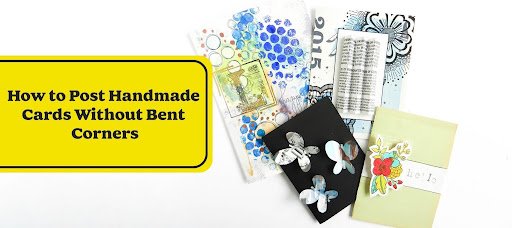
A handmade card is often bought for a particular occasion, so a bent corner can make it unusable even when the printed design is undamaged. The mailing arrangement should protect the card’s edges and surface without putting pressure on raised details.
Measure the complete order
Include the card, its presentation envelope and any insert when checking dimensions. If customers buy several cards together, test the largest normal order as well as a single-card parcel.
Custom Envelopes can provide a neat outer presentation, but a paper envelope alone may not resist bending. Add suitable stiffening where the card needs it, and ensure the contents cannot slide around the support.
Protect embellishments separately
Raised lettering, wax seals and attached decorations can create pressure points. A flat mailing method may be unsuitable if it presses directly against them.
Test the actual card construction. Keep adhesives fully set before packing, and check that protective materials do not catch edges or mark the surface. Do not place tape where the recipient may pull it against the card.
Check the finished postal format
Measure and weigh the sealed mailpiece rather than the unpacked card. Include backing material, inserts and labels. Royal Mail’s measuring guidance is useful for checking the complete parcel before selecting postage.
Do not assume that an earlier design’s postage category still applies after adding an embellishment or extra insert. Recheck when the product changes.
Identify what makes the finished card vulnerable
Measure the completed card with any envelope, embellishments and protective inner materials included. A raised flower, layered paper detail or wax element can change both the thickness and the pressure points. The nominal paper size does not describe the whole item.
Check whether the main risk is bending, corner impact, surface rubbing or damage to a raised feature. These risks may need different protection. A rigid backing can help resist bending but will not necessarily protect a decoration pressed directly against the front.
Consider how the customer will use the card. It should arrive clean, flat enough for its intended presentation and ready to give. Avoid attaching protective materials directly to a finished surface unless that method is appropriate and tested.
Position support where it can work
A backing board should support the vulnerable area without leaving corners exposed. Check the dimensions of the actual inserted assembly, including any slight variation in handmade cutting. Too much room around the card can allow it to slide away from the support.
Keep the card and its presentation envelope together in a clear arrangement. If several cards are ordered, separate surfaces that could rub or transfer colour. A stack of decorated cards may need a different method from a stack of plain folded cards.
Do not force a thick order into the format used for a single thin card. Compression may flatten decoration or create a visible crease. Select the dispatch method from the completed order rather than from the cheapest empty container.
Check adhesive and opening details
Keep tape and exposed adhesive away from paper edges and decorative surfaces. A recipient should not have to pull the card across a sticky flap to remove it. Test the opening sequence with someone who has not seen the packing method.
If a protective sleeve is used, confirm it can be opened without cutting close to the card. Keep instructions brief and visible where they are needed. An elaborate wrapping sequence can undermine the care taken during dispatch if it makes removal awkward.
Make sure postal information sits on a suitable, readable area. Decorative writing should not interfere with the address or label. Check the carrier’s current requirements for the finished parcel, especially when thickness or rigidity changes.
Use trial results to refine the method
Inspect the same features before and after a representative postal trial. Look at all corners, fold lines, raised details and printed surfaces. Record whether the support stayed in position and whether the closure remained secure.
Trial more than one order type if you sell both single cards and bundles. A method that suits one lightweight card may not suit a mixed set with embellishments. Keep a reference arrangement for each common format so staff can select a tested approach without improvising at dispatch.
Make opening straightforward
Leave a clear opening route that does not require cutting close to the card. Include the recipient’s address clearly and keep decorative details away from areas needed for postal processing.
When sourcing custom packaging uk, explain the card’s stiffness, surface finish and raised features. Samples should be tested with finished products rather than blank sheets of the same nominal size.
Send a small trial through the intended service and inspect the corners, surface and envelope closure on arrival. Keep photographs of a correctly packed order so each dispatch follows the same arrangement. The objective is a card that arrives ready to give, not one the customer has to flatten or repair.
| 🔗 You may also like: |
| Branded water bottles for events employees customers |
| Heartfelt apology gift ideas |