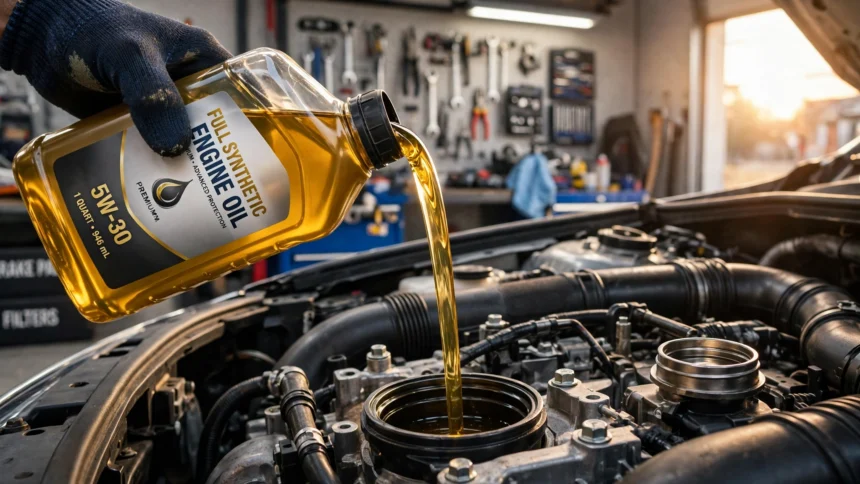
Your vehicle does not ask for much. It does not complain the way people do. It does not sigh when days are long or grumble when roads are rough. It simply starts, moves, carries, protects, and waits for you to notice when something small needs attention. And among all the parts working quietly under the hood, none is more humble—or more important—than engine oil.
It is easy to forget about what cannot be seen. We notice glossy paint, clean seats, and shiny wheels. Yet deep inside the engine, heat, pressure, and friction are battling every second your vehicle is running. Without proper lubrication, that battle turns destructive fast. Metal rubs against metal. Temperatures rise. Wear accelerates. Tiny failures begin stacking up like silent warnings.
That is why engine oil matters so deeply. It is not just a fluid. It is protection, balance, and time. It is the difference between an engine that ages gracefully and one that gives up too soon.
Why Engine Oil Deserves More Respect
Think of your engine as the heart of your vehicle. Every moving part depends on smooth coordination. Pistons rise and fall, valves open and close, and crankshafts spin with relentless precision. Engine-oil plays a vital role in keeping these components moving smoothly, reducing friction and preventing excessive wear. Without proper lubrication, friction left unchecked can cause serious damage to your engine.
Good oil forms a protective film between moving components. It reduces direct contact, limits wear, helps control temperature, and carries away contaminants. It also helps prevent sludge buildup, which can slowly choke an engine from within. In other words, this liquid does far more than “keep things slick.” It preserves the life of the machine you depend on.
There is something quietly emotional about that. A vehicle often holds memories—school runs, late-night drives, family trips, unexpected goodbyes, joyful reunions. Sometimes the smallest maintenance choice protects far more than machinery. It protects continuity.
How Engine Oil Protects Your Vehicle Every Day
To understand why oil changes are so critical, it helps to break down what this fluid actually does:
- Lubricates moving parts to reduce friction and wear
- Cools engine components by dispersing heat
- Cleans internal surfaces by suspending dirt and debris
- Protects against corrosion and rust
- Seals gaps between components, improving efficiency
When oil becomes old, dirty, or too thin, these protective functions weaken. That is when trouble begins—sometimes slowly, sometimes all at once. Strange noises, sluggish performance, overheating, and increased fuel consumption can all point to oil that is no longer doing its job.
Choosing the Right 5w30 Engine Oil
Not all oils are the same, and using the right viscosity matters more than many drivers realize. One common and trusted choice is 5w30 engine oil, especially for vehicles designed to perform in a range of temperatures. The “5W” refers to winter performance, meaning the oil flows well in cold starts. The “30” reflects how it performs once the engine reaches operating temperature.
That balance is important. When an oil is too thick, it may not circulate quickly enough. When it is too thin, it may fail to protect under high heat. The right option supports easier starts, smoother performance, and better long-term durability.
Owners should always check the manufacturer’s manual before choosing any oil type. The recommendation is there for a reason. A modern engine is built with exact tolerances, and the wrong fluid can compromise everything from efficiency to lifespan.
A Small Hug, A Big Reminder
There was once a driver who delayed an oil change for weeks, maybe months, telling everyone the vehicle still “felt fine.” One cold morning, after hearing an odd ticking sound, that same driver parked in the driveway and stood there in silence. A child ran up and gave them a quick hug, the kind that arrives without warning and says more than words ever could. In that small moment, the lesson landed: care should never wait for a crisis.
Vehicles may not feel affection, of course. But they respond to attention. And when you care for what carries you, it tends to carry you farther.
Signs Your Oil May Need Immediate Attention
It helps to know the warning signs before a minor issue becomes a costly repair. Watch for these common indicators:
- The oil warning light appears on the dashboard
- The engine sounds louder than usual
- A burning smell comes from under the hood
- Dark, gritty oil appears on the dipstick
- Exhaust smoke seems heavier than normal
- Fuel economy drops unexpectedly
Some drivers rely only on mileage stickers, but real-world conditions matter too. Stop-and-go traffic, towing, extreme temperatures, and short trips can all shorten oil life. Listening to your vehicle is just as important as following a calendar.
The Newborn Lesson in Fragility
Anyone who has ever seen a newborn being held for the first time understands something immediate and profound: fragile things deserve careful support. That same instinct applies, in a practical way, to an engine. Precision-built parts may look tough on paper, but inside, they rely on a delicate system of protection to survive heat and motion.
Neglect is rarely dramatic at first. It is quiet. Gradual. Almost polite. Then one day the consequences arrive all at once. Regular oil checks and timely changes are simple acts, but they prevent some of the harshest mechanical heartbreak a driver can face.
When to Change and Why Timing Matters
There is no universal schedule that fits every vehicle perfectly. Some older rules suggested every 3,000 miles, while many newer vehicles can go much longer. What matters most is the combination of manufacturer guidance, driving habits, and oil quality.
For many drivers, 5w30 engine oil is part of a dependable maintenance plan because of its versatility and broad compatibility. But even the best oil cannot protect forever. Over time, additives break down, contaminants build up, and performance declines.
A Moment of Bated Silence Before the Key Turned
One driver, after putting off maintenance too long, turned the key with bated breath after the engine had started knocking the day before. That pause—those few suspended seconds—felt enormous. The engine started, yes, but not smoothly. The relief was partial, not complete. It was a reminder that prevention feels ordinary until the day you nearly lose what has always been there for you.
Keeping Your Engine Alive for the Long Road
Caring for your oil means caring for your engine, your budget, and your peace of mind. Check levels regularly. Use the correct grade. Change filters when needed. Follow service intervals with discipline, not delay. Small habits create long futures.
Your vehicle serves in silence, through ordinary mornings and unforgettable nights. It deserves more than last-minute attention. It deserves steady care. And among all the simple things you can do, few are more powerful than respecting the quiet, constant work of engine oil. It may be unseen, but its protection touches every mile you hope to keep driving.